
From LEGOs to Lasers: Discovering the Joy of Creative Building Projects
Why Creative Building Projects Matter for Your Spirit

Creative building projects are hands-on activities where you transform raw materials—wood, metal, cardboard, or even natural objects—into something new and meaningful. These projects range from tiny desktop models to room-sized installations, offering a tangible way to express yourself and solve problems with your hands.
Quick Guide to Creative Building Projects:
- Small-Scale: LEGO models, 3D metal puzzles, wooden kits, found object sculptures
- Medium-Scale: DIY playhouses, custom furniture, cardboard forts, LEGO walls
- Large-Scale: Land art, community gardens, public installations, adventure playgrounds
- Core Benefits: Self-expression, stress relief, problem-solving skills, community connection
- Getting Started: Choose a scale that fits your space, gather basic tools, start with clear instructions
There's something deeply satisfying about building with your hands. When you cut a piece of wood, assemble metal parts into a sculpture, or stack stones into a balanced cairn, you're engaging in an ancient human practice—making things.
Creative building projects offer an escape from the mundane. They transform ordinary materials into extraordinary objects that reflect your unique vision. Whether you're a parent building a playhouse, an artist creating land sculptures, or someone seeking a meditative hobby, these projects connect you to the joy of creation.
The best part? You don't need a workshop or years of experience. A driveway, a few basic tools, and the willingness to try are often enough to start. As one experienced builder notes, mistakes are simply part of the process—wood filler and sanding can fix most errors.
From Scott Weaver's decades-long toothpick cityscape to simple cardboard forts that take over a living room, creative building projects prove that making something with your hands isn't just about the final product. It's about the journey of turning an idea into reality.
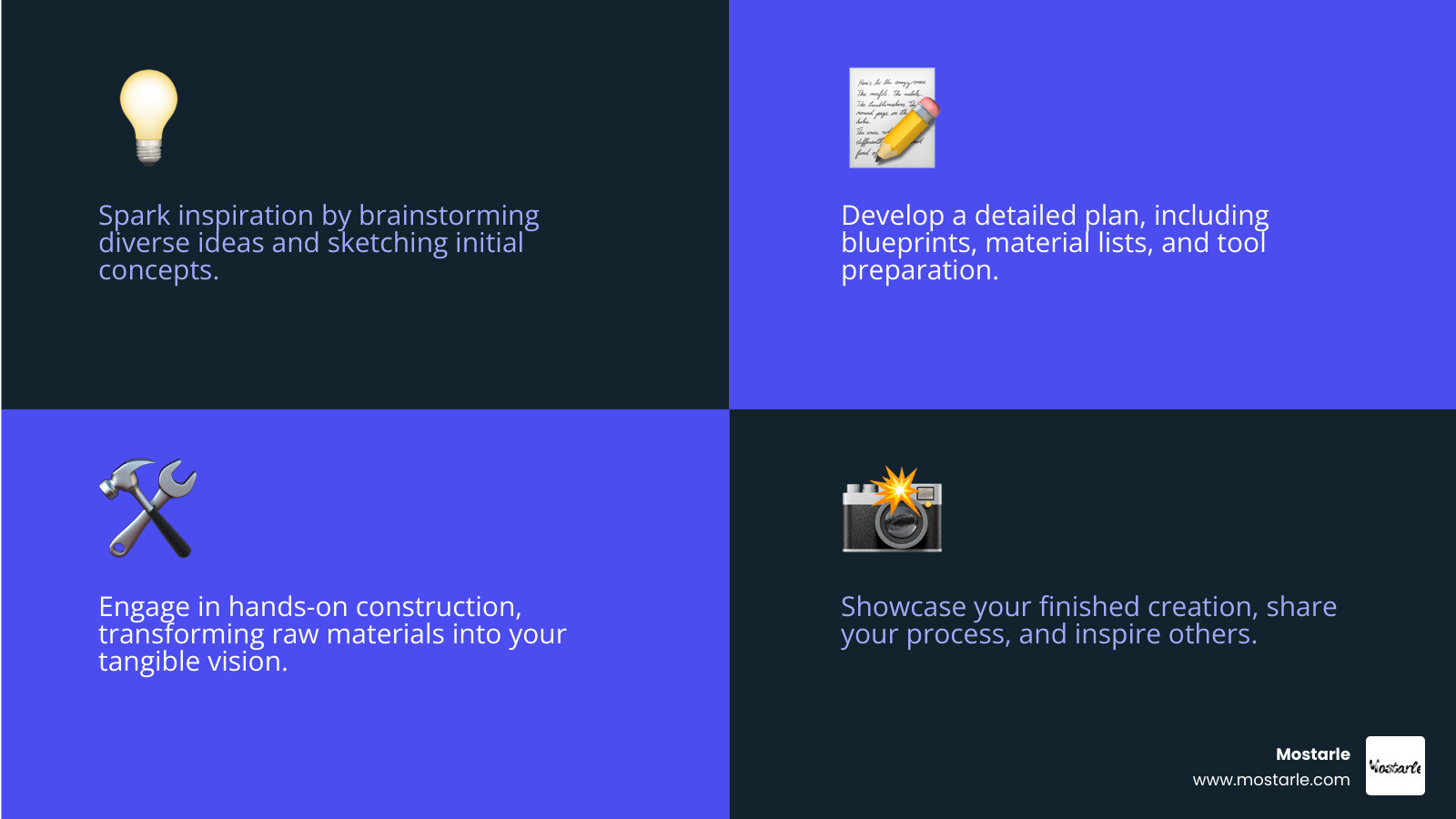
The Spectrum of Creation: Examples from Tiny to Towering
Creative building projects come in all shapes and sizes, proving that creativity truly has no limits. From intricate models that fit in the palm of your hand to monumental structures that reshape landscapes, there's a world of possibilities waiting to be explored. Let's explore some examples across different scales, showcasing the diverse ways we can bring our visions to life.
Small-Scale Wonders for Your Desk or Shelf
Sometimes, the most impactful creations are those we can hold and admire up close. Small-scale creative building projects are perfect for honing your skills, exploring new materials, and enjoying the immediate satisfaction of a completed piece.
- LEGO Models: Who doesn't love LEGOs? Beyond the pre-designed sets, the true magic of LEGO lies in free-building. Imagine creating intricate sculptures, miniature cities, or even functional gadgets. The principles learned here—structure, balance, and aesthetic—translate to larger projects.
- 3D metal puzzles: If you're looking for a challenge that results in a stunning display piece, 3D metal puzzles are fantastic. These kits involve assembling small, laser-cut metal pieces into detailed replicas of vehicles, landmarks, or fantastical creatures. They demand precision and patience, rewarding you with a gleaming, intricate model.
- Wooden model kits: For those who appreciate the warmth and tactile nature of wood, these kits offer a delightful building experience. From classic airplanes and ships to elaborate mechanical contraptions, wooden models often use interlocking pieces and require careful sanding and gluing, teaching fundamental woodworking skills on a smaller scale.
- Found Object Sculptures: This is where our company, Mostarle, truly shines! We believe in changing ordinary, forgotten fragments into remarkable, creative pieces. Think about taking everyday items—old keys, gears, nuts, bolts, or even discarded electronics—and assembling them into unique sculptures. This approach, often called "assemblage," challenges you to see potential in the overlooked and combine disparate elements into a cohesive artistic statement. It's a testament to the idea that creativity has no limits, turning what others might consider trash into treasure.
- Mechanical gear puzzles: These fascinating projects combine the satisfaction of building with the intrigue of engineering. Assembling mechanical gear puzzles involves understanding how different components interact to create movement. The result is often a captivating, functional model that demonstrates the principles of mechanics.
Room-Sized Adventures: DIY Projects for the Home
When you're ready to expand your canvas, room-sized creative building projects allow you to transform your living space and create immersive environments. These are often DIY endeavors that bring both practical utility and playful imagination into your home.
- DIY Playhouses: For families, building a playhouse is a magical project. We've seen incredible designs, from simple indoor structures to elaborate outdoor bungalows complete with French doors and windows. These projects often involve basic woodworking, careful measuring, and a lot of imagination, making them rewarding for both builders and the little ones who get to enjoy them.
- Epic LEGO Walls: Imagine a wall that's a giant, interactive canvas for creativity! An 80" x 80" LEGO wall, for example, can be built for around $400, using 64 10" x 10" LEGO baseplates mounted on plywood. These walls provide an incredible space for pixel art, architectural designs, or just free-form building. While some plates might eventually work loose, a little re-gluing every few months keeps the creativity flowing. It's an engaging tool that fosters spatial thinking, fine motor skills, and endless fun.
- Cardboard Forts: Simple, accessible, and surprisingly versatile, cardboard forts are a classic for a reason. You can create intricate castles, secret hideouts, or even immersive labyrinths. Michelangelo Pistoletto's large-scale corrugated cardboard maze is a fantastic example of how far you can push this humble material, creating a truly twisty and immersive experience. The Instructables Cardboard Challenge also provides a wealth of inspiration for what's possible with just cardboard.
- Custom Furniture: Building your own furniture, whether a simple entryway organizer or a bespoke bookshelf, allows you to tailor pieces perfectly to your space and needs. We often find that custom builds offer a sense of pride and functionality that off-the-shelf items can't match.
- Immersive cardboard mazes: As mentioned with cardboard forts, these projects can take over an entire room, creating a playful and engaging environment for exploration.
Large-Scale & Community-Focused Builds
Moving beyond personal spaces, creative building projects can also manifest as large-scale installations or community initiatives, often with a focus on public engagement, environmental art, or shared resources.
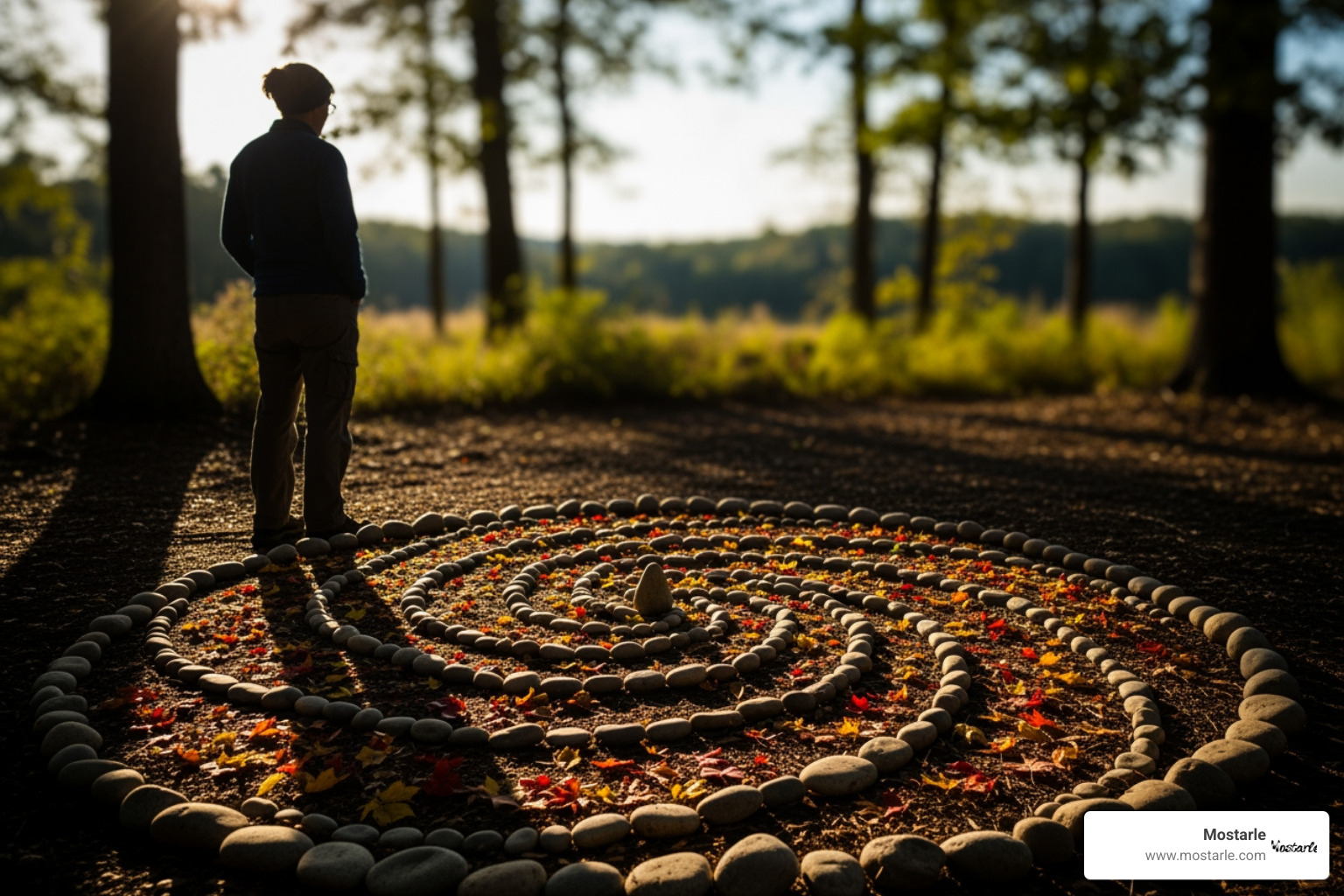
- Land Art: Land artists like Andy Goldsworthy create stunning, site-specific installations using only natural materials like rocks, ice, leaves, or branches. These ephemeral works highlight the beauty of nature and its constant change. We can draw inspiration from this to create our own natural sculptures inspired by artists, exploring balance and stacking with collected rocks, much like building cairns.
- Adventure Playgrounds: These imaginative spaces are designed and often built with community input, offering children unique and stimulating play environments beyond standard swings and slides. They encourage creativity and physical activity through structures made from diverse materials.
- Public Art Installations: From temporary sculptures in city parks to permanent fixtures that define a plaza, public art installations often involve significant creative building. Collaborators like Artencurs inspire us with what's possible using many modular parts to create interesting geometric structures, often involving young builders in the process.
- Little Free Libraries: These charming, small, house-like structures are built to hold books for community sharing. They are a wonderful example of a creative building project that serves a social purpose, encouraging literacy and community connection. Many free woodworking plans exist for building your own DIY Little Free Library.
Professional construction companies also engage in creative building on a large scale. For instance, Creative Building Projects Ltd., based in the UK, has been operating since 2008, completing over 500 projects valued up to £2,000,000, and specializing in changing commercial and industrial spaces. Similarly, Creative Building Concepts, with 15 years of industry experience and multiple awards, focuses on custom remodeling and construction, including historical building conservation and home additions. These examples show how a focus on creative solutions, open communication, and attention to detail can bring even the most ambitious projects to life.
Your Creative Toolkit: Essential Materials and Techniques
Every creative building project begins with materials and the know-how to put them together. The beauty of creative building is its openness to a vast array of resources and methods, allowing us to experiment and innovate.
From the Hardware Store to the Recycling Bin
The materials you choose define your project's aesthetic, structural integrity, and even its message. We often find inspiration in unexpected places.
- Wood (Pine, Plywood): A perennial favorite for its versatility and workability. Pine and fir are affordable, easy to find, and rapidly renewing, making them a great eco-friendly choice for many projects. Plywood is excellent for flat panels, like those in a playhouse or the base for an epic LEGO wall. Many DIY projects, from simple entryway organizers to complex furniture, rely on these accessible lumber types.
- Metal: From the structural strength of steel to the intricate details of small hardware, metal offers durability and a sleek finish. At Mostarle, we specialize in crafting unique models from everyday hardware like nuts and bolts, proving that even the smallest metal components can be transformed into remarkable art. The world of welding wonders also opens up possibilities for larger, more robust metal sculptures.
- Cardboard: Don't underestimate this humble material! Cardboard is incredibly adaptable for prototyping, temporary structures, and artistic creations. Its low cost and ease of cutting make it ideal for experimentation, from intricate models to room-filling mazes.
- Recycled Items: This category is a treasure trove for the truly creative. The Tinkering Studio team, for instance, used to build mazes out of VHS tapes, and other makers have repurposed old flip phones and even irons into elaborate structures. The next time you're cleaning out the closet, consider what old technologies or materials could serve as unusual component parts. It's a fantastic way of turning trash into treasure and giving new life to discarded objects.
- Natural Materials (Rocks, Branches): For outdoor or environmentally conscious projects, natural materials are unparalleled. Collecting rocks for stacking and balance, or using branches and leaves for site-specific art (like Andy Goldsworthy's work), connects us to the environment and offers unique textural and structural challenges.
Fundamental Building Techniques
Knowing how to join materials together is crucial. Here are some essential techniques we often employ:
- Woodworking Joinery: This encompasses methods like using screws, nails, and wood glue. For stronger holds, especially in furniture or playhouses, we often combine glue with finish nails. Pocket holes are also a popular and efficient method for creating strong, hidden joints in woodworking projects, offering a balance of ease, speed, and cost-effectiveness.
- Slotted Construction: Particularly useful with cardboard, this technique involves cutting slots into pieces that then interlock without the need for adhesives. It's a fantastic way to create reusable construction sets and explore geometric structures.
- Lashing: When working with natural materials like sticks and branches, lashing involves tying them together with string, cord, or tape. This technique allows for flexible yet secure connections, ideal for creating rustic structures or sculptures.
- Stacking: The simplest yet profound technique, especially with natural materials like rocks. Stacking requires an understanding of balance, weight distribution, and friction to create stable structures, such as cairns.
- The art of assemblage: As highlighted by our work at Mostarle, this technique involves combining various found objects or pre-made components into a new, cohesive artistic piece. It's about seeing the potential in every item and bringing them together in an imaginative way.
How to Start Your First Creative Building Project
Feeling inspired but unsure where to begin? We've all been there! Starting a creative building project can seem daunting, but with a few guiding steps, you'll be turning ideas into reality in no time.
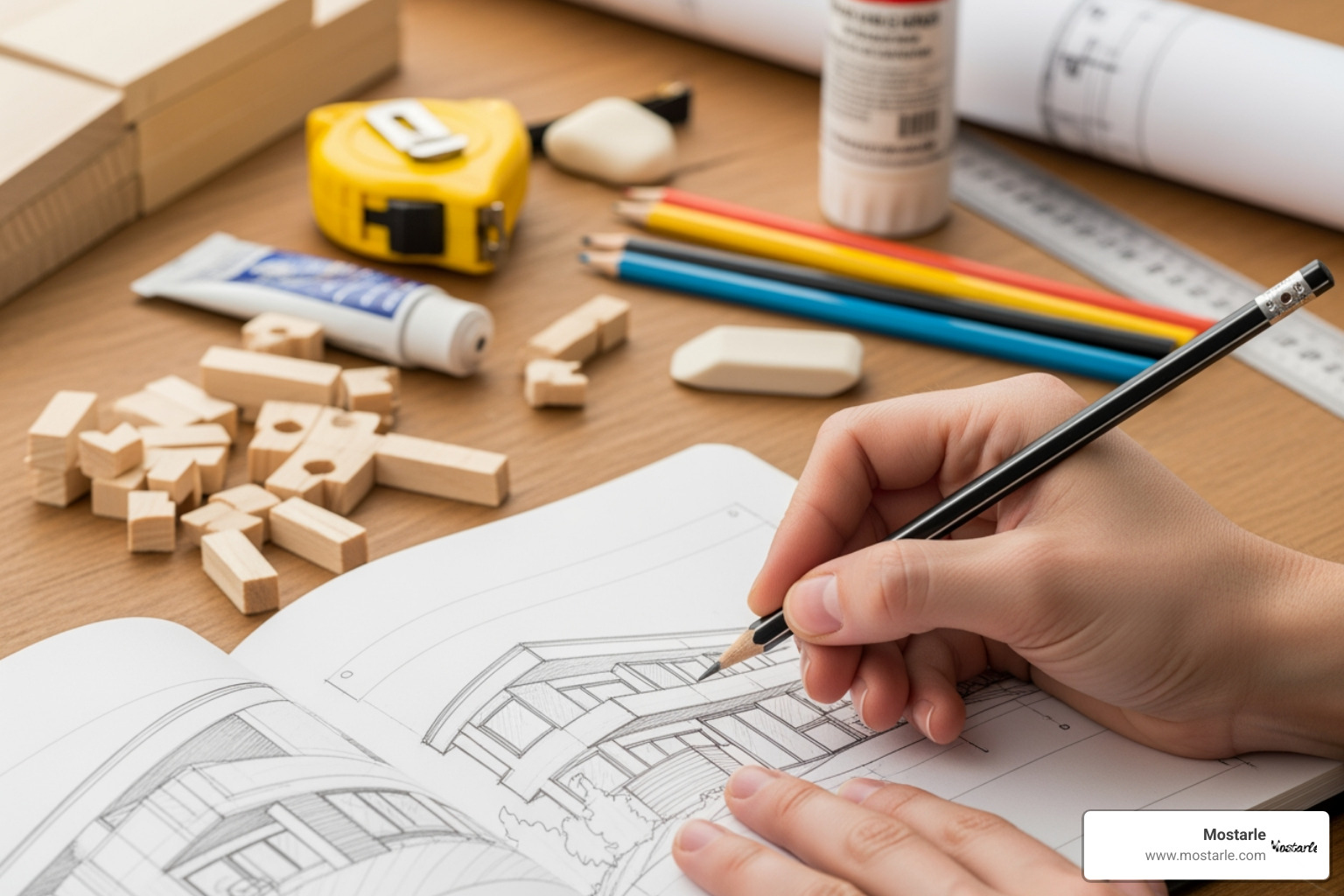
Step 1: Finding Your Spark of Inspiration
The first hurdle is often deciding what to build. Don't worry, inspiration is everywhere!
- Brainstorming and Sketching: Start by thinking about what excites you. Do you need a practical solution for your home, or are you drawn to purely artistic expression? Sketch out your ideas, no matter how rough. This helps visualize your concept and work through initial design challenges.
- Finding Ideas Online: The internet is a vast gallery of creative building projects. Websites like Pinterest, Instructables, and specialized blogs offer countless examples, tutorials, and plans. Search for "exploring creative constructions" to see what others are making.
- Considering Scale and Space: Before you get too far, think about where your project will live. Do you have space for a room-sized cardboard fort, or is a desktop mechanical puzzle more appropriate? The chosen space often dictates the scale and materials of your build.
Step 2: Gathering Tools and Sourcing Materials
Once you have an idea, it's time to gather your resources. You don't need a professional workshop to start!
- Basic Toolkits: For many woodworking projects, a drill, circular saw, tape measure, square, and a few clamps will get you through most projects. For metal projects, basic pliers, cutters, and files might be enough for our 3D metal puzzles.
- Finding Free Woodworking Plans: Many excellent resources offer detailed plans for everything from furniture to playhouses, often for free. These can be a fantastic starting point for beginners.
- Safety Precautions: Always prioritize safety. Wear appropriate personal protective equipment (PPE) like safety glasses and gloves. Understand how to use your tools correctly and safely.
- Working on a Level Surface: A clean, level workspace is crucial for accurate cuts and stable assembly. Whether it's a driveway, a patio, or a dedicated workbench, ensure your building area is free of debris.
- Measuring Twice: This age-old adage is a creative building project mantra. Double-checking your measurements before cutting saves materials and frustration.
Step 3: Overcoming Common Building Challenges
Every builder, from novice to professional, encounters challenges. The key is how we approach them.
- Warped Boards: It happens! When buying lumber, choose the straightest boards available. For slightly warped pieces, you can often work around them by cutting them into shorter sections.
- Making Accurate Cuts: Practice makes perfect! If using a circular saw, clamp your board securely, measure twice, cut slowly, and ensure your blade is sharp. A miter saw offers fast and precise cuts, but a circular saw with a straight edge can get the job done too.
- Fixing Mistakes: Don't let errors discourage you. Mistakes are part of the process! Wood filler, sanding, or simply flipping a board over can often remedy issues. In the spirit of creative problem-solving, sometimes a "mistake" can even lead to an unexpected, brilliant design element.
- Keeping Things Square: For structural integrity, especially in woodworking, ensuring your project is "square" (all corners at 90 degrees) is vital. Use a speed square and measure the diagonals after each step to confirm alignment. Always clamp joints before screwing to keep them tight and flush.
- Staying Motivated: Some projects take time. Break large projects into smaller, manageable steps. Celebrate small victories, and remember the joy of creation that drew you to the project in the first place.
The Future of Building: Sustainability and Technology
As we look ahead, two powerful forces are shaping creative building projects: a growing emphasis on sustainability and the transformative potential of technology. We are passionate about both, understanding their role in expanding what's possible and how responsibly we build.
Building with a Conscience: The Role of Sustainability
Our planet's health is paramount, and creative building projects offer unique avenues for eco-conscious creation.
- Upcycling: This is at the heart of what we do at Mostarle. We believe in taking existing items, especially those often overlooked or discarded, and changing them into something new and valuable. Our philosophy of repurposing everyday tools into art exemplifies this, turning old wrenches, gears, and bolts into stunning sculptures. It's about seeing potential where others see waste.
- Using Natural Materials: Incorporating elements like wood, stone, and leaves, especially those locally sourced, reduces the environmental footprint of a project. Land art, as exemplified by Andy Goldsworthy, is a beautiful demonstration of building in harmony with nature.
- Reducing Waste: By choosing to build with recycled items—whether cardboard from old boxes, old VHS tapes, or other reclaimed materials—we actively divert waste from landfills. This approach challenges us to be resourceful and innovative in our material selection.
- Biodegradable Materials: Opting for materials like pine or fir in woodworking projects is also a sustainable choice, as these are rapidly renewing and biodegradable.
The Digital Toolbox: How Technology Improves Creative Building Projects
Technology has opened up a universe of possibilities, making complex designs accessible and enhancing the creation process.
- 3D Modeling: Digital design software allows us to conceptualize and refine our projects in a virtual space before committing to physical materials. This helps in visualizing complex structures, testing ideas, and ensuring precision.
- Laser Cutting and 3D Printing: These advanced manufacturing techniques allow for incredible precision and the creation of intricate components. From custom parts for mechanical puzzles to unique elements for sculptures, digital fabrication tools can bring highly detailed designs to life that would be difficult or impossible to create by hand. Our journey from LEGOs to Lasers truly embodies this technological progression.
- Online Communities and Resources: Digital platforms connect builders worldwide, facilitating the sharing of ideas, plans, and troubleshooting tips. This collaborative spirit accelerates learning and innovation in creative building projects.
- Time-Lapse Video Documentation: Technology also allows us to capture the process itself. Time-lapse videos can beautifully document the evolution of a build, from raw materials to finished product, offering insights into the creative journey and inspiring others.
More Than a Hobby: The Benefits of Creative Building
Engaging in creative building projects is far more than just a way to pass the time; it's a profound investment in ourselves and our communities. The benefits extend across individual growth, mental well-being, and social connection.
For the Individual: Sharpening Your Mind and Skills
When we build, we engage a wide array of cognitive and practical abilities, leading to significant personal development.
- Fostering Innovation: Every project, big or small, presents opportunities to innovate. Whether it's finding an unexpected way to join two materials or devising a new structural solution, building encourages out-of-the-box thinking.
- Problem-Solving Skills: From a warped board to an ill-fitting joint, creative building projects are essentially a series of puzzles. We learn to identify problems, brainstorm solutions, test them, and adapt our plans. This iterative process sharpens our analytical and practical problem-solving abilities.
- Spatial Reasoning: Visualizing how components fit together, understanding dimensions, and anticipating structural integrity all contribute to improved spatial reasoning. This skill is crucial in many aspects of life, from navigating a city to arranging furniture. Building an epic LEGO wall, for instance, requires careful consideration of alignment and spacing.
- Fine Motor Skills: The precise movements required for cutting, gluing, assembling small parts (like in our 3D metal puzzles), or manipulating tools significantly improve dexterity and hand-eye coordination.
- Stress Relief: The focused, meditative nature of building can be incredibly therapeutic. It provides a welcome escape from daily stresses, allowing us to immerse ourselves in a tangible, rewarding activity. As one builder noted about a LEGO wall, it's "fun and stress-relieving."
- The joy of making your own puzzles: There's a unique satisfaction in crafting something from scratch, especially when that something is a puzzle that challenges the mind. It's a testament to your skill and ingenuity.
For the Community: Building Connections
Creative building projects can also be powerful catalysts for community engagement and shared experiences.
- Collaborative Projects: Building together fosters teamwork, communication, and a sense of shared accomplishment. Initiatives like those by Artencurs, which involve young builders in creating geometric structures, highlight the power of collective creativity. Even large-scale cardboard installations can become community-wide endeavors.
- Educational Makerspaces: Spaces equipped for hands-on creation, often found in libraries and community centers, provide accessible environments for people of all ages to explore creative building projects. An epic LEGO wall in a library makerspace, for example, becomes a collaborative canvas that encourages learning and interaction.
- Fostering Teamwork: When groups work on a project, they learn to delegate, support each other, and combine diverse skills to achieve a common goal. This strengthens social bonds and builds a sense of belonging.
- Creating Shared Public Spaces: Projects like Little Free Libraries or public art installations contribute to the vibrancy and character of a community, providing shared resources and points of interest that everyone can enjoy and take pride in.
Frequently Asked Questions about Creative Building Projects
What's the best way to start if I've never built anything before?
We recommend starting small and simple! Choose a project with clear, step-by-step instructions, such as a basic wooden model kit or a small cardboard creation. Don't be afraid to buy a little extra lumber to practice cuts and joints first. Mistakes are part of the process, and they're often fixable! Consider trying one of our beginner-friendly kits to get a feel for assembly and precision.
What kind of wood should I use for my projects?
For most indoor DIY projects, we suggest standard construction lumber like pine or fir. It's affordable, easy to work with, and widely available. For outdoor projects, use red-toned or pressure-treated 2x lumber for framing, and cedar for decking, as it's naturally rot-resistant. Plywood is excellent for flat panels like tabletops or the base of a LEGO wall. Always pick the straightest boards you can find, and let wood acclimate indoors before building, especially in humid climates, to minimize warping.
Can I sell the things I build from online plans?
Generally, yes! Most plan creators are happy for you to sell items you build from their plans, as long as you don't resell or repost the plans themselves. It's always a good idea to check the specific policy of the plan creator if you're unsure. Focus on your craftsmanship and the unique touch you bring to each piece; that's what truly makes your creations special.
Conclusion
The journey of creative building projects is a profoundly rewarding one. It's a journey of turning abstract ideas into tangible reality, of problem-solving with your hands, and of finding new skills and confidence within yourself. Whether you're carefully assembling one of our unique metal models or starting on a large-scale community build, the act of creation connects us to a fundamental human drive.
At Mostarle, we champion this spirit by showing that creativity has no limits, changing ordinary fragments—like nuts and bolts—into remarkable, intricate pieces of art. We invite you to accept the challenge, enjoy the process, and experience the immense satisfaction that comes from bringing something new into the world.
So, what are you waiting for? Start your own building adventure today, and perhaps, along the way, you'll also learn everything you need to know about mechanical puzzles.