
Repurposed Masterpieces: Crafting Art from Everyday Tools
Why Art Made From Tools Captivates Creative Minds
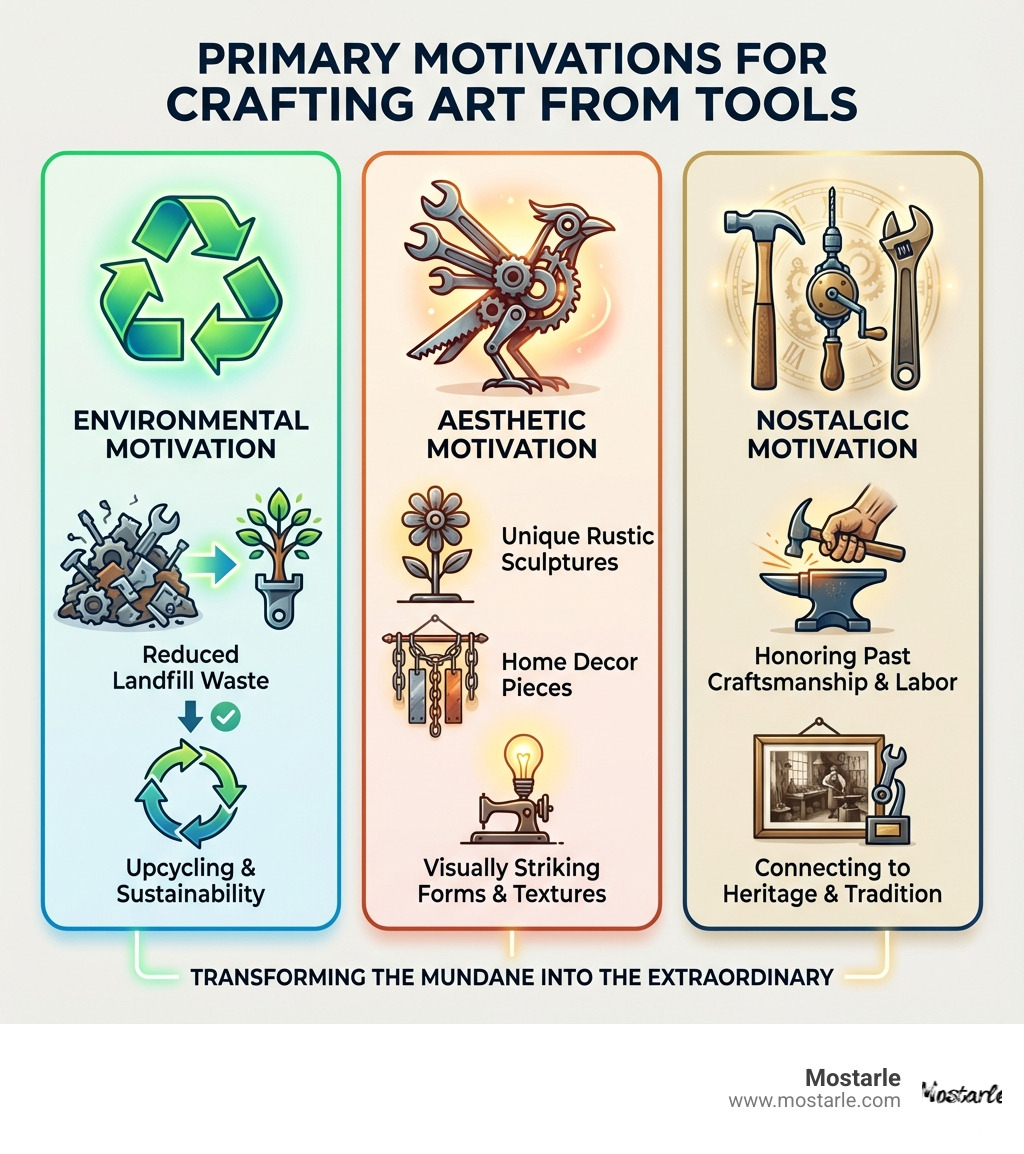
Art made from tools transforms discarded wrenches, rusted shovels, and forgotten gears into stunning sculptures and decorative pieces. This creative practice combines environmental consciousness with aesthetic expression, giving new life to items that once shaped our world through labor.
If you enjoy the broader history of turning everyday objects into art, you might recognize this approach as part of the wider tradition of found object art, where ordinary items are recontextualized as artworks.
Quick Answer: Common Types of Tool Art
- Animal Sculptures - Birds, insects, and creatures welded from shovels, springs, and hardware
- Garden Art - Trellises made from rake handles, decorative displays on fences and walls
- Painted Saw Blades - Hand saws transformed into canvas for folk art and personalized signs
- Abstract Sculptures - Gears, chains, and mechanical parts assembled into contemporary forms
- Functional Decor - Wall hangings, tool storage solutions, and architectural elements
The motivations behind creating art from repurposed tools run deeper than simple craft. Artists report acquiring truckloads of old hand tools for as little as $50, changing them through welding, painting, and assembly. Some create whimsical garden creatures from shovel heads and rebar. Others, like artist Damián Ortega, explore existential themes by covering interlaced tools in plaster to resemble bones.
The appeal lies in honoring generations of labor while preventing perfectly good metal from ending up in landfills. Rust becomes patina. Function becomes form. Each piece tells two stories—the original purpose it served and the new life it's been given.
Whether you're drawn to the environmental benefits of upcycling, the unique aesthetic of weathered metal, or the nostalgia of antique implements, tool art offers a creative outlet that transforms the mundane into the extraordinary.
From Workshop to Art Piece: Common Tools Repurposed
When we talk about art made from tools, we're often talking about a fascinating change. The very objects designed for utility and function—for building, repairing, or cultivating—are reimagined as elements of beauty and expression. The array of tools that find new life in art is incredibly diverse, limited only by the artist's imagination. We've seen everything from simple hand tools to complex mechanical components repurposed, each bringing its own history and character to the final artwork.
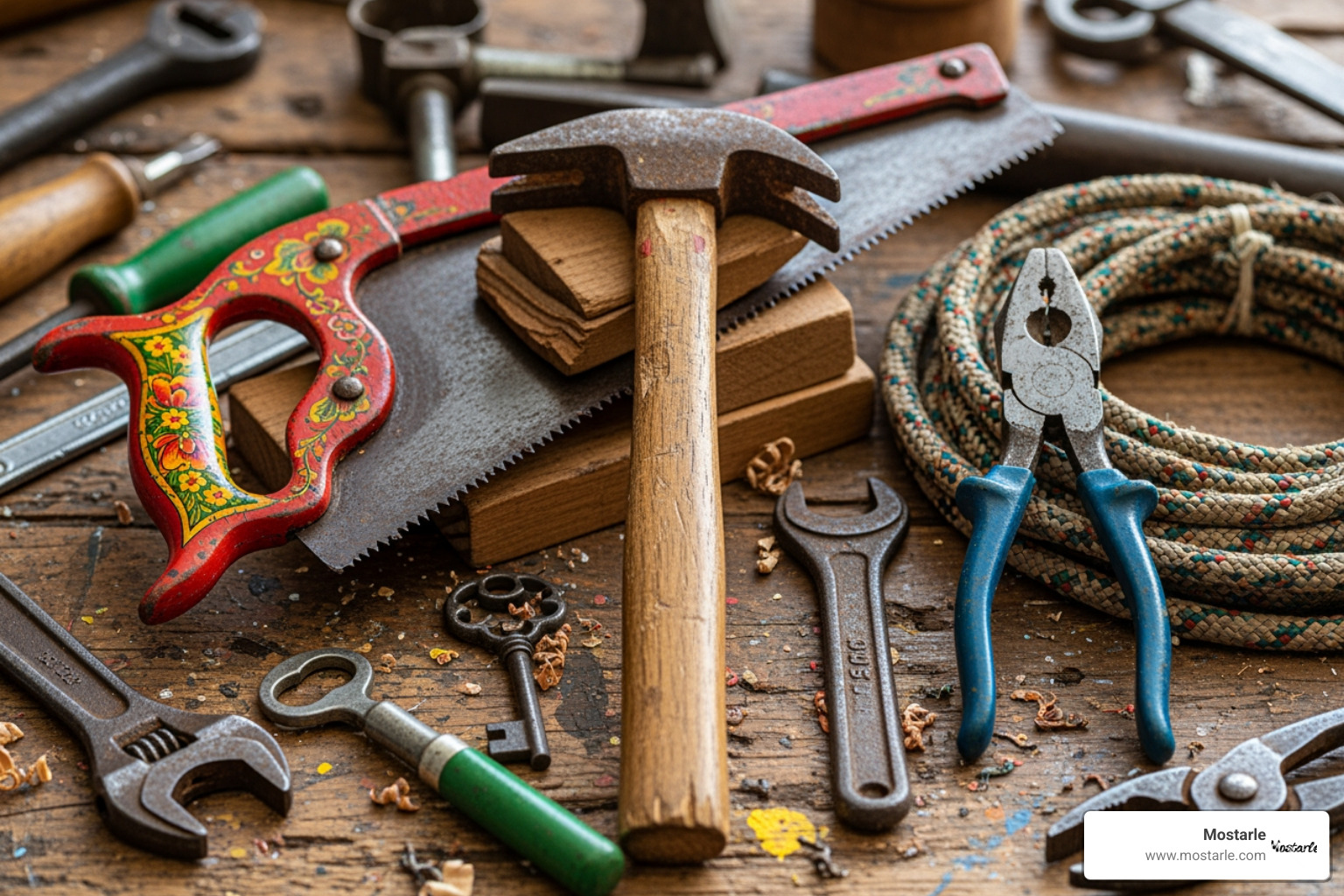
Many artists find their treasures at auctions, scrap yards, or even forgotten corners of old workshops. The low cost of acquisition can be surprising; some artists report picking up a truckload of old hand tools and parts for around $50. This accessibility makes it a rewarding medium for many creators. The original purpose of the tool often inspires its new artistic role, leading to clever and often humorous interpretations.
Garden and Farm Implements
Garden and farm tools are particularly popular for outdoor art due to their rustic charm and inherent shapes. Their weathered appearance, often adorned with years of rust and use, adds character without needing much embellishment.
- Shovel heads and Rake tines: These are frequently transformed into animal sculptures. A shovel blade, for instance, can become the body of a bird, with cut sections forming wings, while rake heads can be ingeniously used to create features like a bird's comb or feathers. We've seen delightful woodpeckers crafted from shovels and comical crows painted onto their broad surfaces.
- Pitchforks: Their multi-pronged design makes them excellent for creating abstract forms or even as structural elements in larger pieces.
- Old metal wheels: These are considered "awesome in the garden" and can be used as decorative focal points, adding a touch of industrial history to a natural setting.
- Plow parts: Large, robust, and often dramatically shaped, parts from old agricultural equipment can form the backbone of impressive, large-scale sculptures. Artist John Lopez, for example, is renowned for using rusted carcasses of discarded farm equipment to create powerful animal sculptures, celebrating the agricultural heritage of his region.
- Garden Trellises: Long-handled tools can be repurposed as unique trellises for climbing plants, adding an artistic touch to functionality. We've even seen old gears welded together to form intricate and visually striking garden trellises, showcasing how mechanical parts can support organic growth.
The charm of older garden tools, often made from wood and metal, lies in the gorgeous patina they develop over the years. This natural aging process is often accepted, influencing the artistic outcome and adding depth to the piece.
Workshop and Mechanical Parts
Beyond the garden, the workshop itself is a treasure trove of artistic potential. The intricate designs and varied materials of industrial and mechanical components lend themselves beautifully to diverse artistic styles.
- Wrenches, Hammers, and Pliers: These fundamental hand tools, with their distinct shapes, can be assembled into figurative or abstract sculptures. A collection of wrenches, for example, can be artfully arranged and mounted to create intriguing wall art.
- Saw Blades: These flat, often circular or elongated metal pieces, offer a unique canvas. They can be painted with intricate designs, from landscapes to personalized signs for a "Man Cave" or workshop. We've seen artists transform saw blades into decorative clocks or even owl sculptures, using their sharp edges and circular forms creatively.
- Gears and Cogs: The precise, interlocking nature of gears makes them ideal for steampunk-inspired art or for creating complex, textural surfaces. Their repetitive patterns can form fascinating abstract compositions.
- Springs and Chains: These flexible and tensile components add dynamic movement and texture to sculptures, often mimicking hair, fur, or even musculature in animal figures.
- Circuit Boards: In a more contemporary vein, artists like Nathaniel Stern explore "techno-aesthetic futures" by changing electronic waste, including circuit boards, into new tools or art. This involves processes like routing circuit boards into shapes resembling saws or axes, challenging our perceptions of waste and value.
- Surprising Household Items: The field of art made from tools isn't strictly limited to traditional workshop implements. Artists often incorporate other metal scraps and household items. We've seen metal stove vent filters, whisks, and canning jar lids cleverly combined with springs and forks to create whimsical owl sculptures. Even license plates, while not strictly tools, are frequently repurposed as decorative elements in garden art, adding splashes of color and history.
The beauty of working with these diverse materials is that each piece carries its own story, its own wear and tear, which artists can either highlight or transform, creating something entirely new and meaningful.
The Artisan's Touch: Techniques to Transform Tools
The journey from a utilitarian object to a piece of art involves a range of transformative techniques. While some artists simply arrange and mount tools, many dig into more intensive processes to truly reshape and redefine their found objects. This is where the artisan's touch truly comes into play, blending technical skill with creative vision.

Assembly and Welding
For many creators of art made from tools, welding is the cornerstone technique. It allows for the permanent fusion of disparate metal pieces into cohesive, three-dimensional forms. Artists quickly weld tools together to create sculptures, building up complex figures from individual components.
- Creating 3D Sculptures: Welding enables artists to construct intricate animal figures, abstract forms, and even human-like sculptures from a compilation of rusty tools. A hammerhead might become a bird's head, washers its eyes, and springs its neck.
- Joining Different Metals: While challenging, welding allows for the combination of various metal types, each contributing its unique color, texture, and history to the artwork. This requires understanding the properties of different metals and appropriate welding techniques.
- Structural Integrity: For outdoor installations or larger sculptures, ensuring structural integrity through strong, well-executed welds is crucial for durability and safety.
- If you're inspired to try your hand at metal art, we encourage you to explore the possibilities of welding. It's a skill that opens up a world of creative potential, allowing you to turn scrap into spectacular. For more in-depth guidance on this transformative process, you might find inspiration in our article, Welding wonders: Unleash your inner metal artist.
Painting and Finishing
Not all art made from tools relies on welding. Painting offers another powerful way to transform tools, adding color, narrative, and a fresh aesthetic.
- Using tools as a canvas: Old saw blades, with their broad, flat surfaces, are frequently used as canvases for painting. Artists create folk art, landscapes, or personalized signs, turning a functional object into a unique piece of wall decor.
- Applying patinas: For those who appreciate the aged look of metal, applying chemical patinas can accelerate the natural rusting process or create artificial color variations, enhancing the tool's character.
- Sealing for outdoor use: When creating garden art or outdoor installations, sealing painted or naturally rusted pieces is essential to protect them from the elements and ensure their longevity. This preserves the artwork and maintains its aesthetic appeal over time.
- Adding color to rusty metal: While some artists accept the raw, rusted aesthetic, others prefer to add vibrant colors. This can involve cleaning the rust off first or using specialized paints designed to adhere to rusted surfaces, creating a striking contrast between the old material and new artistic expression.
Another intriguing technique, exemplified by artist Damián Ortega, involves covering interlaced tools in fabric and plaster. This process strips the tools of their metallic appearance and function, changing them into organic-abstract objects that resemble bones, prompting deeper reflections on mortality and existence. This method showcases how tools can be deconstructed and recontextualized to convey profound conceptual messages.
Exploring Different Styles of Art Made From Tools
The versatility of tools as an artistic medium allows for an incredible range of styles and themes. From the whimsical to the profound, art made from tools challenges our perceptions of what these objects can be, often influenced by their material nature—the rust, the wear, the inherent function.
Lifelike and Mythical Creatures
One of the most popular and endearing forms of tool art is the creation of animal sculptures. The shapes of various tools lend themselves surprisingly well to forming the anatomy of creatures, both real and imaginary.
- Animal Sculptures: We've seen artists craft everything from delicate birds using shovels and rebar, to intricate insects made from small springs, nuts, and bolts. The robust forms of larger farm implements can become the powerful bodies of horses or bison, as demonstrated by artists like John Lopez.
- Birds from Shovels: As mentioned, shovel blades are often cut and shaped into wings, while handles or rebar become legs and bodies. The natural curve of a shovel can perfectly mimic a bird's chest.
- Insects from Small Parts: Screws, gears, and tiny metal fragments are ingeniously assembled to create detailed representations of beetles, spiders, or even praying mantises, sometimes using a shovel head as the main body.
- Dragons and Imaginary Creatures: The fragmented and often sharp nature of tools makes them ideal for constructing fantastical beasts. Dragons, mythical monsters, and other imaginary creatures can be brought to life through the clever assembly of spikes, chains, and various metallic components.
- Observing the work of artists in their studios reveals how they envision these changes. They often see the potential creature within the pile of discarded metal, allowing the inherent shapes and textures of the tools to guide their creative process. The aesthetic of rust and patina often plays a crucial role here, adding an ancient, almost fossilized quality to these metal beasts.
Abstract and Conceptual Art
Beyond literal representations, tools also serve as a powerful medium for abstract and conceptual art, inviting viewers to ponder deeper meanings about industry, labor, and human existence.
- Deconstructed Tools: Artists sometimes deconstruct tools, separating their components or altering their forms to create abstract compositions that emphasize line, texture, and shape. The material nature of tools – their hardness, their metallic sheen, their signs of wear – becomes central to the artwork's message.
- Exploring Form and Function: Conceptual artists often use tools to explore the relationship between form and function, questioning the utilitarian origins of an object when it's placed in an artistic context. Damián Ortega's "Tool Bones I-VI" exemplifies this, where interlaced tools covered in plaster resemble skeletal structures, prompting questions about mortality and the human condition. Here, the tools lose their immediate function but gain a new, symbolic one.
- Using Tools to Represent Larger Ideas: Nathaniel Stern's "Circuitous Tools" series, where e-waste is melted and recast into new tools, digs into techno-aesthetic futures. This work uses tools to represent complex ideas about waste, reuse, and the environmental impact of technology, changing what was once waste into a commentary on our consumption.
- Steampunk Aesthetic: The inherent mechanical nature and often antique appearance of tools make them perfect for the steampunk aesthetic. This style often combines industrial elements with Victorian-era fantasy, resulting in intricate, gear-laden sculptures and decorative pieces that celebrate the beauty of machinery.
The material nature of tools—the rust, the wear, the coldness of metal, the signs of past labor—profoundly influences the artistic outcome. Artists either accept these qualities, allowing the history of the tool to speak through the art, or they transform them entirely, creating new narratives and aesthetics.
Your First Project: Tips for Creating Tool Art at Home
Ready to dive into art made from tools? It's an incredibly rewarding creative outlet that allows you to express yourself while giving new life to forgotten objects. Whether you're aiming for a grand garden sculpture or a simple piece of home decor, getting started is easier than you might think.
Getting started with art made from tools
We want to empower you to release your inner artist, so here are some practical tips for beginning your journey:
-
Sourcing Materials: The first step is finding your tools.
- Local markets and flea markets: These are treasure troves for old tools. Look for interesting shapes, unique patinas, or tools that spark your imagination.
- Community swaps and garage sales: Often, people are happy to part with old, unused tools for very little or even free.
- Scrap yards: For those looking for larger quantities or specific types of metal, scrap yards can be a fantastic resource, often allowing you to acquire materials for a very low cost. One artist was able to get a pickup truck load of old tools and parts for about $50!
-
Safety Precautions: Working with old tools and metal requires some basic safety measures.
- Gloves: Protect your hands from rust, sharp edges, and grime.
- Eye Protection: Essential if you're cleaning, grinding, or welding.
- Ventilation: If you're painting or welding, ensure you're in a well-ventilated area.
- Cleanliness: Old tools can be dirty. A good scrub before you start can make a big difference.
-
Planning Your Design: Don't feel pressured to weld a masterpiece on your first try.
- Start Simple: For beginners, arranging and mounting tools on a wooden board or a piece of metal for wall decor is a fantastic starting point. A collection of vintage wrenches or pliers, artfully arranged, can make a striking display.
- Garden Decor: Consider using individual long-handled tools as decorative stakes or hanging them on a fence. You can even create simple garden trellises by arranging sturdy old tools.
- Visualize: Before making any permanent changes, lay out your tools and experiment with different configurations. See what figures or patterns naturally emerge from the shapes you have.
-
Displaying on Walls or Fences: Old tools make excellent rustic decor.
- Wall Hangings: A series of antique hand saws, perhaps with painted designs, can create a unique focal point in a workshop, garage, or even a living space.
- Garden Fences: Hanging damaged or aesthetically pleasing tools on a garden fence adds character and a touch of history to your outdoor space.
Challenges of creating art made from tools
While incredibly rewarding, working with old tools for artistic purposes does come with its unique set of challenges:
- Working with Rust: Rust is a double-edged sword. While it contributes to the charming patina and character of many pieces, it can also be difficult to clean, prepare for painting, or weld through. You'll need to decide if you want to accept the rust, clean it off entirely, or treat it to prevent further degradation.
- Heavy Materials: Metal tools can be surprisingly heavy, especially when working on larger sculptures. This requires careful handling, sturdy supports, and potentially specialized equipment for lifting and positioning.
- Required Skills like Welding: For complex, three-dimensional sculptures, welding is often a necessary skill. This requires training, specialized equipment, and adherence to strict safety protocols. If you're not a welder yourself, you might need to collaborate with someone who is, or opt for assembly techniques using bolts, screws, or strong adhesives.
- Weatherproofing for Outdoor Pieces: If your art made from tools is destined for the garden or other outdoor spaces, weatherproofing is crucial. This involves selecting appropriate paints and sealants to protect against rust, fading, and general wear from the elements. As a practical note, ensure that garden art made from tools doesn't collect water in ways that could shorten its life.
Despite these considerations, the unique aesthetic and sustainable nature of tool art make it an incredibly fulfilling endeavor for many artists and hobbyists alike.
Frequently Asked Questions about Tool Art
We often hear common questions from those curious about diving into art made from tools. Here are some answers to help you get started and understand this unique craft better.
What is the best way to start making tool art?
We recommend starting simple and letting the tools inspire you. Begin by collecting a variety of old tools that catch your eye – perhaps some wrenches, pliers, or even small gears. For your very first project, try arranging these tools on a sturdy wooden board or a piece of salvaged metal. Mount them securely to create a unique wall hanging. This allows you to experiment with composition and appreciate the inherent beauty of the tools without needing complex skills like welding.
As you gain confidence, start looking at the shapes of individual tools and imagine what they could become. Does a shovel head look like a bird's body? Do springs resemble an animal's tail? Let these initial observations guide your creations. Many artists find that the most compelling pieces emerge when they allow the natural forms of the tools to suggest a figure or an abstract design. Once you're comfortable with assembly and have a clearer vision, then you can explore more advanced techniques like welding for truly sculptural pieces.
How do you clean old rusty tools for art?
The approach to cleaning rusty tools largely depends on the aesthetic you're aiming for.
- Embracing the Rust (Patina): For many, the aged, rusty look is a desirable characteristic, adding history and character to the artwork. In this case, a light brushing with a wire brush to remove loose dirt and flaking rust is often enough. You might then apply a clear sealant to stabilize the rust and prevent further corrosion, especially for outdoor pieces. We know that older garden tools, with their gorgeous patina, are often cherished in their naturally weathered state.
-
Removing Heavy Rust: If you need a cleaner surface for painting, a smoother finish, or for welding (as rust can interfere with welds), more thorough cleaning is required.
- Wire Brush/Sanding: Manual scrubbing with a wire brush or using sandpaper can remove surface rust. Power tools with wire wheel attachments can make this process faster for larger areas.
- Vinegar Soak: Soaking rusty tools in white vinegar for a day or two (or longer for very heavy rust) can effectively loosen and remove rust. After soaking, scrub with a wire brush and rinse thoroughly, then dry immediately to prevent new rust from forming.
- Chemical Rust Removers: Various commercial rust removers are available that can dissolve rust. Always follow the manufacturer's instructions and wear appropriate safety gear when using these products.
The choice to clean or accept the rust is an artistic decision that significantly influences the final look of your art made from tools.
Can I make money selling art made from tools?
Absolutely! Many artists find a market for their unique creations, whether through local exhibitions, craft fairs, online marketplaces, or direct commissions. The unique charm and sustainable aspect of art made from tools appeal to a wide audience.
Unique, well-crafted pieces, especially sculptures that demonstrate creativity and skill, can be highly appreciated by collectors and enthusiasts looking for distinctive home or garden decor. Artists often share their creations as gifts or display them proudly, and this organic exposure can lead to sales. The demand for handcrafted, repurposed items continues to grow, and art made from tools fits perfectly into this niche.
By developing a distinct style, telling the story behind your materials, and showcasing the ingenuity involved, you can certainly turn your passion for creating art made from tools into a rewarding venture.
Conclusion
The journey of art made from tools is one of profound change – changing the functional into the fantastic. It's a testament to human ingenuity, where the discarded and the forgotten are given a new lease on life, imbued with meaning and beauty. We've explored how common implements, from garden shovels to intricate gears, can be reimagined through techniques like welding, painting, and clever assembly. We've seen how artists accept the inherent qualities of their materials – the rust, the wear, the history – to create everything from whimsical animal sculptures to thought-provoking conceptual pieces.
This art form celebrates the beauty of imperfection, reminding us that there is creativity in unexpected places, waiting to be found. It's a powerful statement about sustainability, turning potential waste into cherished treasures, honoring both past labor and future possibilities.
At Mostarle, our philosophy resonates deeply with this spirit. We believe in changing ordinary, forgotten fragments into remarkable, creative pieces, proving that creativity has no limits. Whether you're assembling a sculpture from old wrenches or carefully crafting a design with precision-cut metal, the joy of creation is universal.
We hope this exploration inspires you to look at the world around you with new eyes, to see the artistic potential in everyday objects, and to release your own boundless creativity.