


Beyond the Box: Unboxing and Building Your Mechanical 3D Wooden Bat and Crow Puzzles
Why Mechanical 3D Wooden Puzzle Bats Are Perfect for Creative Minds
Mechanical 3D wooden puzzle bats transform flat laser-cut sheets into stunning moving sculptures that flap their wings through ingenious gear systems. These puzzles combine the satisfaction of building with the wonder of mechanical engineering, creating decorative pieces that actually move.
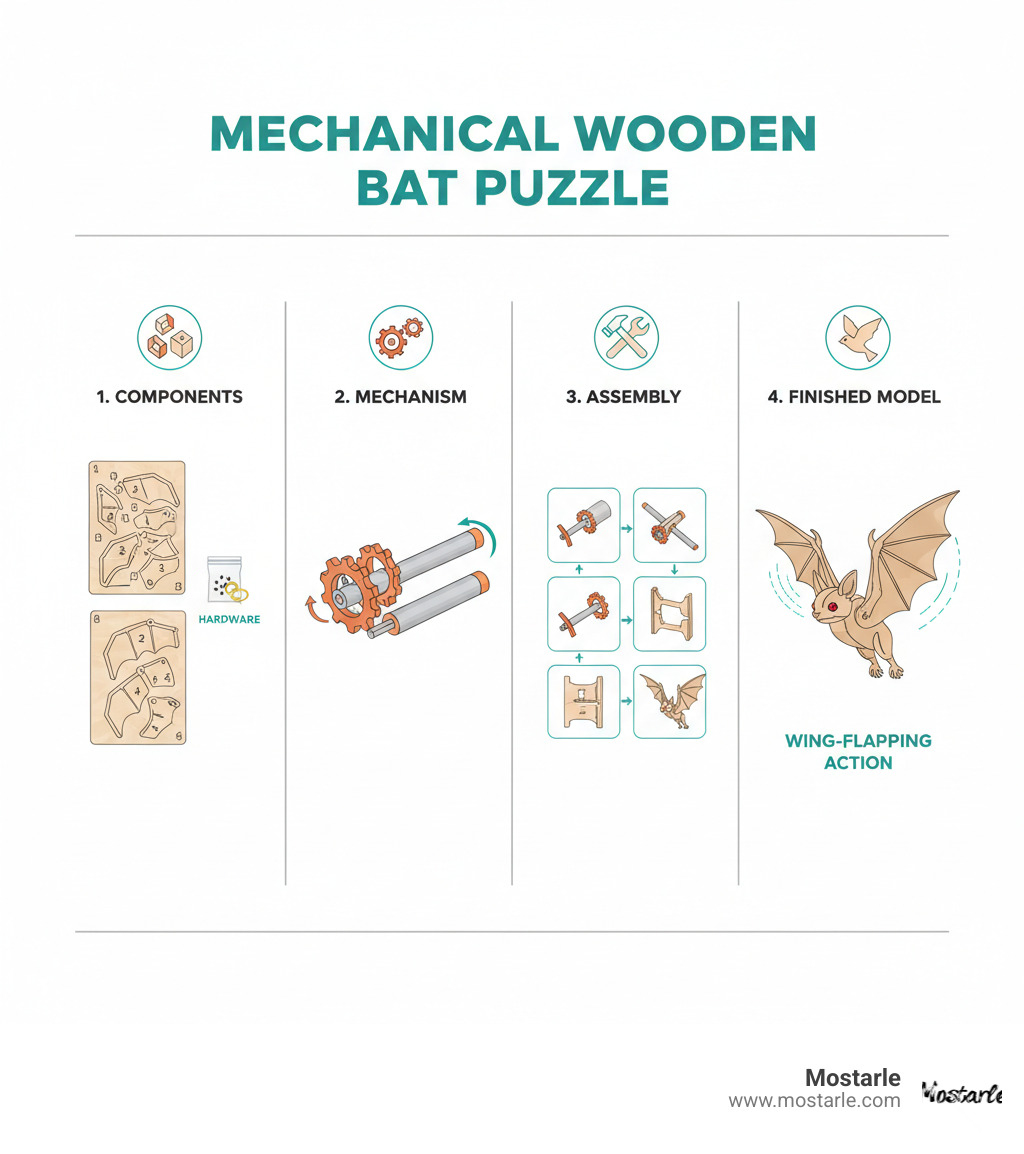
Quick Build Guide for Mechanical Bat Puzzles:
- Unbox and organize - Sort numbered pieces and read instructions
- Build the core mechanism - Assemble gears, axles, and motor system
- Construct the bat body - Connect frame pieces using mortise and tenon joints
- Attach moving wings - Link wing structures to central gear mechanism
- Test and display - Verify wing movement and mount your finished bat
These eco-friendly birch plywood kits require no glue thanks to precision laser cutting. Assembly times range from 20 minutes for simple 8-piece models to 10-12 hours for complex designs with over 600 pieces.
The most captivating feature? Your finished bat actually flaps its wings. As one designer noted, "This little creature flap its wings in a most convincing manner" - creating what feels like "a horrible red eyed flying rodent to call your very own."
Whether you choose a basic complexity level 1 model or challenge yourself with a professional-grade build, these puzzles offer the perfect blend of problem-solving and artistry. You're not just following instructions - you're bringing a wooden creature to life.
Gearing Up: What You'll Find Inside the Box
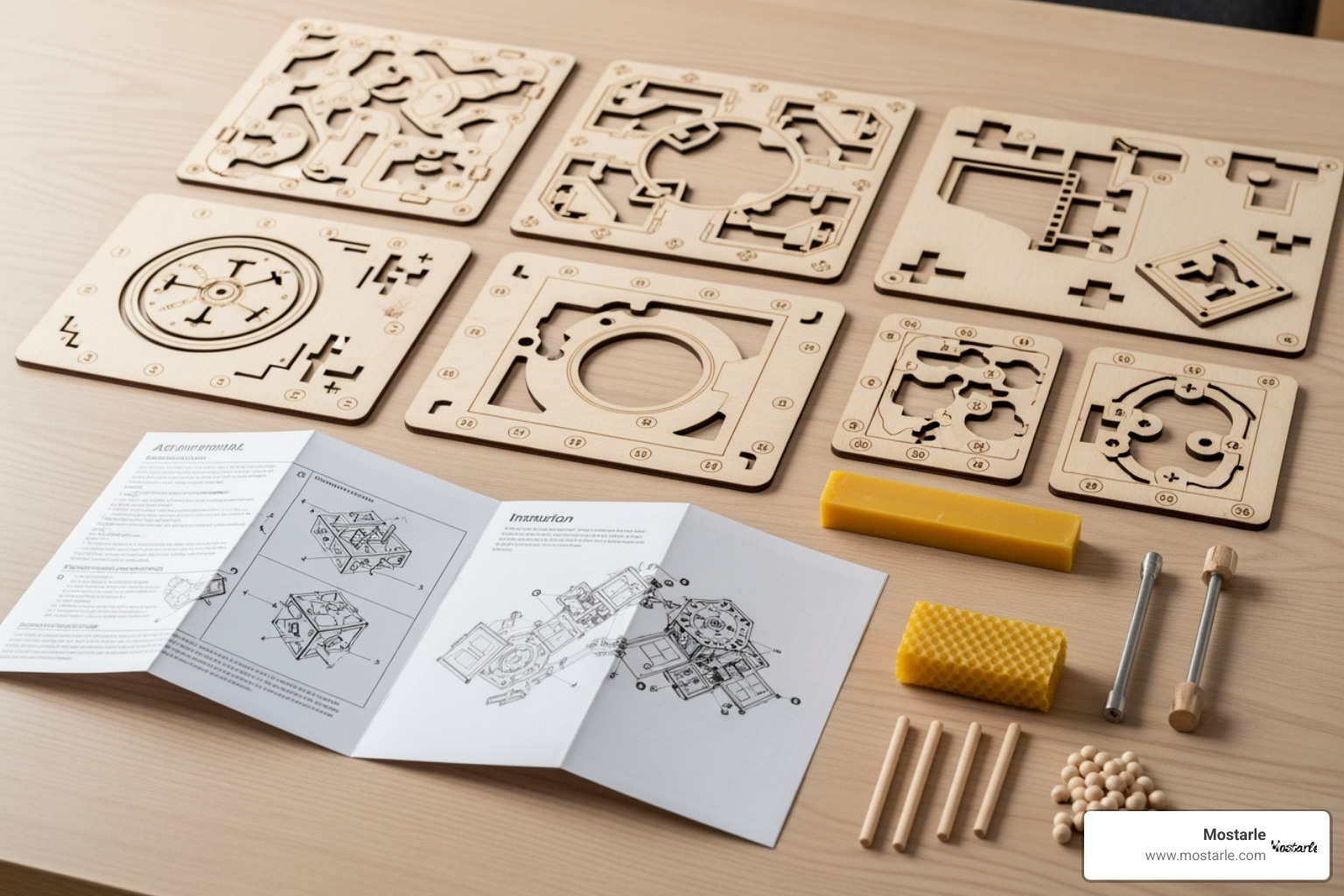
There's something magical about opening your first mechanical 3D wooden puzzle bat kit. Inside that compact box lies everything you need to create a moving masterpiece - and honestly, it's pretty amazing how much engineering fits into such a neat package.
The star of the show is the laser-cut plywood sheets. These aren't just any wooden pieces - they're precision-cut from high-quality, eco-friendly birch plywood. Each piece is numbered, which takes the guesswork out of assembly. The laser cutting is so accurate that everything fits together like a glove, no glue required.
Your kit also includes illustrated instructions that become your best friend during the build. These step-by-step guides show exactly how each piece connects and how the mechanical magic happens. Many manufacturers also provide downloadable PDFs online, which is handy if your paper instructions get a bit worn during construction.
Don't be surprised to find a small sheet of sandpaper tucked in there. While the laser cutting is incredibly precise, sometimes tiny rough edges need a gentle touch. A quick sand ensures everything moves smoothly when your bat starts flapping its wings.
The wax for gears might look insignificant, but it's crucial for bringing your creation to life. Apply this to gear teeth and moving parts, and watch how effortlessly everything turns. It's the difference between a creaky contraption and a gracefully flapping bat.
Those small axles and pins scattered in the box are what make the magic happen. These wooden or durable plastic components connect your gears and create all the rotation. They slide into place perfectly without any adhesives needed.
Depending on your model's complexity, you might also find rubber bands for tension mechanisms, springs, or even small assembly tools. Everything has a purpose in creating your moving sculpture.
The beauty of these kits lies in their glue-free assembly. Using precision laser engraving and mortise & tenon joint structures, every piece locks together with satisfying clicks and gentle pressure. It's engineering at its finest - robust, clean, and completely mess-free.
Before diving into your build, consider checking out our guide on 7 Things to Consider Before Buying Your First 3D Puzzle. It's all about setting yourself up for the most enjoyable building experience possible.
The Ultimate Guide to Your Mechanical 3D Wooden Puzzle Bat
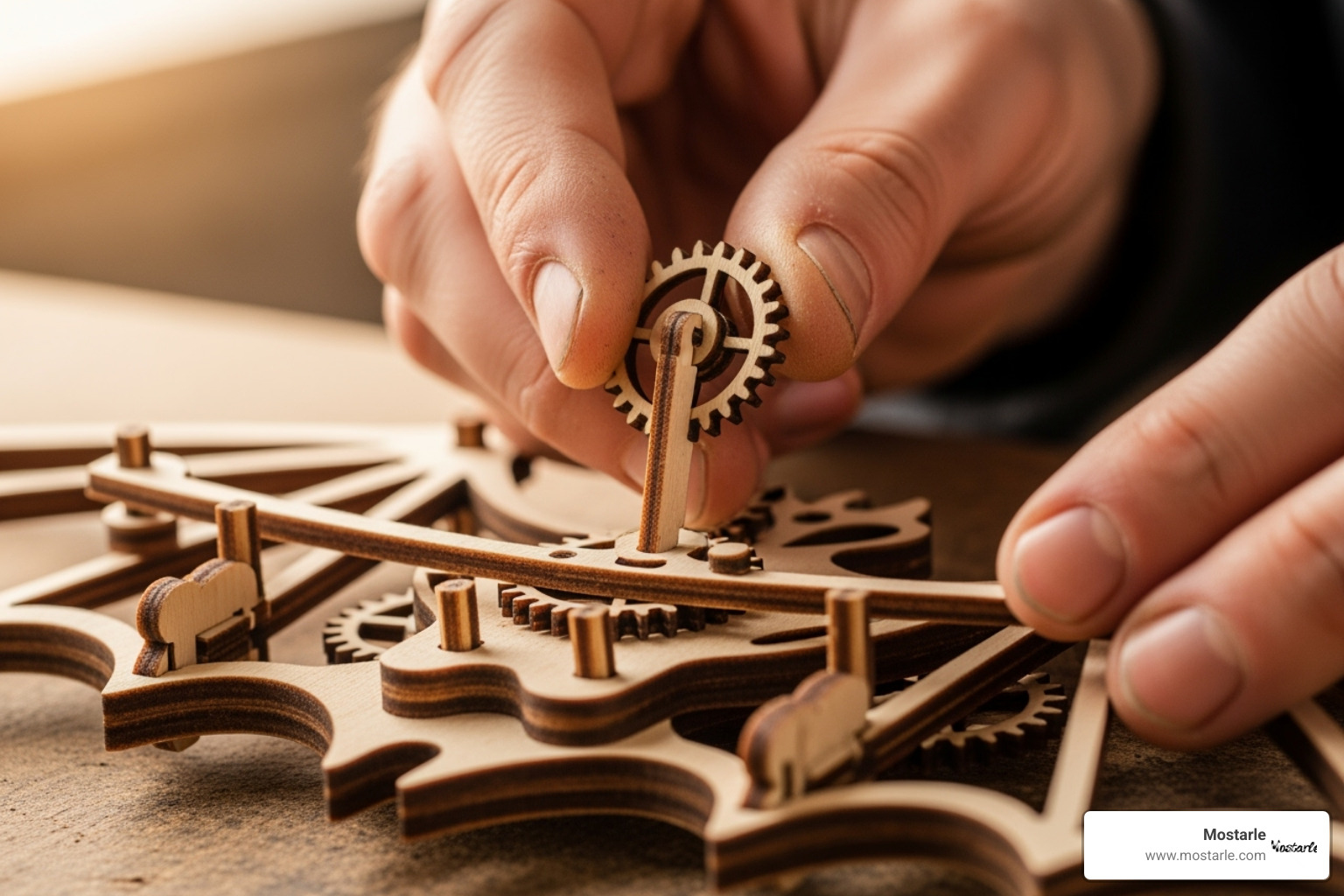
The moment has arrived to transform those carefully organized pieces into a living, breathing work of art. Building your mechanical 3D wooden puzzle bat is more than following instructions - it's about watching ordinary wooden fragments come alive through your hands.
Think of this as a conversation between you and the puzzle. Each piece has its place, each gear its purpose. The magic happens when patience meets precision, creating something that moves with mechanical grace.
Step 1: Pre-Assembly Preparation
Your success starts before you connect a single piece. Like a chef preparing ingredients before cooking, this preparation stage sets you up for a smooth and enjoyable build.
Start by reading through the entire instruction manual. Yes, the whole thing! This gives you the big picture and helps you spot any tricky sections ahead. Some puzzles even offer downloadable PDF versions, which are perfect for zooming in on detailed diagrams.
Next, organize your pieces by number. Gently pop each piece from its laser-cut sheet - they should come away easily with gentle pressure. If a piece feels stuck, try a slight wiggle rather than force. Arrange them in numbered groups using small trays or even just sections of your workspace.
Sand any rough edges using the included sandpaper. While laser cutting is incredibly precise, tiny burrs can sometimes remain. A light sanding ensures smooth assembly and prevents any snags during movement.
The most important step? Apply wax to all gears and moving parts before assembly. This small detail makes the difference between a bat that flutters gracefully and one that struggles to move. Rub the included wax onto gear teeth, axle surfaces, and any parts that will slide or rotate.
Step 2: Assembling the Core Mechanism of your mechanical 3d wooden puzzle bat
Here's where the real magic begins. The core mechanism is the beating heart of your mechanical 3D wooden puzzle bat - the engineering marvel that will bring those wings to life.
Building the gearbox comes first. This sturdy housing holds all your gears in perfect alignment. Each wooden panel interlocks with precision, but pay close attention to orientation. One upside-down piece can throw off the entire mechanism.
Installing gears and axles requires a gentle touch. Slide each axle through its designated hole, then carefully position the gears. Wax you applied earlier? It's about to prove its worth as everything glides into place smoothly.
The power system - whether it's a rubber band motor or hand crank - gives your bat its energy. This is what will eventually make those wings flap with convincing realism. Assemble this component carefully, ensuring proper tension for rubber bands or secure attachment for crank handles.
Test your core mechanism before moving forward. Give the crank a turn or briefly activate the motor. Do the gears rotate smoothly? Any sticking or grinding means it's time to add more wax or check your assembly. Fixing issues now saves frustration later.
Step 3: Building the Bat's Form and Wings
With the mechanical heart beating steadily, it's time to give your creation its distinctive bat form. This stage transforms your gearbox into something recognizably alive.
The body frame wraps around your core mechanism like a custom-fitted suit. These interlocking pieces form the torso, head, and tail, often with intricate details that make your bat look ready to take flight.
Wing assembly is where patience truly pays off. These delicate structures consist of multiple articulated segments that mimic natural flight mechanics. Each wing piece connects to the next in a specific sequence, creating a framework that's both strong and graceful.
Connecting wings to the mechanism is the moment your bat truly comes alive. As you attach the completed wing structures to the central gears or levers, you're creating the link between mechanical motion and natural movement.
Test the wing movement by gently articulating them by hand. They should move freely without resistance. Any sticking points might need additional wax, light sanding, or a quick check against your instructions.
Step 4: Final Touches and Testing your mechanical 3d wooden puzzle bat
You're in the home stretch! These final steps bring everything together and reveal the full glory of your creation.
Attach the display stand or hanging loop to give your bat a proper perch. Whether it's designed to sit proudly on a shelf or hang dramatically from the ceiling, this final component completes the overall presentation.
Conduct a final inspection of all moving parts. Check that every piece sits securely, every joint moves freely, and every gear turns smoothly. This is your quality control moment - the last chance to perfect your creation.
The grand test is what you've been building toward. Activate your bat's mechanism and watch as those wings begin their mesmerizing dance. When everything works perfectly, you'll see why one designer described it as a "little creature flap its wings in a most convincing manner."
Display your masterpiece with pride. You've transformed flat wooden sheets into a moving sculpture that captures the essence of flight itself. Your mechanical 3D wooden puzzle bat now stands as proof that with patience and care, ordinary materials can become extraordinary art.
From Perch to Flight: Assembling the Mechanical Crow Puzzle
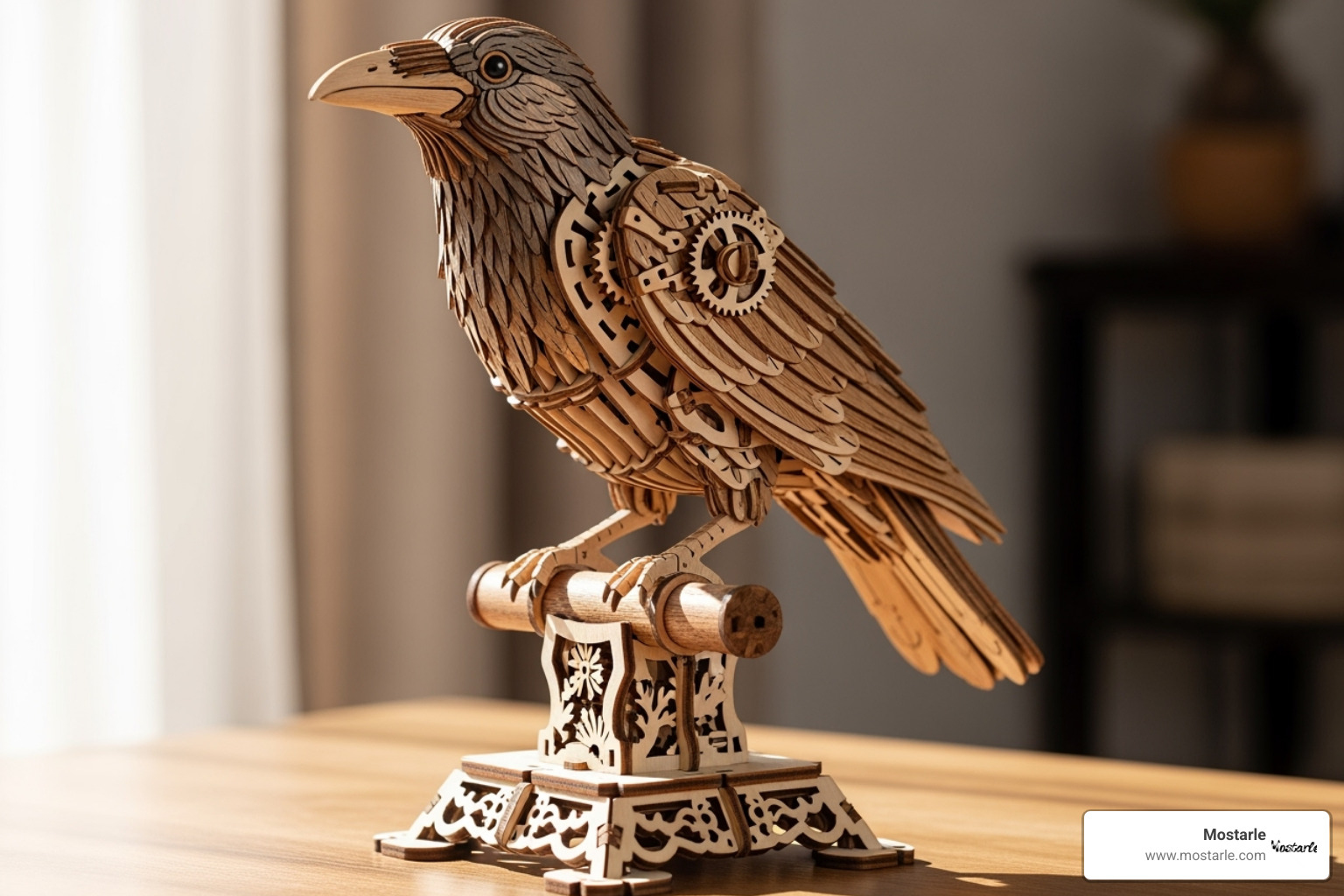
While we've been exploring the fascinating world of the mechanical 3D wooden puzzle bat, there's another captivating creature waiting in the wings - the intelligent crow. Building a mechanical crow puzzle offers its own delightful journey, sharing the same satisfying foundation as our bat but with distinctive twists that make it uniquely rewarding.
Just like with our bat friend, the crow arrives as a collection of precision laser-cut wooden pieces, ready for that wonderful glue-free assembly we've come to love. The familiar rhythm of organizing parts, gentle extraction, and careful interlocking remains, but now we're capturing the essence of one of nature's most clever birds.
The feather details in crow puzzles often showcase remarkable artistry. Instead of the smooth membrane wings of a bat, we find ourselves working with pieces designed to mimic individual feathers. This means carefully layering and aligning dozens of small, overlapping components to create the illusion of a rich, textured feathered coat. It's like painting with wood - each piece adding depth and realism to our creation.
Some advanced crow models bring their own unique challenges through moving parts beyond simple wing flapping. We might find a mechanism for beak movement or head turning, introducing us to smaller, more intricate gear systems. These tiny mechanical marvels require extra attention during assembly - a bit more wax here, careful alignment there - but the payoff is incredible when we see our crow's head turn with lifelike precision.
The perch becomes an integral part of many crow designs, changing what could be a simple stand into part of the artistic puzzle itself. We might find ourselves constructing a stylized tree branch or decorative platform that perfectly complements our crow's form. It's these thoughtful design touches that lift these puzzles from simple models to display-worthy art pieces.
Comparing assembly techniques between bats and crows reveals the beautiful diversity in mechanical puzzle design. While our bat relies on wing-flapping mechanisms using central cams or lever systems, a crow's movements might employ rack-and-pinion gears for head rotation. Each model introduces us to different simple machines and how they create mesmerizing motion from basic wooden components.
The complexity range is just as varied as with bat puzzles - from beginner-friendly models perfect for getting our feet wet to intricate designs that challenge even experienced builders. This variety means there's always a perfect next project waiting, whether we want a relaxing evening build or a weekend-long adventure.
For those wondering about tackling these more complex builds, our guide on How Difficult Are 3D Mechanical Puzzles to Solve offers valuable insights into choosing the right challenge level.
Whether perched proudly on its stand or captured mid-flight, a completed mechanical crow represents the same change we've come to treasure - turning simple wooden fragments into something extraordinary through patience, creativity, and a touch of mechanical magic.
Beyond the Build: The Rewards of Mechanical Puzzles
There's something magical that happens when the last piece clicks into place and your mechanical 3D wooden puzzle bat spreads its wings for the first time. That moment of triumph isn't just about completing a puzzle – it's the culmination of a journey that's been quietly changing your mind along the way.
Building these intricate models offers remarkable cognitive benefits that extend far beyond the crafting table. As we carefully study diagrams and visualize how flat pieces will become three-dimensional creatures, we're actively strengthening our spatial reasoning skills. This mental exercise proves invaluable in countless real-world situations, from reading maps to rearranging furniture to understanding complex instructions.
The focused concentration required for these builds naturally improves our focus. In our distraction-filled world, spending hours absorbed in precise assembly work becomes a form of mental training. We learn to sustain attention, ignore interruptions, and dive deep into detailed work – skills that benefit every aspect of our lives.
Each build presents its own problem-solving challenges too. Despite clear instructions, we'll encounter moments when a gear seems stubborn or a wing joint doesn't want to cooperate. These aren't setbacks – they're opportunities to analyze, experiment, and find creative solutions. We develop patience and persistence while learning to approach problems from different angles.
The physical aspects matter just as much. Carefully extracting delicate pieces, sanding rough edges smooth, and fitting tiny gears develops our dexterity and hand-eye coordination. It's therapeutic work that connects us to the tactile pleasure of creating something with our hands.
But perhaps the greatest reward is the change itself. We start with ordinary wooden sheets – simple, forgotten fragments that seem unremarkable. Through patience and creativity, we breathe life into these materials, creating a beautiful decorative art piece that moves and captivates. This perfectly embodies Mostarle's philosophy that creativity truly has no limits.
Your finished model becomes more than just a puzzle – it's a conversation starter, a testament to your skills, and a unique addition to your home décor. The natural wood finish has its own beauty, but customization with paint or stain opens up endless possibilities. Imagine a dramatic black crow with glossy feathers or a mysterious bat with subtle silver highlights.
The building process itself can be incredibly healing. The methodical steps, steady progress, and focused activity create a meditative state that helps us unwind from daily stress. For more insights into this therapeutic aspect, explore The Healing Power of Mechanical Puzzles.
When it comes to displaying your masterpiece, creativity knows no bounds. Place your bat on a bookshelf where its wings can catch the light, or create a themed display with other decorative elements. A completed crow looks magnificent perched on a desk as a unique workspace companion. For special occasions, these models make extraordinary centerpieces that guests will remember long after the event ends. You might even hang your bat from a ceiling fixture to create the illusion of flight, or gift a completed puzzle to someone special, sharing both your craftsmanship and the joy of mechanical artistry.
Frequently Asked Questions about Mechanical Bird and Bat Puzzles
We love hearing from fellow builders around the world, and certain questions come up again and again. Let's explore the most common curiosities about these fascinating mechanical 3D wooden puzzle bat and bird creations.
How long does it take to build one?
The beauty of these puzzles lies in their incredible variety - some are perfect for a quick afternoon project, while others become weekend adventures that stretch across multiple sessions.
Simple models can surprise you with how quickly they come together. Take those charming 8-piece bat models - you can have wings flapping in just 20-30 minutes. These are fantastic when you want that instant gratification or when introducing someone new to the hobby.
Complex models are where things get really exciting (and time-consuming). The most intricate designs can easily demand 8-12+ hours of focused assembly time. Some record-breaking models with over 1200 pieces have been known to take dedicated builders 14-16 hours to complete. Even medium-complexity puzzles with around 200 pieces typically require about 4-5 hours of careful work.
The piece count tells much of the story. You'll find models ranging from under 10 to over 1000 pieces, and naturally, more pieces mean more assembly time. But it's not just about quantity - the intricacy of the mechanisms and the precision required for proper gear alignment can add significant time to any build.
Most manufacturers use difficulty levels ranging from 1 to 5, which gives you a good sense of what you're signing up for. A level 1 mechanical 3D wooden puzzle bat might be your relaxing evening project, while a level 5 model becomes your weekend challenge that you'll tackle bit by bit.
Do I need glue or special tools?
Here's one of the most delightful aspects of modern wooden puzzle design - you can start building straight out of the box without hunting for additional supplies.
The glue-free design is truly ingenious. Through precision laser cutting and clever engineering, these puzzles use interlocking parts that create remarkably sturdy structures without any adhesives. Many rely on traditional mortise and tenon joints - a time-tested woodworking technique where carefully shaped projections fit perfectly into corresponding slots.
Your kit comes with everything essential: fine-grit sandpaper for smoothing any rough edges and wax for lubricating all those gears and moving parts. This wax application is crucial for ensuring your bat's wings flap smoothly and effortlessly.
While not absolutely necessary, many builders find tweezers incredibly helpful for handling tiny components or fitting pieces into tight spaces. They're not included, but if you have a pair lying around, they can make the more delicate assembly work much easier. The precision of the laser cutting means you won't need any specialized woodworking tools - just patience and careful attention to the instructions.
What are these puzzles made of?
The materials behind these puzzles reflect a commitment to both quality and environmental responsibility that makes the building experience even more satisfying.
Eco-friendly materials form the foundation of quality puzzle kits. Most reputable manufacturers use high-quality birch plywood sourced from responsibly managed forests. This isn't just good for the planet - birch plywood offers the perfect combination of strength, fine grain, and consistency needed for precision cutting.
The laser-cut precision technology creates those incredibly clean edges and perfectly accurate dimensions that make glue-free assembly possible. Every gear tooth, every joint, every delicate wing component is cut with exacting standards that ensure smooth operation and proper fit.
Choosing wooden puzzles means embracing a truly sustainable hobby. Unlike disposable alternatives, these models are built to last, becoming treasured display pieces that you'll admire for years. The natural wood finish is beautiful on its own, but it also accepts paint or stain beautifully if you want to customize your creation.
When you're working with these materials, you're handling something that feels substantial and real. The wood has a pleasant texture, and there's something deeply satisfying about the way the pieces fit together with that perfect wooden "click" that tells you everything is aligned just right.
Conclusion
What a journey it's been! From those first moments of carefully unboxing flat wooden sheets to watching our mechanical 3D wooden puzzle bat spread its wings and flap with mesmerizing grace - we've experienced something truly magical. There's something deeply satisfying about changing ordinary fragments into extraordinary moving sculptures, proving that creativity really does have no limits.
This is exactly what we believe in at Mostarle. We've seen how simple pieces of wood can become captivating works of art through patience, precision, and a little bit of mechanical magic. Just like we transform everyday hardware into remarkable creations, these wooden puzzle kits show us that the most beautiful things often start as the most humble materials.
Building these puzzles isn't just about following instructions - it's about sharpening our minds, improving our focus, and developing those problem-solving skills we use every day. Whether we spent 20 minutes on a simple bat or invested hours into a complex crow with intricate feather details, each build teaches us something new about ourselves and what we're capable of creating.
The real magic happens when we activate that mechanism for the first time. Watching our wooden creature come alive, seeing those wings move with convincing realism, or observing a crow's beak open and close - these moments remind us why we love creating things with our hands. Our finished models become more than just decorations; they're proof of our dedication and skill.
Ready to find what other mechanical wonders await? We'd love for you to explore more about this fascinating hobby. Learn everything to know about mechanical puzzles and uncover the endless possibilities that are waiting for your creative touch.
Every master builder started with their first puzzle. Your journey into mechanical wooden sculptures is just beginning!