Expert Support

The Ultimate Challenge A Deep Dive into Precision Metal Puzzles
Why Difficult Metal Puzzles Captivate Problem-Solvers Worldwide
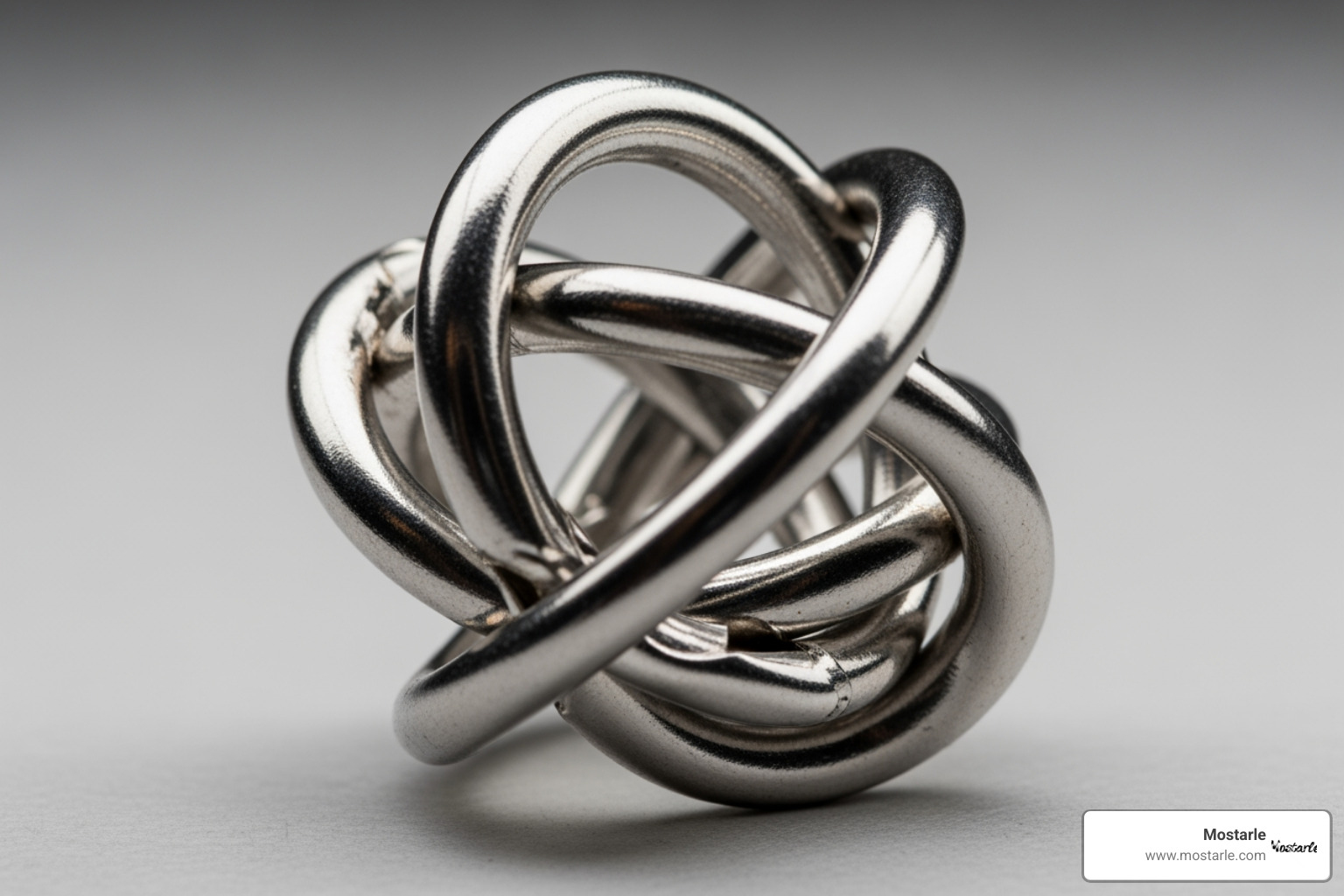
Difficult metal puzzles represent the pinnacle of mechanical brain teasers, offering a tactile and visual challenge that has captivated puzzle enthusiasts for centuries. Unlike screen-based games or paper puzzles, these precision-engineered objects demand spatial reasoning, patience, and creative thinking to open up their secrets.
Quick Guide to Difficult Metal Puzzles:
- Difficulty Levels: Rated from Level 1 (Fun) to Level 6 (Grand Master)
- Common Types: Interlocking puzzles, sequential movement puzzles, dismess puzzles
- Top Difficulty Examples: Puzzles with high complexity ratings, often requiring dozens of moves
- Materials: Typically zinc alloy, stainless steel, or chrome-plated aluminum
- Time to Solve: Level 6 puzzles can take hours, days, or even weeks
- Where to Buy: Specialty puzzle stores, online retailers, hobby shops
The satisfying weight of metal in your hand. The quiet click of pieces shifting into place. The seemingly impossible challenge staring back at you from your desk. These are the hallmarks of precision metal puzzles.
These mechanical marvels have evolved from ancient dismess toys into sophisticated engineering feats. Many popular brands use standardized difficulty ratings, making it easier for solvers to find their perfect challenge. The best puzzles combine beautiful design with deceptive complexity—what looks simple often hides dozens of precise moves.
In this guide, we'll explore what separates truly difficult metal puzzles from simple brain teasers, showcase some of the most challenging designs ever created, and reveal the cognitive benefits that come from wrestling with these mechanical enigmas. Whether you're drawn to a Grand Master-rated challenge or an award-winning design, you'll find why these objects transform ordinary metal into extraordinary challenges.
What Makes a Metal Puzzle a True Test of Wits?
When we talk about difficult metal puzzles, we're referring to more than just a tricky toy; we're delving into a world of intricate engineering and deceptive design. What lifts a simple brain teaser to a true test of wits? It often comes down to a combination of clever design, precision manufacturing, and the psychological traps laid out by their creators.
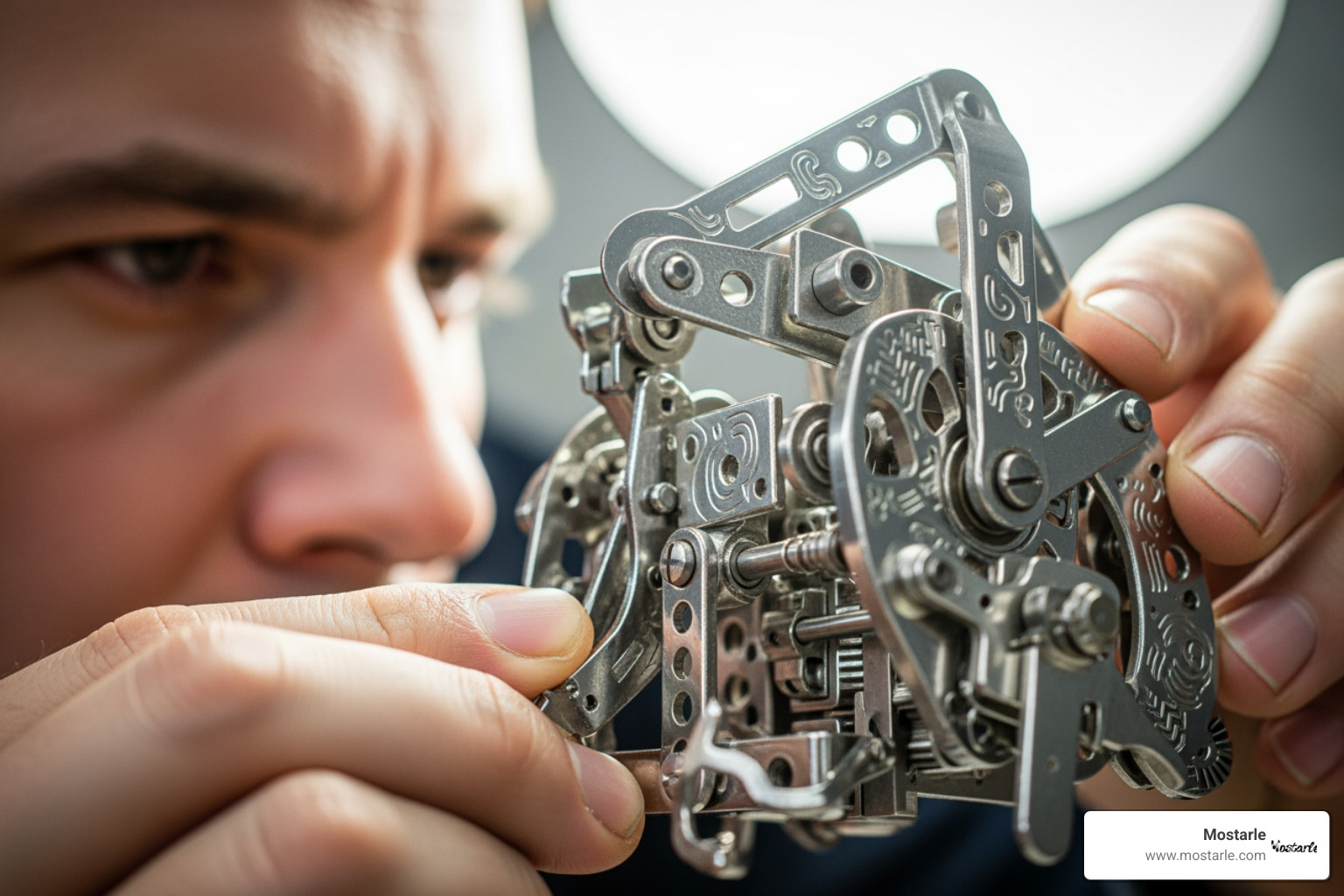
One of the primary factors contributing to difficulty is design complexity. These puzzles aren't solved by brute force; they demand a keen eye for detail and an understanding of spatial relationships. The solution is rarely obvious, requiring us to think several steps ahead and often backtrack when an initial approach proves fruitless. Many puzzles feature non-obvious solutions, where the path to success is hidden or counter-intuitive. Sometimes, designers intentionally incorporate "red herrings"—elements that seem important but are actually irrelevant, designed to mislead us and prolong the challenge. As we found from analyzing complex puzzle constraints, sometimes the most obvious visual cues are merely for assembly, not for the logical solution itself.
The materials used in these puzzles also play a crucial role in both their difficulty and durability. Typically, difficult metal puzzles are crafted from robust materials such as zinc alloy, stainless steel, aluminum, or brass, often finished with chrome or nickel plating. These metals provide a satisfying weight and a smooth, precise feel that is essential for complex mechanisms. The durability of these materials ensures that the fine tolerances and intricate movements can withstand repeated attempts without warping or breaking, which is vital for puzzles that might take hours, days, or even weeks to solve. This precision in manufacturing is part of what makes the puzzle challenging; even a millimeter of misalignment could prevent a solution.
Difficulty ratings are a common way to gauge the challenge. For example, many well-known puzzle makers use a scale from Level 1 (Fun) to Level 6 (Grand Master). But how do these ratings translate to the actual challenge?
- Level 1 (Fun): Often solvable in minutes, great for beginners.
- Level 2 (Easy): Might take a bit longer, perhaps 15-30 minutes.
- Level 3 (Normal/Advanced): Requires more thought and persistence, possibly an hour or two. Some gear-based puzzles are good examples of this level.
- Level 4 (Hard): These puzzles start to demand significant problem-solving skills and can take several hours over multiple sessions. Puzzles with multiple interlocking, rotating pieces often fall into this category.
- Level 5 (Expert/Extreme): These are serious challenges, often requiring days of dedicated effort. Puzzles with complex internal mazes or spiral movements are frequently rated at this level.
- Level 6 (Grand Master): The pinnacle of difficulty. The most complex interlocking and sequential movement puzzles are rated Level 6. These can truly test our limits, taking days, weeks, or even longer to conquer. They demand exceptional spatial reasoning, an understanding of sequential movements, and immense patience.
Finding a 3D puzzle that offers the right level of challenge is key to an enjoyable experience. We want to be challenged, but not overwhelmed. It's about slowly building our skills and understanding the nuances of different puzzle types. If you are curious about how these difficulty scales compare across different mechanical puzzles, the overview on mechanical puzzles is a useful neutral reference.
Unique Design Mechanisms
Beyond mere complexity, specific design elements and mechanisms are engineered to amplify the difficulty of these metal marvels. These are the secrets that make a puzzle truly profound.
- Hidden Mechanisms: Some puzzles contain internal components or movements that are not immediately visible. We might need to manipulate the external pieces in a specific way to reveal these hidden elements, adding a layer of mystery and requiring us to explore every possible interaction.
- Sequential Movement: Many difficult metal puzzles, particularly dismess and interlocking types, rely on a precise sequence of moves. Some puzzles challenge us to remove maze-like rings from a spherical cage, and often, reassembling it is even harder than taking it apart. One wrong step or an incorrect order of operations can lead us back to the starting point, demanding meticulous planning and memory.
- Rotational Parts: Puzzles featuring rotating elements often require us to align internal pathways or open up hidden catches through precise turns. The interaction between multiple rotating pieces, sometimes on different axes, can create a bewildering array of possibilities.
- Gravity Pins and Internal Mazes: Some puzzles incorporate gravity-dependent mechanisms or internal mazes that guide a pin or ball through a labyrinthine path. These add a physical dimension to the challenge, where the orientation of the puzzle becomes as important as the manipulation of its parts.
These mechanisms highlight that understanding the fundamental principles of mechanical puzzles is essential to solving them. To learn more about these fascinating devices, we recommend exploring Everything to know about mechanical puzzles.
The Psychology of Difficulty
The challenge of difficult metal puzzles isn't just about physical manipulation; it's deeply rooted in psychological principles that test our perception, patience, and problem-solving strategies.
- Misdirection: As mentioned, puzzle designers are masters of misdirection. They might make a certain path seem obvious, only for it to lead to a dead end. Or they might embed clues in plain sight that we overlook because we're focused on a more complex (and incorrect) approach. Some cross-shaped puzzles are renowned for their deceptive simplicity, making us believe the solution is straightforward when it's anything but.
- Required Dexterity: While not always immediately apparent, many advanced metal puzzles demand a surprising level of fine motor skill and dexterity. The precise movements required to disengage or align pieces often necessitate a delicate touch, challenging our hand-eye coordination as much as our intellect.
- Spatial Reasoning Demands: At their core, these puzzles are a workout for our spatial reasoning abilities. We must visualize how pieces interact in three dimensions, predict their movements, and understand how rotations and shifts affect the overall structure. This mental gymnastics is a key aspect of their difficulty.
- Patience as a Factor: Perhaps the most significant psychological hurdle is patience. Solving a Level 6 puzzle can be a long, arduous process filled with frustration and false starts. The ability to persist, to step away and return with fresh eyes, and to resist the urge to force pieces is paramount. It's a test of mental fortitude as much as cognitive skill.
For a deeper dive into the mental workout these puzzles provide, check out our article on How difficult are 3D mechanical puzzles to solve.
A Showcase of Exceptionally Difficult Metal Puzzles
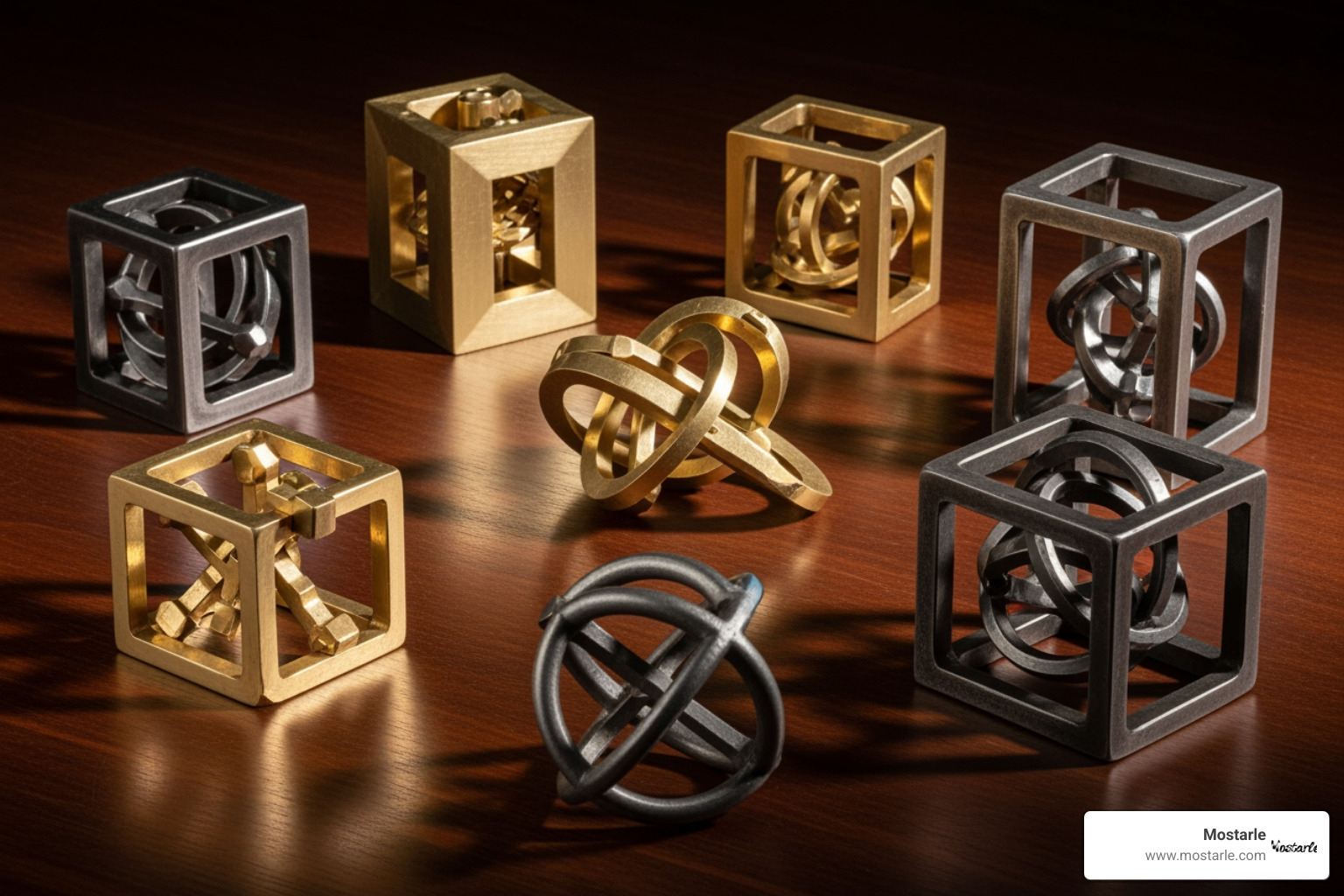
For those of us who crave the ultimate cerebral workout, certain difficult metal puzzles stand out as benchmarks of ingenuity and frustration (in the best possible way!). While many brands craft incredible challenges, we'll focus on the types and concepts that define these exceptionally complex designs, drawing inspiration from highly-rated examples.
The Grand Master Interlocking Sphere
Imagine a puzzle where the objective is to separate internal pieces from a spherical cage, but the pathways are so convoluted that they resemble a three-dimensional maze. This is the essence of the Grand Master Interlocking Sphere. Puzzles with this type of design exemplify this category.
- Description: These puzzles often feature a smooth, metallic outer shell (the "spherical cage") that encases two or more intricately shaped internal components. These inner pieces are frequently maze-like, with protrusions and indentations designed to catch on one another or on the interior of the sphere.
- Challenge: The true difficulty lies in the fact that there's no obvious opening or single point of separation. We must typically manipulate the internal pieces through a series of twists, turns, and precise alignments, often requiring dozens of sequential moves, each one opening up the potential for the next. Reassembly can be even more daunting, as we must reverse-engineer the solution without accidentally locking pieces back into an incorrect position. A prime example is a puzzle where the goal is to extract two maze-like rings from a spherical cage.
- Difficulty: These are consistently rated at the highest levels, often Level 6/6 (Grand Master). They demand exceptional spatial visualization and a systematic approach. For a look at some other top-tier challenges, see What are the top 5 most challenging 3D metal puzzles of all time.
The Deceptively Simple Interlocking Cross
Sometimes, simplicity in form belies incredible complexity in function. The interlocking cross puzzle is a perfect illustration of this principle, earning its reputation as a formidable challenge.
- Description: This puzzle typically consists of four identical or very similar metal pieces that interlock to form a cross shape. The pieces are often smooth, with subtle curves or angles that make their separation enigmatic.
- Challenge: The primary challenge is to find the single, precise orientation and movement that allows the four pieces to separate. There are no obvious catches or slides. Instead, we must find a very specific, often counter-intuitive, path where all pieces can simultaneously clear each other. It's a test of subtle manipulation and keen observation, as even the slightest angle can prevent separation. Once disassembled, reassembling it presents an equally perplexing task.
- Difficulty: Widely regarded as a very difficult puzzle, its deceptive appearance often leads solvers to underestimate its complexity. It demands extreme patience and a willingness to explore seemingly impossible angles.
The Sequential Movement Dismess Puzzle
Dismess puzzles are a classic category, but when combined with sequential movement and precision metal, they become incredibly challenging. Puzzles with three or more intertwined pieces exemplify this.
- Description: This type of puzzle typically involves three or more intertwined metal pieces that appear inextricably linked. The pieces might be rings, rods, or complex shapes, designed to snag and block each other's movement.
- Challenge: The solution doesn't involve brute force or a single "trick." Instead, it requires us to execute a long, specific sequence of precise movements, rotations, and slides to free the pieces. Each move must be exactly right to create the space for the next, and a single misstep can reset our progress, forcing us to start over or retrace a long path. The subtle tolerances of the metal pieces mean that the correct sequence often feels like magic when found.
- Difficulty: Often rated at Level 6 (Grand Master), these puzzles are a true test of memory, spatial planning, and meticulous execution. They embody the "art of dismess," pushing us to visualize complex paths and commit them to memory. To learn more about this specific type of challenge, explore The art of disentanglement: Solving intricate metal ring puzzles.
The Hourglass-Shaped Enigma
Combining a neat form with devilish function, the hourglass-shaped puzzle represents another peak in difficult metal puzzles.
- Description: This puzzle typically takes on an hourglass shape, often with internal components that are not fully visible. The design might involve interlocking halves or an inner mechanism that needs to be manipulated through the outer shell. These puzzles are celebrated for their intricate internal workings.
- Challenge: The core challenge often involves a combination of rotational and linear sequential movements within a highly confined space. We must typically steer internal structures, often by rotating one part while simultaneously shifting another, to create a path for separation. The puzzle's internal geometry is designed to create numerous false paths and dead ends, requiring a deep understanding of its three-dimensional structure and how pieces interact when out of sight.
- Difficulty: These are consistently ranked at the "Grand Master" (Level 6) difficulty level. They demand exceptional spatial awareness, an ability to think abstractly about hidden mechanics, and significant patience to uncover the correct series of precise maneuvers.
The Cognitive Rewards of Cracking the Code
Engaging with difficult metal puzzles is more than just a pastime; it's a powerful workout for our brains, offering a wealth of cognitive and emotional benefits. The journey from perplexity to triumph is paved with significant personal growth.
One of the most immediate benefits is improved problem-solving skills. Each puzzle presents a unique problem that requires logical deduction, pattern recognition, and creative thinking to overcome. We learn to break down complex challenges into smaller, manageable steps, a skill that translates directly into everyday life.
These puzzles also significantly improve spatial reasoning. As we manipulate the metal pieces, we're constantly visualizing how they fit together, how they move in three dimensions, and what impact a rotation or slide will have on the overall structure. This strengthens our ability to understand and steer physical spaces.
Beyond the purely intellectual, solving metal puzzles can be a fantastic tool for stress relief and mindfulness. The focused concentration required to solve a puzzle can act as a form of meditation, drawing our attention away from daily worries and into the present moment. This immersive experience helps us achieve a "flow state," where time seems to disappear, and we are fully engaged in the task at hand. Our article on Practicing mindfulness: Why 3D puzzles make for a valuable tool digs deeper into this aspect. This mindful engagement can have a profound impact on our well-being, contributing to the healing power of mechanical puzzles.
Furthermore, these challenges are excellent for boosting creativity and perseverance. When initial attempts fail, we're forced to think outside the box, to try unconventional approaches, and to not give up. This iterative process of trial, error, and breakthrough fosters a resilient mindset and encourages innovative solutions. As we've explored in Tickle your brain: 3D puzzles can ignite your cognitive skills and spark creativity, the mental stimulation is undeniable.
Finally, there's a strong connection to STEM education. Metal puzzles are miniature lessons in engineering, physics, and design. They teach us about tolerances, leverage, friction, and the neat simplicity (or complexity) of mechanical systems. By engaging with these puzzles, we implicitly develop an understanding of mechanics and fundamental scientific principles, making them a fun and engaging way to promote STEM learning. Find more about this connection in The connection between 3D metal puzzles and STEM education.
Mastering the Challenge: Tips for Solving Your Puzzle
Facing a particularly difficult metal puzzle can be daunting, but with the right approach, even the most intricate designs can be conquered. We've compiled some expert tips to help you on your puzzling journey, turning frustration into fulfillment.
- Examine Thoroughly: Before making any moves, take time to inspect the puzzle from all angles. Feel its weight, identify seams, observe how pieces might interact. Look for any subtle markings or variations that could be clues.
- Understand the Goal: Is it to separate pieces, disentangle them, or assemble them? Clearly defining the objective helps focus your efforts and prevents wasted motion.
- Don't Use Force: Metal puzzles are designed for precision. If something isn't moving easily, you're likely trying the wrong approach or sequence. Forcing pieces can damage the puzzle or make it even harder to solve. Gentle manipulation is key.
- Take Breaks: It's easy to get tunnel vision. If you're feeling stuck or frustrated, step away. A fresh perspective after a break can often reveal solutions you overlooked. This is a common strategy for Level 6 puzzles that can take days or weeks.
- Work Backwards (If Possible): For some assembly puzzles, if you know the final form, imagining how it comes apart can sometimes illuminate the path to assembly, and vice-versa for dismess puzzles.
- Document Your Progress: For exceptionally difficult sequential movement puzzles, it can be helpful to sketch the state of the puzzle or even write down the sequence of moves you've tried. This prevents repeating mistakes and helps you visualize the solution path.
- Experiment Systematically: Instead of random wiggling, try to isolate variables. If a piece can move in three directions, test each direction fully before moving to another piece.
- Listen and Feel: The subtle clicks, scrapes, or changes in resistance can provide crucial auditory and tactile feedback about how pieces are interacting.
- Accept the Process: The joy is often in the journey, not just the destination. The satisfaction of finally solving a complex puzzle is immense, but the mental exercise along the way is equally valuable.
For more detailed strategies on tackling intricate brain teasers, we encourage you to read our 9 tips for solving difficult 3D puzzles.
Frequently Asked Questions about Difficult Metal Puzzles
We often hear common questions from fellow puzzle enthusiasts, especially when they're seeking their next grand challenge. Here are some of the most frequent inquiries about difficult metal puzzles.
What are the main types of metal puzzles?
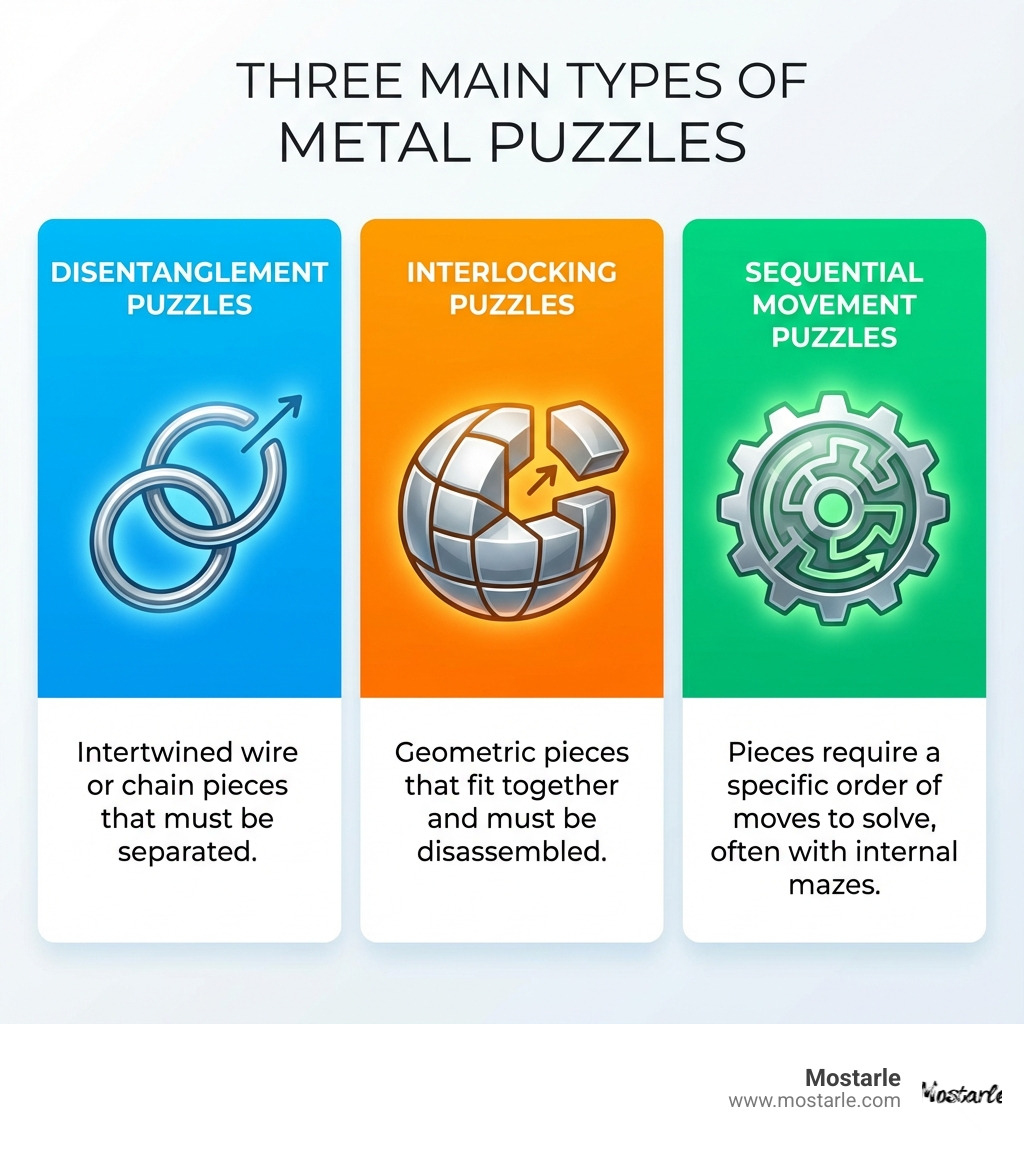
Metal puzzles come in various forms, each offering a distinct challenge:
- Dismess Puzzles: These are perhaps the most classic type, involving two or more intertwined metal pieces (often rings or wires) that we must separate, and then reassemble.
- Interlocking Puzzles: These consist of multiple pieces that fit together to form a specific shape, like a cross or sphere. The challenge is often in finding the correct order and orientation to assemble or disassemble them.
- Sequential Move Puzzles: These require a precise series of steps to solve, where each move enables the next. The most difficult puzzles often fall into this category.
- Puzzle Boxes: While often made of wood, metal versions exist that require a sequence of manipulations to open a hidden compartment.
- Assembly Puzzles: These involve putting together multiple pieces to form a complete object, often a three-dimensional shape.
Where can I find high-quality difficult metal puzzles?
Finding the right puzzle is crucial for a satisfying experience. We recommend looking in a few key places:
- Mostarle's Online Store: We pride ourselves on crafting unique metal creations that offer both aesthetic beauty and intellectual challenge.
- Specialty Puzzle Stores: Many online retailers specialize exclusively in puzzles, offering a wide selection of brands and difficulty levels.
- Online Marketplaces: Large platforms are great resources where you can often find a wide variety of difficult metal puzzles. Be sure to check customer reviews and difficulty ratings to find a quality product.
- Hobby Shops: Local hobby shops often carry a selection of unique brain teasers and can provide personalized recommendations.
How long does it take to solve a Level 6 puzzle?
The time it takes to solve a Level 6 puzzle, the "Grand Master" level, varies dramatically from person to person. There's no single answer, and that's part of the appeal!
- Individual Skill and Experience: A seasoned puzzle veteran might crack a Level 6 puzzle in a few hours of intense focus, while a newcomer could struggle for weeks or even months.
- Complexity of the Puzzle: Even within Level 6, some designs are inherently more intricate than others. Puzzles with very long sequential solutions or highly deceptive mechanisms will naturally take longer.
- Patience and Persistence: As we discussed, these puzzles demand immense patience. If you're willing to take breaks, return with fresh eyes, and systematically explore possibilities, you're more likely to succeed.
- The Journey is the Reward: The exact time isn't the most important factor. The process of engaging our minds, overcoming frustration, and experiencing the "aha!" moment is what makes difficult metal puzzles so rewarding. It's not a race; it's a personal intellectual adventure.
Conclusion
The world of difficult metal puzzles offers an unparalleled blend of artistic design, mechanical ingenuity, and profound intellectual challenge. From the subtle clink of interlocking pieces to the triumphant separation of an intricate dismess, these puzzles captivate our minds and hone our cognitive abilities. They are not merely objects; they are experiences, teaching us patience, boosting our spatial reasoning, and igniting our creative problem-solving skills.
At Mostarle, we understand the beauty of changing the ordinary into the extraordinary. Just as we craft unique models from everyday hardware like nuts and bolts, we appreciate the philosophy behind these metal puzzles: finding immense complexity and ingenuity in seemingly simple materials. It's a testament to the idea that creativity truly has no limits, and that even the smallest fragments can be assembled into remarkable, thought-provoking pieces.
So, whether you're a seasoned puzzler seeking your next Grand Master challenge or a curious newcomer ready to start on a journey of mental exploration, difficult metal puzzles awaits. Ready to explore mechanical marvels and sharpen your mind? Understanding 3D metal puzzles is the perfect place to start your journey.