


Projecting the Past: Our Take on the Vitascope Mechanical Gear
Why the Vitascope Mechanical Gear Still Captivates Us Today
The vitascope mechanical gear system represents one of cinema's most ingenious mechanical innovations - a complex arrangement of gears, sprockets, and tension devices that brought moving pictures to life over a century ago.
Key Components of Vitascope Mechanical Gear:
- Hand-crank generator - Powers the entire mechanism without electricity
- Intermittent motion system - Creates the stop-start movement needed for film projection
- Sprocket wheels - Engage film perforations for precise positioning
- Tension device - Maintains proper film alignment and prevents damage
- Adjustable lens system - Focuses projected images
This mechanical marvel transformed entertainment forever. In 1896, the first Vitascope Hall opened in Buffalo, NY, charging just 10 cents admission for audiences to witness the magic of moving pictures. The original patent describes an intricate system designed to move film smoothly while preventing the blurring that plagued earlier devices.
What makes the vitascope mechanical gear so fascinating isn't just its historical importance - it's how this analog technology solved complex problems through pure mechanical ingenuity. No computers, no digital processing, just precisely engineered gears working in harmony.
Today's hands-on models recreate this mechanical poetry, allowing you to build and operate your own piece of cinema history. It's more than nostalgia - it's a hands-on lesson in engineering brilliance that still works perfectly after more than 125 years.
The Dawn of Cinema: A Revolution in Motion
Picture this: it's the 1830s, and people are absolutely mesmerized by spinning discs that somehow make drawings come alive. Long before the vitascope mechanical gear would revolutionize entertainment, inventors were already chasing the dream of moving pictures.
The magic started with a brilliant Belgian mathematician named Joseph Plateau. Working alongside Dr. Stampfer in Vienna, Plateau created something called the Phenakistoscope in the early 1830s. This clever device used two spinning discs - one showing different phases of motion, another with slots to peek through. The secret? Our eyes hold onto images for a split second after they vanish, and when still pictures flash by quickly enough, our brain stitches them together into smooth motion.
What makes Plateau's story even more remarkable is that he kept experimenting with optical devices even after losing his sight completely. In 1849, he built a larger version called the 'Diable Soufflant' (Devil Blowing up Fire). His work laid the foundation for everything that followed, including the intermittent shutter principle that would become essential to all motion picture technology. You can dive deeper into this fascinating history in The Phenakistoscope -- November 22, 2015.
By the late 1800s, photography and celluloid film had set the stage perfectly. Inventors everywhere were rolling up their sleeves, determined to make those static images dance.

From a Shared Idea to a Public Spectacle
Enter Charles Jenkins and Thomas Armat, two inventors who created the Phantoscope in 1895. Their projector could actually show moving pictures to audiences - a genuine breakthrough that caught the attention of none other than Thomas Edison.
Edison, never one to miss a business opportunity, saw the massive potential immediately. He struck a deal to manufacture the device through his Edison Manufacturing Company, but with one catch: Edison wanted his name on it. The Phantoscope was reborn as the Vitascope, forever linking Edison's reputation to the birth of public cinema.
The genius of the Vitascope lay in its precise mechanical design. The vitascope mechanical gear system controlled every aspect of film movement, ensuring each frame stayed perfectly still while illuminated, then quickly advancing to the next frame in darkness. This delicate dance between light and motion created smooth, lifelike images instead of the flickering mess that plagued earlier attempts.
For just 10 cents admission, audiences could witness this technological marvel firsthand. It was affordable magic that would soon change entertainment forever.
The Birth of the Movie Theater
In 1896, something extraordinary happened in Buffalo, New York. The world's first dedicated movie theater, Vitascope Hall, opened its doors in the neat Ellicott Square Building on Main Street.
This wasn't just a room with a projector thrown in the corner. Vitascope Hall was a proper theater experience - 72 luxurious seats arranged on an inclined, velvet-carpeted floor, neat orchestra chairs, and beautiful white and gold decorations topped with an elaborate proscenium arch. The Edisonia exhibition quarters served as an impressive entrance, building anticipation for the main event.
From 10 a.m. to 11:30 p.m., hourly exhibitions drew crowds eager to experience moving pictures. The success was immediate and overwhelming, proving that people had an enormous appetite for this new form of entertainment. The theater's impact was so significant that Buffalo celebrated its 115th anniversary in 2011, honoring this pivotal moment in cinema history. You can read more about this fascinating story at Vitascope Invention Used in First Movie Theatres - Vincent LoTempio.
Vitascope Hall transformed movies from scientific curiosity to cultural phenomenon. It proved that mechanical ingenuity could create truly magical experiences - much like how intricate puzzles challenge and delight us today. Speaking of clever mechanical designs, you might enjoy learning about other brain-teasers that have captured imaginations throughout history in 3 Most popular mechanical puzzles ever invented.
The success of that small Buffalo theater launched an entire industry, showing the world that there was no limit to what creative engineering could achieve.
Deconstructing the Vitascope Mechanical Gear System
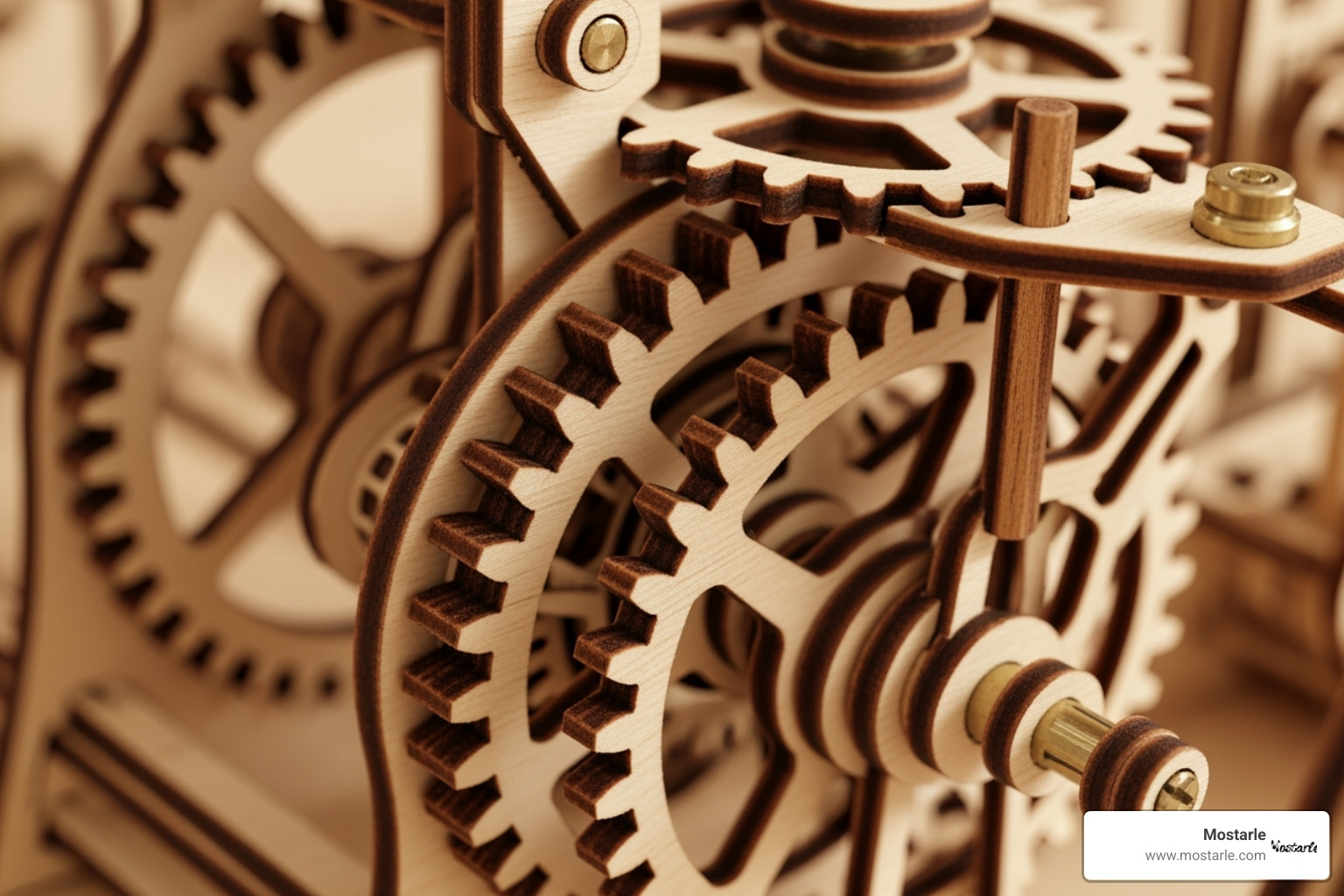
Have you ever wondered what makes a century-old movie projector tick? The vitascope mechanical gear system is like watching a perfectly choreographed dance of wooden wheels, sprockets, and levers. It's mechanical poetry in motion, and honestly, it's pretty amazing that something so intricate actually works.
Think of it this way: moving a strip of film smoothly while projecting clear images is trickier than it sounds. The film needs to stop completely for each frame to be projected, then zip forward to the next one, all without tearing or creating a blurry mess. It's like trying to flip through a photo album while someone's watching - but doing it 16 times per second with perfect precision.
The magic happens through several key players working together. The hand-crank generator powers everything without needing a single battery. A gear train takes your cranking motion and transforms it into the exact speed needed. The intermittent motion mechanism creates that crucial stop-and-go rhythm. Sprockets grab onto the film's perforations like tiny mechanical hands, while a tension device keeps everything aligned just right. Finally, an adjustable lens focuses the projected image onto your wall or screen.
How the Original Vitascope Mechanical Gear Worked
The original Vitascope was a masterpiece of 1890s engineering. The patent, granted in 1897, reads like a love letter to mechanical precision. The inventors weren't just trying to make pictures move - they wanted to create something that wouldn't destroy expensive film or give audiences headaches from flickering images.
The heart of the original vitascope mechanical gear was its brilliant intermittent film movement system. Picture a slotted wheel with four carefully cut recesses. As a rotating element with a small projection spins, it catches these slots one by one, giving the film drum a gentle nudge forward. Then - and this is the clever part - a recessed disk locks everything in place while the image gets projected.
This wasn't just start-and-stop motion. It was gradual start-and-stop motion that treated the delicate film like the precious resource it was. No jerky movements that could tear a frame or create that awful flickering that plagued earlier devices. The slotted wheel mechanism ensured each movement was smooth and controlled.
The engineers even thought about film care in ways that would make a librarian proud. They designed a tension device with three spring-loaded members arranged vertically. The top one had the lightest touch and even doubled as a dust brush. Everything that touched the film was covered in soft materials like plush or rubber. This positive engagement system meant the film stayed exactly where it needed to be, frame after frame.
Recreating History: The Model's Vitascope Mechanical Gear
Hands-on, Vitascope-inspired models bring this mechanical marvel into your workspace using precisely engineered components. The emphasis is on visible mechanisms and direct interaction: no batteries, just hand-crank power that connects you to the machine's rhythm. As you turn the handle, you can feel each gear engaging and each sprocket catching the film perforations.
These functional replications often include adjustable lenses for focusing and scaling the image, along with practical access points to load film and fine-tune operation. They aren't just display pieces—they're working demonstrations of the same principles that powered early cinema.
When you're cranking away and watching Chaplin's iconic scenes flicker to life on your wall, you're not just playing with a puzzle. You're operating the same mechanical principles that launched the entire film industry. That's pretty incredible when you think about it.
The Build Experience: Assembling Your Piece of History
Opening the box of a Vitascope-inspired model feels like unwrapping a piece of history. The precisely cut components spread across your workspace represent more than just a project - they're your gateway to understanding how cinema began.
The beauty of these builds lies in their thoughtful design. Many require no glue and rely on precision parts that fit exactly where they should, creating satisfying clicks as components lock into place.
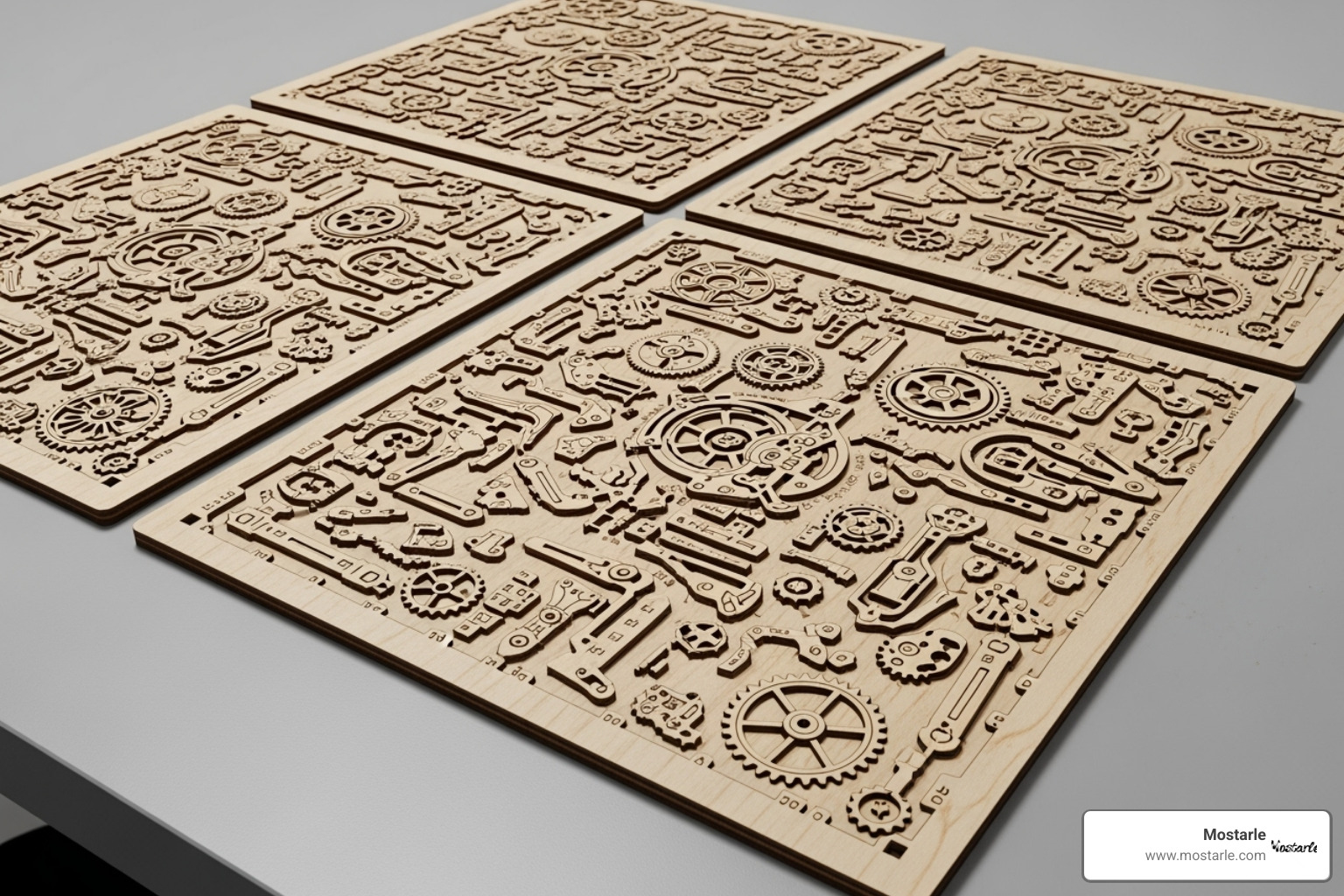
Plan for a few hours of focused assembly time. This isn't a quick project, but that's exactly what makes it so rewarding. The challenge is real, but careful attention to step-by-step instructions will see you through.
Smooth operation depends on careful alignment and appropriate lubrication of moving parts—especially the vitascope mechanical gear train. Without it, the projector can feel stiff or jerky.
Assembly Challenges and Triumphs
The most intricate part involves aligning the gear assembly. Each gear must mesh perfectly with its neighbors, creating a smooth chain of motion from your hand-crank to the film transport.
Getting the film path tension just right requires patience. Too loose, and the film won't advance properly. Too tight, and there's a risk of strain. The intermittent motion mechanism—the heart of any projector—needs precise alignment to create that magical stop-start movement that makes movies possible.
Troubleshooting access points make problem-solving easier, letting you peek inside and adjust components without dismantling everything.
At Mostarle, we believe in changing ordinary fragments into remarkable, creative pieces. This philosophy shines through every step of the build. What starts as individual parts gradually becomes a sophisticated machine that actually projects moving images.
There's something deeply satisfying about this hands-on creation process. The focused concentration required can be incredibly therapeutic, connecting you to the timeless joy of making something with your own hands. As many builders find, there's real healing power in mechanical puzzles.
Unique Features of the Finished Model
A completed Vitascope-style build is a substantial conversation piece that commands attention—and it works. Turn the hand-crank slowly, and watch classic scenes come to life on your wall. Speed up your cranking, and motion speeds up with it. Slow down, and time crawls—you control the flow of motion.
An adjustable focus lets you fine-tune your projection for your room. Whether you're projecting onto a nearby wall or across a larger space, simple lens adjustments create crisp, clear images.
Beyond its mechanical marvels, a finished Vitascope-inspired model serves as both decorative art and an engaging engineering toy for adults. It bridges the gap between art and science, proving that the most beautiful machines are often the ones that actually do something meaningful.
Frequently Asked Questions about the Vitascope Model
Building a piece of cinema history naturally raises questions - and we love hearing from fellow puzzle enthusiasts! The Vitascope model is such a unique blend of mechanical engineering and vintage technology that people often wonder what they're really getting into.
Let's explore the most common questions we receive about this fascinating vitascope mechanical gear system.
Does a Vitascope-style model actually project a movie?
This is usually the first question people ask, often with a hint of disbelief in their voice. The answer is yes—and it's absolutely magical to witness!
A well-built model isn't just a pretty display piece. It's a functional projector that can bring classic frames to life on your wall. Load a short loop of film, turn the hand-crank, and you'll see iconic antics dancing across your room.
The real projection capability is what sets this kind of model apart from typical puzzles. There's something deeply satisfying about cranking the handle and watching carefully aligned gears work together to create actual moving pictures. It's like having your own private screening room from 1896.
What powers the projector?
In our battery-obsessed world, these models offer a refreshingly simple answer: you do.
The entire system runs on a hand-crank generator—no batteries, no power cords, no charging stations. Just pure mechanical power transferred through that intricate vitascope mechanical gear system. Turn the crank, and watch the magic happen.
This direct connection between you and the machine lets you feel every gear turning and every sprocket engaging. It's a tactile reminder of how ingenious inventors solved complex problems using nothing but mechanical precision.
How difficult is a Vitascope puzzle to assemble?
This isn't a typical weekend puzzle. With many precisely cut pieces and fine tolerances, it demands patience and focus.
The challenge lies in the intricate gear alignment and the delicate film transport mechanism. Every piece must fit perfectly for the projection system to work smoothly. One misaligned gear can throw off the entire vitascope mechanical gear sequence.
But that's exactly what makes it so rewarding for teens and adults. Each successful gear mesh and perfectly aligned sprocket brings you closer to that moment when you turn the crank and watch film spring to life.
The focused concentration required can be surprisingly therapeutic. There's something deeply human about taking scattered pieces and changing them into a working machine. As we explore in our piece about why building metal puzzles might be the most human thing you can do right now, the act of creation through careful assembly connects us to our most fundamental nature as makers and builders.
If you're curious about the broader world of hands-on puzzles and their appeal, you might enjoy learning about everything to know about mechanical puzzles. The Vitascope represents the perfect intersection of historical recreation and modern puzzle craftsmanship.
Conclusion: The Enduring Magic of Mechanical Marvels
There's something deeply satisfying about watching a vitascope mechanical gear system come to life. As you turn that hand-crank and see Charlie Chaplin flicker across your wall, you're experiencing the same wonder that audiences felt in Buffalo's Vitascope Hall over 125 years ago.
The journey from Joseph Plateau's spinning discs to Edison's grand projectors shows us how human creativity can transform simple mechanical principles into pure magic. No computers, no digital processing - just gears, sprockets, and the clever dance of precisely timed motion.
What makes the Vitascope special isn't its technology - it's its honesty. Every gear is visible, every movement makes sense. When something goes wrong, you can see why. When it works perfectly, you understand how. It's the opposite of our black-box digital world, where complexity hides behind sleek surfaces.
Building the Vitascope model connects you to this mechanical heritage in a way that watching movies on your phone simply can't. Your hands shape each wooden gear, your patience aligns each component, and your effort powers the final projection. It's a reminder that the most amazing innovations often come from solving simple problems in clever ways.
At Mostarle, we see this same spirit in every project we create. Whether it's changing forgotten nuts and bolts into art or watching someone find the joy of mechanical puzzles, it's all about finding magic in the ordinary. The vitascope mechanical gear system proves that sometimes the most profound experiences come from the simplest mechanical principles.
This wooden wonder serves many purposes. It's a nostalgic journey back to cinema's golden dawn. It's an engineering lesson that makes complex principles tangible and fun. It's a challenging hobby that rewards patience with genuine accomplishment. And it's a unique gift for anyone who appreciates the beauty of things that actually work.
The Vitascope reminds us that mechanical marvels never really go out of style. In our digital age, there's something refreshing about technology you can touch, understand, and fix with your own hands. It's proof that creativity truly has no limits - whether you're working with cutting-edge electronics or century-old gear systems.
Ready to explore more of this fascinating world? Find Everything to know about mechanical puzzles and see how these timeless creations continue to captivate builders and dreamers alike.