Expert Support

Why Nixie Alarm Clocks Are the Coolest Way to Wake Up
The Nixie Alarm Clock: A Glowing Piece of History for Your Bedside Table
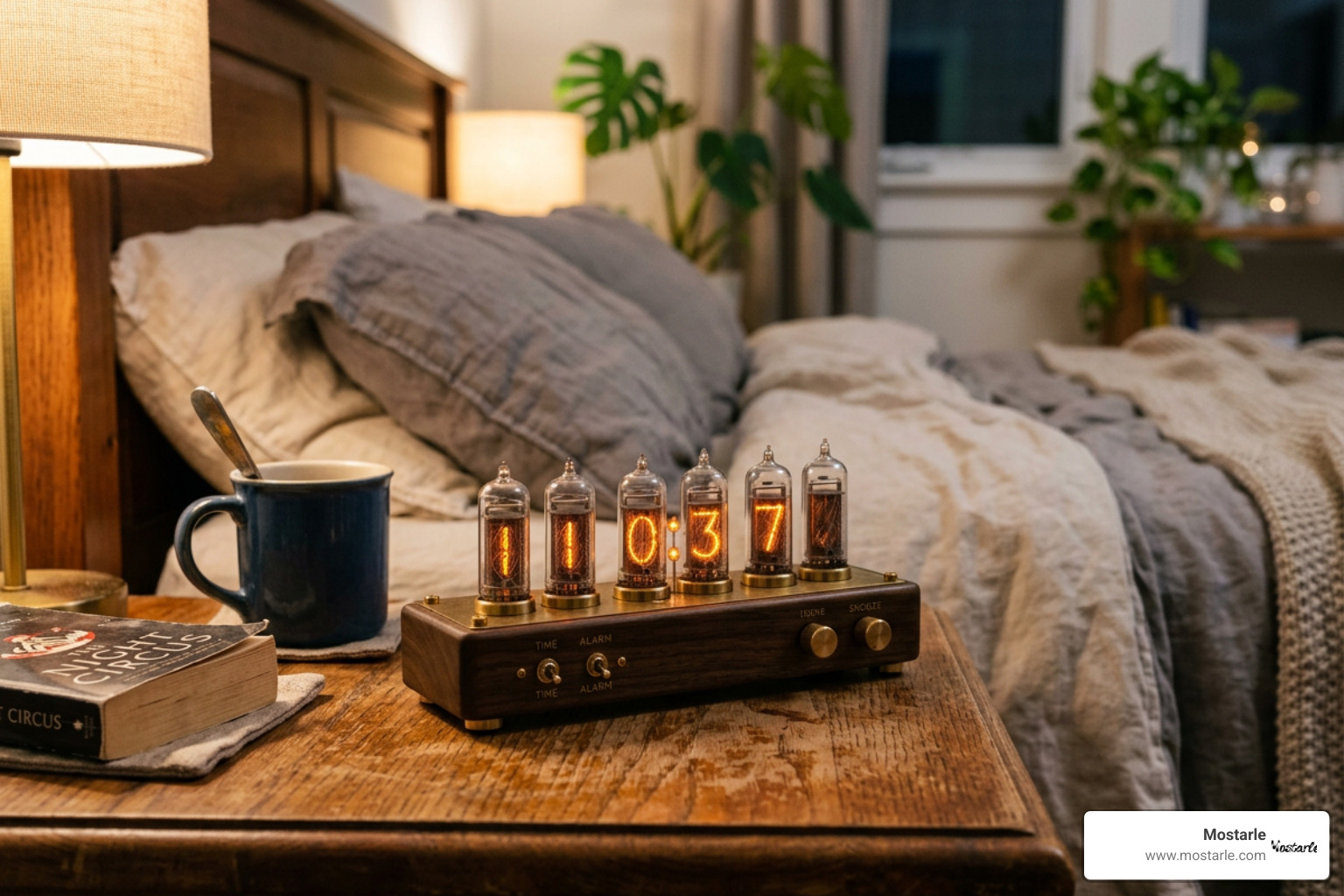
A nixie alarm clock is one of the most visually striking ways to display time — blending Cold War-era vacuum tube technology with modern clockmaking to create a warm, amber glow that no LCD screen can replicate.
Here's a quick answer if that's all you need:
- A nixie alarm clock uses glass tubes filled with neon gas to display numbers via a soft orange glow
- The tubes are vintage "nixie" display components, originally used in 1950s–70s scientific instruments
- Modern versions add features like alarm functions, motion sensors, RGB backlighting, and Wi-Fi time sync
- Prices range from roughly $150 for basic kits to $365+ for premium handcrafted models
- They run on either 12V DC or USB-C power depending on the model
- Tube lifespan ranges from 5,000 to 200,000+ hours depending on usage and care
Unlike a standard digital clock, a nixie alarm clock doesn't just tell time — it performs it. Each digit glows individually inside its own glass envelope, giving the display an almost living quality.
These clocks attract people who want their everyday objects to mean something. If your alarm clock feels too forgettable, too flat, too ordinary — a nixie clock is the opposite of that.
What is a Nixie Tube Clock?
To truly appreciate a nixie alarm clock, we have to take a quick trip back in time. Long before light-emitting diodes (LEDs) and liquid crystal displays (LCDs) took over our household electronics, engineers needed a way to display numbers on scientific equipment, digital voltmeters, and early desktop calculators.
Enter the Nixie tube. Invented in the mid-1950s by David Hagelbarger and popularized by the Burroughs Corporation, these tubes are essentially specialized neon lamps. The name "Nixie" actually started as a accidental backronym derived from "Numeric Indicator eXperimental No. 1" (NIX I).
But how do they actually work?
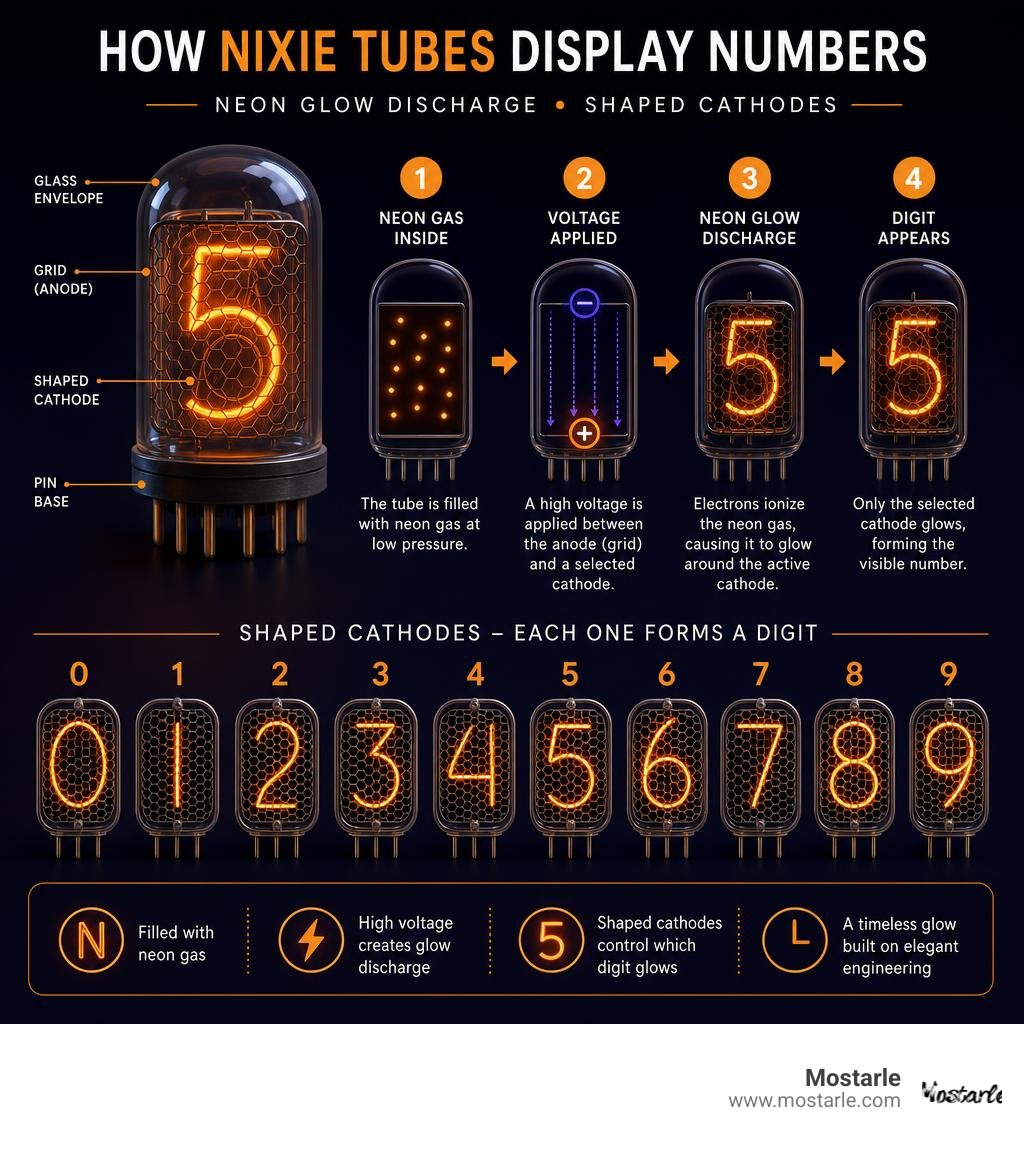
Inside each glass envelope is a cold cathode display. It contains a wire-mesh anode and multiple stacked cathodes shaped like the numbers 0 through 9. The tube is filled with a low-pressure gas, typically neon mixed with a small amount of argon. When a high voltage (usually around 170 volts DC) is applied to a specific cathode, a beautiful orange glow discharge forms around the chosen number.
Because the numbers are physically stacked one behind the other inside the tube, you get a unique depth effect as the clock counts the seconds. The numbers don't just change; they step forward and backward in space. It is a mesmerizing, organic dance of light that makes vintage Nixie tubes so incredibly popular today.
Why a Nixie Alarm Clock Beats Standard Digital Clocks
If you have ever been shocked awake by the harsh, artificial blue glare of a cheap modern digital clock, you already know why we need a better alternative. Standard digital clocks are functional, but they are completely devoid of soul.
A nixie alarm clock offers an entirely different sensory experience:
- Analog Warmth: The orange-red glow of neon gas operates at a wavelength that is naturally easy on the eyes. It mimics the cozy warmth of a fireplace or a candle, making it the perfect companion for a dark bedroom.
- Visual Depth: Because the metal templates inside the tube are physically layered, the numbers have a three-dimensional quality. Watching the digits shift feels like watching a miniature mechanical theater.
- A Conversation Starter: Let’s be honest — no one ever walks into a room and says, "Wow, look at that gorgeous plastic LED clock!" A nixie clock is an instant focal point, blending industrial history with artistic design.
Here is a quick breakdown of how these technologies compare:
| Feature | Nixie Tube Clock | Modern LED Clock | Traditional Analog Clock |
|---|---|---|---|
| Light Quality | Warm, organic neon glow | Harsh, direct LED light | None (requires external light) |
| Aesthetic Vibe | Retro-futuristic / Steampunk | Utilitarian / Minimalist | Classic / Traditional |
| Visual Depth | High (3D stacked digits) | Flat (2D segments) | High (physical moving hands) |
| Customization | Backlighting, transition effects | Limited brightness | None |
| Operation Noise | Completely silent | Completely silent | Audible ticking (often annoying) |
If you want a modern bedside clock that syncs seamlessly but retains that timeless, glowing charm, modern Wi-Fi enabled tube clocks bridge the gap between historic hardware and modern convenience beautifully.
Key Features of a Modern Nixie Alarm Clock
While vintage tubes provide the visual magic, modern electronics give these clocks the brainpower they need to be highly practical daily alarms. When you buy a modern nixie alarm clock, you aren't just getting 1950s tech; you are getting a highly refined smart gadget.
Some of the most useful features built into modern units include:
- Motion Sensors: To prolong the lifespan of the vintage glass tubes, many high-end clocks feature integrated motion sensors. The clock will automatically shut off its display when you leave the room or go to sleep, and instantly spring back to life with a gentle glow the moment you walk near or wave your hand.
- RGB LED Backlighting: Beneath the glass tubes, designers often place modern RGB LEDs. This allows you to bathe the bottom of the glass in customizable colors, creating stunning contrasts (like a deep blue underlight highlighting the warm orange digits).
- Intelligent Alarms: Unlike simple vintage clocks, modern versions offer advanced alarm settings. For example, some smart clocks allow you to set multiple alarms, configure weekend-only wake-up times, and adjust snooze durations.
- Wi-Fi and Bluetooth Time Sync: No one wants to manually adjust their clock every time there is a power outage or a daylight saving shift. High-tech options connect directly to your home network to sync time with NTP servers down to the millisecond. Others let you configure everything easily from your smartphone.
- IPS Display Alternatives: For those who love the look but want unlimited customization, modern IPS digital clocks use tiny high-definition screens inside quartz glass tubes to simulate vintage displays, allowing you to upload custom photos or change display faces on a whim.
The Appeal of Vintage IN-12 and IN-14 Tubes
If you decide to go with authentic, classic cold-cathode technology, you will quickly run into two legendary tube designations: IN-12 and IN-14. These are New Old Stock (NOS) tubes manufactured decades ago in Soviet-era factories. Because they are no longer mass-produced, each tube is a genuine piece of historical engineering.
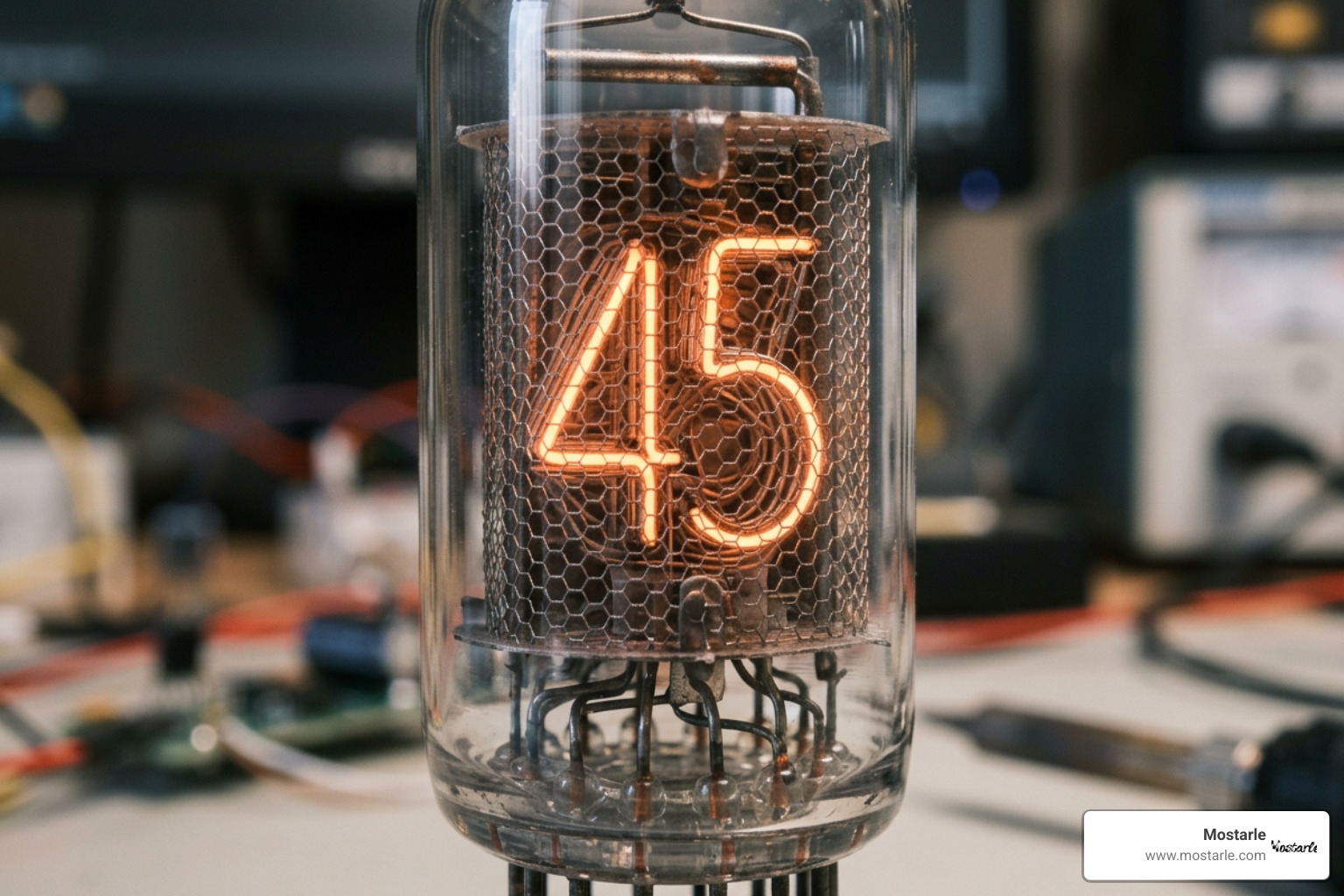
- IN-12 Tubes: These are recognizable by their slightly rounded, blocky glass envelopes. They display numbers vertically and are often mounted on top of wooden cases. An interesting quirk of some Soviet IN-12 tubes is that to save on manufacturing costs, the factory used an upside-down digit "2" to serve as the digit "5"! It’s a charming piece of historical trivia that adds real character to these vintage-inspired clocks.
- IN-14 Tubes: These are the taller, elongated tubes with a pointed top. They feature a fine hexagonal wire mesh in front of the numbers and provide a classic "laboratory instrument" look.
When choosing a clock, we highly recommend looking for designs that feature replaceable sockets. Rather than soldering the precious vintage glass pins directly to the circuit board, premium clocks use gold-plated pin sockets. This means that if a tube ever reaches the end of its natural lifespan, you can simply pull it out and plug in a replacement tube in seconds — no soldering iron required!
Choosing the Perfect Nixie Alarm Clock for Your Space
Because a nixie alarm clock is as much an art piece as it is a timepiece, the case design is just as important as the tubes inside. You want an enclosure that matches your personal space and design aesthetic.
- Solid Wooden Cases: For a warm, mid-century modern or rustic look, a handcrafted wooden enclosure is unbeatable. Often milled from premium hardwoods like walnut, cherry, or maple, these cases look gorgeous on nightstands and library shelves. They offer a beautiful contrast between the organic texture of wood and the industrial glow of glass and gas.
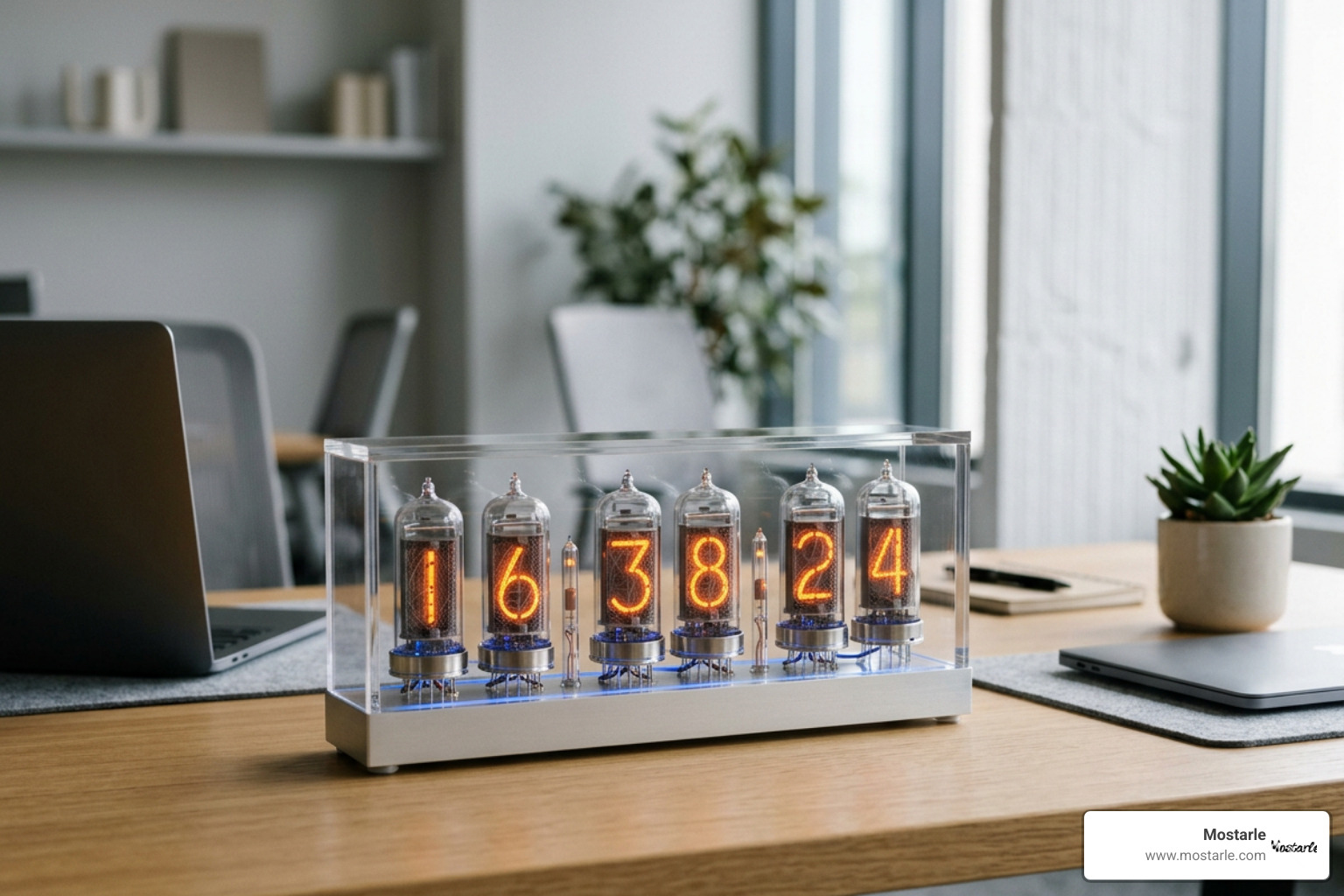
- Transparent Acrylic Cases: If you love the "naked" industrial aesthetic, an acrylic case is a fantastic choice. Designs featuring transparent acrylic enclosures let you see the circuit boards, resistors, and glowing components inside, celebrating the raw engineering of the clock.
- Anodized Aluminum Cases: For a ultra-premium, modern look, CNC-milled metal cases are spectacular. Anodized aluminum cases with gold or metallic finishes sit perfectly in modern, high-end desk setups.
- Artificially Aged Finishes: If you want something that looks like it was pulled straight out of a retro-futuristic submarine or a mad scientist's workshop, look for aged metals or distressed woods with an artificially aged finish.
Power Requirements and Setup
Setting up a nixie clock is generally very straightforward, but because of the unique nature of the tubes, there are a few power requirements to keep in mind:
- Input Power: Most modern nixie clocks run on a safe, low-voltage external power source. This is typically either a 12V DC adapter or a modern 5V USB-C cable. The clock's internal circuitry handles boosting this low voltage up to the 170V DC required to light up the neon gas safely.
- Backup Battery: To ensure you don't lose your time and alarm settings during a power cut, look for clocks with a built-in Real-Time Clock (RTC) module (like the highly accurate DS3231) paired with a small CR2032 backup battery. Even if the tubes turn off during a blackout, the clock keeps ticking internally.
- Ventilation: While nixie tubes stay relatively cool (rarely exceeding 40°C / 104°F), it is always best practice to leave a little bit of breathing room above the tubes to prevent heat buildup.
Safety, Maintenance, and Longevity
Because nixie tubes use high-voltage circuitry, safety and proper maintenance are common questions for first-time buyers.
First, let's talk about safety. While the voltage inside the clock is high (170V), the actual electric current (amperage) running through the tubes is incredibly low — usually just a few milliamps. This means that while you should never open the case or touch the internal circuitry while the clock is plugged in, the clock itself is perfectly safe to use on your bedside table.
As for longevity, vintage Soviet tubes are incredibly robust. While early 1950s tubes had shorter lifespans, later-generation tubes can easily last anywhere from 100,000 to over 200,000 hours of continuous use if driven correctly. That is over 11 to 22 years of constant glowing!
How to Maintain Your Nixie Alarm Clock
To make sure your clock lives a long, glowing life, there are a few simple maintenance tricks you should practice:
- Enable the "Slot Machine" Effect: The biggest threat to a nixie tube's lifespan is cathode poisoning. This happens when a digit is left unlit for a long time, causing microscopic metal particles sputtered from the active digits to build up on the inactive ones, eventually preventing them from lighting up completely. To prevent this, quality clocks include a "Slot Machine" routine. Every few minutes, the clock will rapidly scroll through all the numbers (0 to 9) on every tube. It looks incredibly cool, and it cleans the cathodes to keep them functioning perfectly!
- Use the Sleep Timer or Motion Sensor: If your clock has a motion sensor or a programmable night mode, use it. Turning the tubes off when you are at work or asleep can easily double or triple the real-world lifespan of your display.
- Avoid Unofficial Firmware: If you purchase a smart or IPS-style nixie clock, stick to the manufacturer's official firmware updates. Third-party firmware can sometimes override safety limits, driving too much current to the tubes or screens and burning them out prematurely.
Frequently Asked Questions about Nixie Clocks
How long do Nixie tubes last?
On average, high-quality vintage tubes last between 100,000 and 200,000 hours if the clock is designed with proper current-limiting resistors and runs a regular anti-poisoning routine (the "slot machine" effect). Using features like motion sensors or auto-brightness dimming at night will extend this lifespan even further.
Are Nixie clocks safe to use as bedside alarms?
Yes, absolutely. While they require about 170V DC to ionize the neon gas inside the glass, the current running through them is extremely low (measured in milliamps). The clocks are fully enclosed in protective wood, acrylic, or metal cases, making them perfectly safe for a nightstand. They also produce very little heat, remaining barely warm to the touch.
Can you replace individual tubes if they fail?
Yes, provided you choose a clock designed with replaceable sockets (often using gold-plated pin connectors). With these models, replacing a tube is as simple as gently pulling out the old tube and plugging in a new one. If the tubes are soldered directly to the main circuit board, replacement will require basic desoldering and soldering skills.
Conclusion
A nixie alarm clock is far more than a tool to pull you out of sleep — it is a brilliant intersection of history, physics, and artistic design. By rescuing vintage vacuum tubes from the mid-century era and pairing them with modern smart features, these clocks transform a mundane morning routine into something genuinely magical.
At Mostarle, we have a deep love for this kind of transformation. Our passion lies in taking everyday hardware — the overlooked nuts, bolts, and mechanical fragments — and crafting them into extraordinary, creative art pieces. We believe that the objects in your home should have character, history, and a touch of mechanical wonder.
If you appreciate the intricate beauty of vintage engineering and want to bring more tactile, artistic craftsmanship into your living space, we invite you to Explore mechanical wooden puzzle clocks and discover how we turn the ordinary into the truly remarkable.