Expert Support

Crafting Masterpieces: Exploring Custom Metal Art Fabrication
What is Fabricated Metal Art and Why Does It Matter?
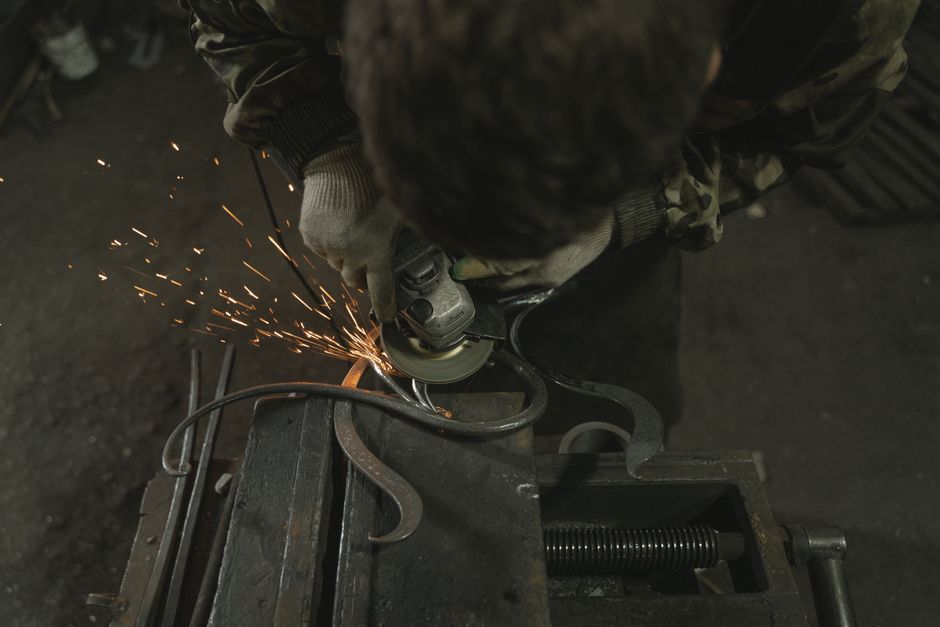
Fabricated metal art is the process of changing raw metal materials into artistic pieces through cutting, welding, bending, and shaping techniques. Unlike cast metal art, which uses molds, fabricated pieces are built by hand, joining individual metal components to create sculptures, wall hangings, functional furniture, and architectural installations.
Quick Overview: Understanding Fabricated Metal Art
- What it is: Handcrafted metal artwork created by cutting, welding, and shaping raw materials like steel, aluminum, copper, and bronze
- Common types: Sculptures, wall art, functional pieces (benches, fire pits, gates), architectural installations, memorial pieces
- Key techniques: CNC plasma cutting, welding, hand-hammering, bending, rolling, powder coating
- Applications: Public art, home decor, commercial spaces, corporate branding, garden features
- Main benefits: Exceptional durability, weather resistance, design versatility, low maintenance, unique aesthetic appeal
The global metal sculpture market was valued at $1.5 billion in 2022 and is projected to reach $2.3 billion by 2030, reflecting a growing demand for custom art that transforms ordinary spaces.
What makes fabricated metal art special? It turns industrial materials into expressions of creativity. The process involves changing a 2-dimensional surface into a unique, light-catching 3-dimensional landscape, where each piece reveals something new at every viewing.
From memorial benches to 10-ton public sculptures, fabricated metal art spans every scale and purpose. Whether you're seeking a garden centerpiece or a city landmark, understanding the fabrication process helps you appreciate the craftsmanship and make informed decisions when commissioning your own piece.
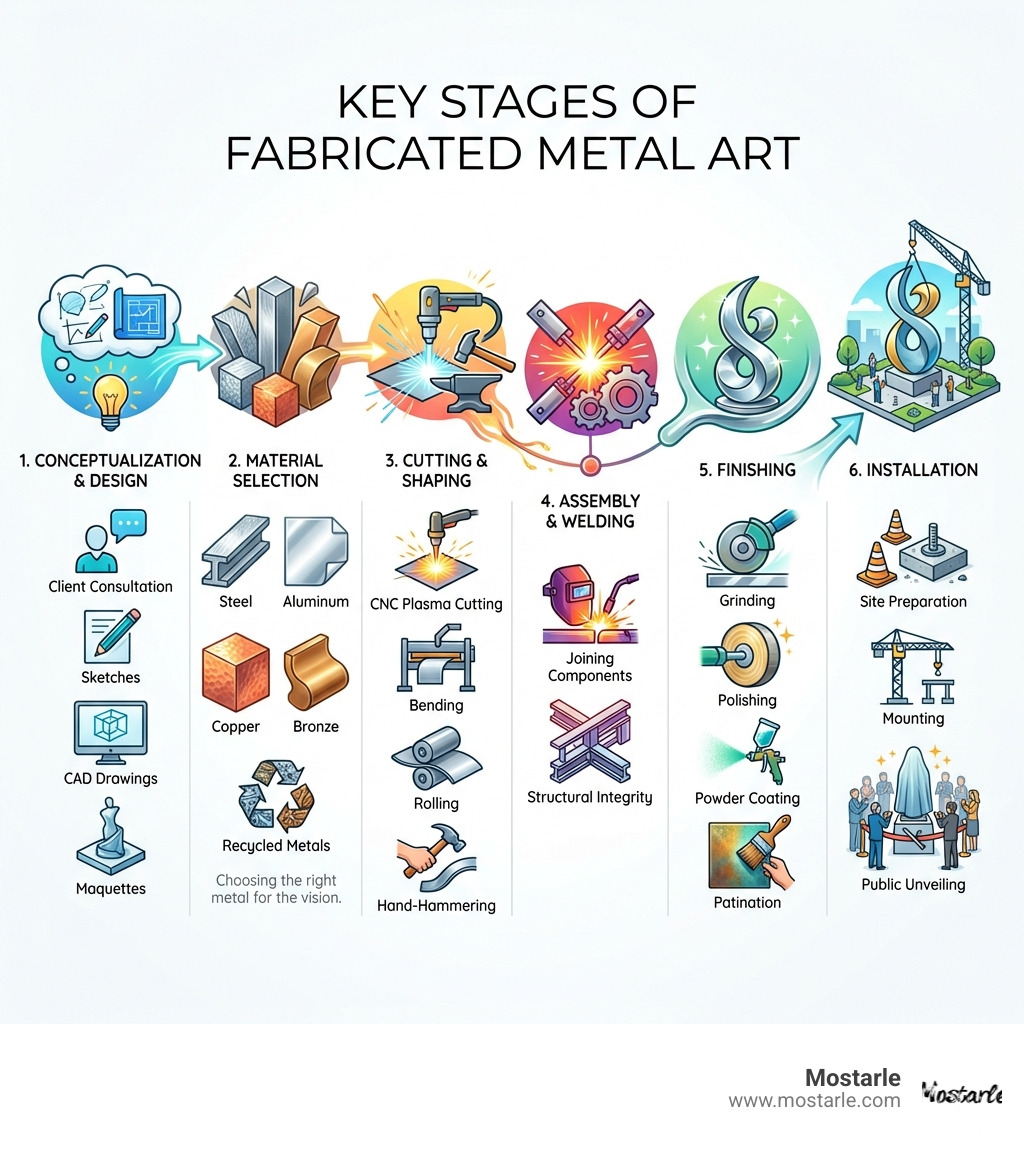
Must-know fabricated metal art terms:
The Anatomy of Fabricated Metal Art
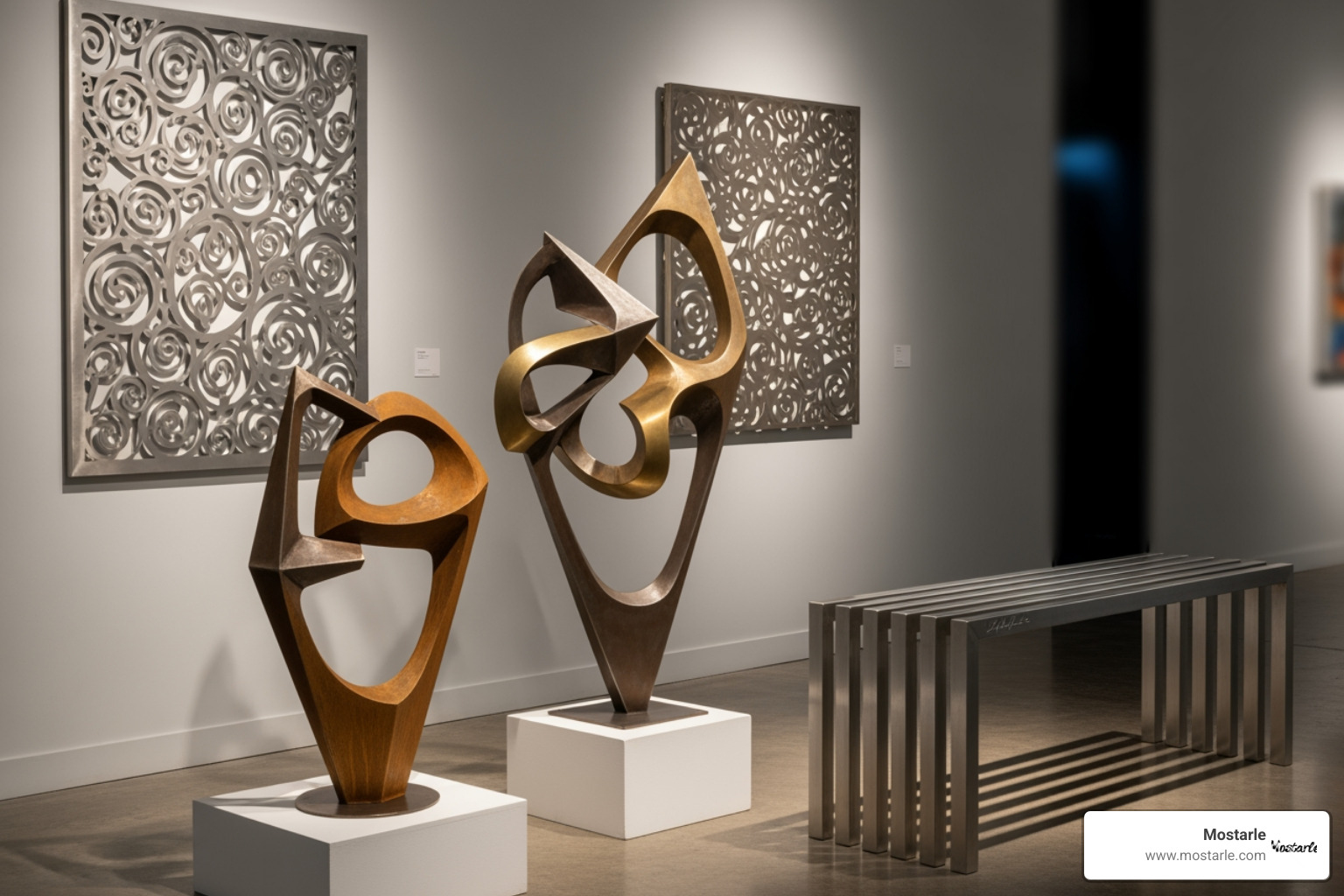
This section explores the diverse forms and foundational materials that define this powerful art medium.
A Spectrum of Styles and Types
Fabricated metal art encompasses a fascinating array of forms and functions. Artists skillfully manipulate metal to bring their visions to life.
Sculptures: From small tabletop pieces to massive public installations. Artists create everything from steel wildlife sculptures to abstract forms exploring emotion.
Wall Art: Metal wall art adds texture, depth, and industrial-chic aesthetic to any space. Consider a black metal wall art piece for dramatic impact.
Functional Art: Where art and utility blur. Think custom gates, artistic railings, bespoke tables, fireplace surrounds, memorial benches, and fire pits that turn everyday objects into personalized works of art.
Architectural Installations: Large-scale metal art integrating directly into buildings or urban landscapes. These can be community murals, legacy statues, or decorative focal points.
Abstract vs. Realistic: Styles vary from nature-inspired 3-dimensional landscapes to abstract pieces demonstrating boundless creativity.
Assemblage and found object sculptures: Artists transform ordinary fragments into remarkable pieces. At Mostarle, we craft unique models from everyday hardware like nuts and bolts. Explore the art of assemblage: discovering found object sculptures.
Repurposed masterpieces: Old wrenches, gears, or street signs find new purpose as sculpture components. Learn more about repurposed masterpieces: crafting art from everyday tools.
The Core Materials: From Steel to Bronze
Each metal brings unique characteristics to the fabrication process.
-
Steel (Mild, Stainless, Corten):
- Mild Steel: Malleable and cost-effective
- Stainless Steel: Corrosion-resistant with sleek appearance
- Corten Steel: Develops stable rust-like appearance, providing earthy aesthetic
Aluminum: Lightweight and corrosion-resistant, excellent where weight is a concern.
Copper: Warm hue, can be polished or allowed to develop natural patina.
Bronze: Rich appearance and durability. See the enduring beauty of bronze tree sculptures you need to know.
Wrought Iron: Strong and intricately shaped, ideal for decorative gates and railings.
Recycled Materials: Sustainable approach minimizing waste while adding unique history.
Metal Animal Models: Various metals capture wildlife spirit. Find more in an essential guide to metal animal models.
From Raw Metal to Masterpiece: The Fabrication Process
This section details the journey of changing industrial materials into fine art through artistic vision, engineering precision, and skilled craftsmanship.
Conceptualization and Design
Every piece of fabricated metal art begins with an idea refined through collaboration.
Initial Idea & Client Collaboration: Define the concept through artist vision or client request. Studios engage clients to personalize designs.
2D CAD Drawings: Essential for complex projects, these technical blueprints ensure precise dimensions and structural integrity.
Maquettes: Small-scale models help clients visualize the final sculpture in three dimensions.
Custom Design: The process allows immense personalization. For inspiration, check out crafting your aesthetic: custom metal art sculptures for every style.
The Art of Shaping Metal: Key Fabrication Techniques
Raw metal transforms through specialized techniques:
Cutting (CNC Plasma, Laser): High-velocity ionized gas or focused laser beams cut metal with precision for intricate designs.
Bending & Rolling: Creating curves, cylinders, and complex forms from metal sheets and plates.
Welding: The cornerstone of fabricated metal art, joining separate pieces into cohesive structures. Explore welding wonders: unleash your inner metal artist.
Forging & Hammering: Ancient techniques involving heating and shaping metal with hammers, adding unique texture and depth. Learn about metalwork history through Britannica's topic on metalwork.
Finishing Touches: How Aesthetics are Finalized
Finishing techniques heavily influence the final aesthetic:
Grinding: Smooths welds, removes imperfections, creates specific textures.
Polishing: Achieves reflective, mirror-like surfaces.
Powder Coating: Durable finish for outdoor pieces. Powdered plastic is sprayed and melted, sealing out elements.
Patination: Creates artificial tarnish for aged or colored appearance.
Oxidized Rust Finishes: Controlled rust for artistic effects, particularly with Corten steel.
Protective Coatings: Lacquers, waxes, or sealants preserve the finish.
Black Finishes: For contemporary looks, explore black metal sculpture.
The Widespread Impact of Fabricated Metal Art
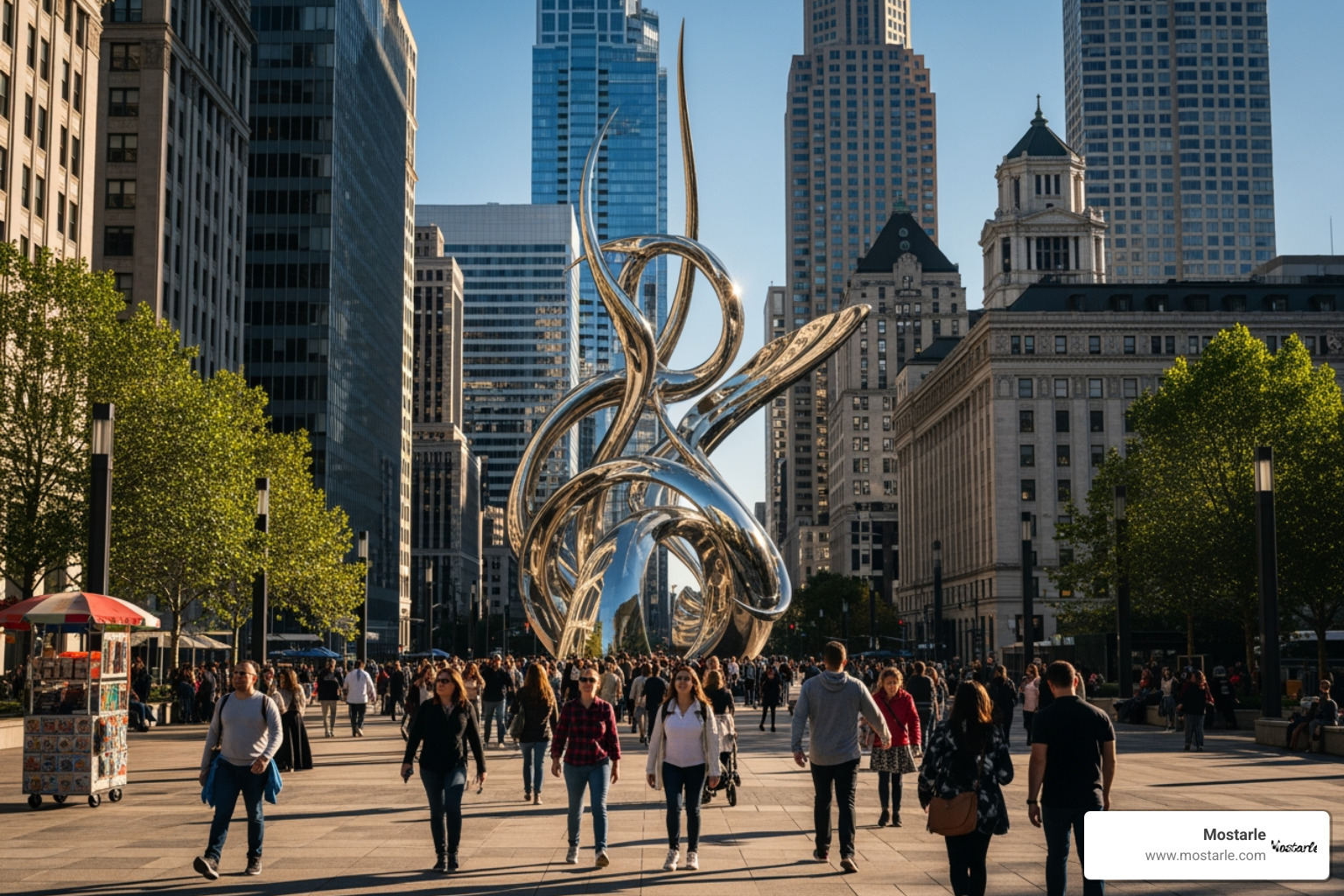
This section examines the diverse applications of metal art and its benefits, from enhancing public spaces to personalizing private ones. The versatility of fabricated metal art allows it to seamlessly integrate into various environments, leaving a lasting impression.
Changing Spaces: Applications Across Environments
Fabricated metal art has the remarkable ability to transform and define spaces, whether grand or intimate.
Public Art: From city squares to parks, public metal art captivates audiences and serves as cultural landmarks. These installations can increase tourism and local economic activity, offering a tangible return on investment for communities.
Memorial Benches: A deeply personal and poignant application, memorial benches offer a beautiful way to honor loved ones. Studios can personalize these benches, allowing for names, phrases, and even photos to be incorporated into the design.
Commercial Spaces: Businesses often commission fabricated metal art to improve their brand identity, create unique interiors, or draw attention to their premises. Custom fabrication can include signs, desks, tables, display units, and decorative elements for municipalities, developers, and architects.
Corporate Branding: Beyond simple signs, metal art can embody a company's ethos. Custom metal signs and installations can serve as powerful branding tools, making a statement about a company's innovation and quality.
-
Home & Garden Decor: The appeal of fabricated metal art extends to personal living spaces, offering durability and distinctive style.
- Wall art: From framed pieces to intricate panels.
- Garden sculptures: Weather-resistant pieces that add character year-round.
- Decorative screens: For privacy or aesthetic division.
- Fire pits & yard burners: Functional pieces that double as outdoor art.
- Custom gates & railings: Elevating curb appeal.
- Unique lighting fixtures: Blending form and function.
- Home design elements: Integrated into interior decor for an industrial-chic touch.
For those looking to go beyond the ordinary, unique metal art and decor for your living space offers a wealth of inspiration.
Why Choose Fabricated Metal Art? The Enduring Benefits
The decision to opt for fabricated metal art over other mediums comes with a host of compelling advantages.
Durability & Longevity: Metal, by its nature, is robust. With proper fabrication and finishes like powder coating, metal art can withstand the elements for decades, requiring minimal upkeep. Using thicker gauge steel and quality coatings ensures signs and sculptures are built to last.
Design Versatility: From the most intricate scrollwork to bold, minimalist forms, metal can be shaped into virtually any design imaginable. The possibilities are broad, allowing for pieces ranging from traditional to abstract styles.
Unique Aesthetic: Metal art offers a distinct visual appeal that cannot be replicated. Its inherent strength, industrial texture, and the way light plays off its surfaces create a dynamic aesthetic where each piece can reveal something new at each viewing.
Low Maintenance: Once properly finished, most fabricated metal art requires very little maintenance. Powder-coated pieces simply need occasional cleaning, making them ideal for both busy commercial spaces and relaxed home environments.
Increased Property Value: A well-chosen, high-quality piece of metal art, whether a custom gate or a garden sculpture, can improve the aesthetic appeal and perceived value of a property, acting as a "crown jewel" for homes and landscapes.
Commissioning Your Vision: A Buyer's Guide
This practical guide helps you find the right creator and steer commissioning custom fabricated metal art.
Finding the Right Artist or Studio
Selecting the right artist or studio is crucial for success.
Portfolio Review: Review work thoroughly for style and quality that matches your vision.
Artist Specialization: Some specialize in wildlife sculptures or metal landscapes. Match expertise with your project.
Client Testimonials: Previous client feedback provides insight into professionalism and delivery.
Finding Your Match: It's about finding a collaborative partner. Explore discovering your ideal metal art studio for unique pieces.
Key Factors for Commissioning Custom Fabricated Metal Art
Practical considerations shape the commissioning process:
Budget: Be clear from the outset. Cost varies by size, complexity, materials, and artist reputation.
Timeline: Large projects need significant time. Custom architectural sculptures may require 16+ weeks.
Scale & Size: Define dimensions. Some studios create 30-foot tall pieces weighing several tons.
Material Choice: Different metals offer distinct aesthetics and properties.
Installation Requirements: Larger pieces require complex installation. Discuss site preparation and mounting.
Artist Communication: Clear communication ensures the artist understands your vision.
Customization: Create something truly unique with personal touches. Even intricate models allow for customization and personalization of 3D metal puzzles.
The Future is Forged: Trends and Innovations
The world of fabricated metal art is constantly evolving, driven by artistic ingenuity and technological advancements. This section explores the cutting-edge technologies and creative movements shaping the future of metal artistry.
Emerging Trends in Fabricated Metal Art
Artists are continuously pushing boundaries, exploring new forms, and incorporating contemporary concerns into their work.
Sustainable Art: With growing global awareness of environmental impact, artists are increasingly turning to sustainable practices. The use of recycled and repurposed metals, as seen in our work at Mostarle, is a significant trend. This not only reduces waste but also infuses pieces with unique character and history.
Kinetic Sculptures: These artworks incorporate movement, often powered by wind, water, or motors, creating dynamic and ever-changing visual experiences. The interplay of metal, light, and motion adds another dimension to artistic expression.
Interactive Art: Engaging the viewer directly, interactive metal art may respond to touch, sound, or proximity, creating a personalized experience.
Parametric Design: Utilizing algorithms and computational design tools, artists can create complex, organic, and intricate forms that would be challenging or impossible to achieve with traditional methods. This allows for high precision and geometric complexity.
Metal Origami Art: Inspired by the ancient Japanese art of paper folding, artists are now applying similar principles to metal. This involves precise bending and folding of metal sheets to create delicate yet strong sculptural forms, as seen in the work of a Cerrillos artist who folds a giant origami garden out of metal.
Technology's Role in Modern Metal Artistry
Technology is not just a tool; it is a collaborator, enabling artists to realize increasingly ambitious and intricate designs.
3D Metal Printing: While still emerging in large-scale art, 3D metal printing offers the ability to create highly complex geometries with precision. As the technology becomes more accessible, we anticipate seeing even more intricate fabricated metal art.
Advanced CNC Technology: Computer Numeric Control (CNC) machines, such as plasma cutters and routers, have revolutionized the cutting and shaping of metal. They allow for intricate designs and repetitive accuracy, freeing artists to focus on the creative aspects.
Digital Design Software: Sophisticated software, including CAD (Computer-Aided Design) programs, enables artists to design, visualize, and refine their creations in a virtual environment before any physical fabrication begins.
Virtual Reality Visualization: For large installations, VR can offer clients an immersive preview of the artwork in its intended space, allowing for adjustments and ensuring integration before costly physical production.
The Connection Between 3D Metal Puzzles and STEM Education: Beyond grand sculptures, the principles of metal fabrication and design are finding their way into educational tools. The growing popularity of 3D metal puzzles not only provides engaging challenges but also fosters critical thinking and problem-solving skills, highlighting the connection between 3D metal puzzles and STEM education.
Conclusion
Fabricated metal art stands as a testament to human creativity and ingenuity, changing raw, often industrial, materials into objects of beauty and purpose. We have explored its diverse forms, from monumental public sculptures to intimate home decor, and looked into the processes that bring these masterpieces to life.
The enduring benefits of fabricated metal art—its durability, design versatility, unique aesthetic, and low maintenance—make it a compelling choice for anyone seeking to improve a space. Whether it is a personalized memorial bench that captures cherished memories or an architectural installation that defines a city's skyline, this art form offers wide creative possibilities.
Studios like Mostarle exemplify this spirit, taking everyday hardware like nuts and bolts and changing these fragments into remarkable, creative pieces, proving that artistry can be found anywhere. By understanding the journey from concept to creation, you gain a deeper appreciation for the skill and vision behind each forged masterpiece.
Ready to explore the intricate world of metal art?
Frequently Asked Questions about Fabricated Metal Art
How much does custom fabricated metal art cost?
The cost of custom fabricated metal art varies, much like any bespoke creation. Several factors influence the final price:
- Size and Scale: A small wall hanging will be less expensive than a 30-foot tall, 10-ton public sculpture. Larger pieces require more material, more complex engineering, and often specialized equipment for fabrication and installation.
- Material Choice: Stainless steel and bronze are typically more costly than mild steel or aluminum. The thickness and gauge of the metal also play a role; for example, using a thicker 12 gauge steel for signs makes them sturdier but increases material cost.
- Complexity of Design: Intricate details, numerous welds, unique forms, and complex curves (like those requiring rolling and twisting) demand more labor and specialized techniques, increasing costs.
- Artist's Reputation and Experience: Highly sought-after artists with extensive portfolios and unique specializations, such as detailed wildlife sculptures or large-scale public art, will command higher prices.
- Finishing Processes: Advanced finishes like multi-layer powder coating or intricate patination add to the overall cost, though they also improve durability and aesthetic appeal.
Small decorative pieces might start in the low hundreds, while large-scale public art installations can run into the tens or hundreds of thousands, or more, depending on the scope.
How do I care for my outdoor metal sculpture?
Caring for your outdoor fabricated metal art ensures its longevity and preserves its appearance. The approach to maintenance depends largely on the type of metal and its finish:
-
Material-Specific Care:
- Powder-Coated Steel (or Aluminum): Generally the easiest to maintain. The powder coating acts as a protective layer that seals out the elements for years of durability.
- Stainless Steel: Highly corrosion-resistant, stainless steel typically only needs occasional cleaning to remove dirt and grime.
- Wrought Iron: Known for its strength, but may require re-treatment of protective coatings over many years.
- Copper/Bronze with Patina: Often desired for their natural aging process. Cleaning should be gentle to avoid stripping the patina.
Cleaning Methods: For most finished metal art, a soft cloth, mild soap, and water are sufficient. Avoid abrasive cleaners, harsh chemicals, or scouring pads, as these can damage the finish. Rinse thoroughly with clean water and dry to prevent water spots.
Inspecting for Damage: Periodically inspect your sculpture for any signs of wear, such as chips in the powder coating or rust spots (especially on mild steel if the coating is compromised). Addressing these issues promptly can prevent further deterioration.
Protective Re-application: Depending on the finish, you might consider reapplying a clear protective sealant or wax every few years, especially if the piece is in a harsh climate.
For general care principles, even for smaller items, the advice in a maintenance guide for 3D metal puzzles offers relevant insights into keeping metal items in good condition.
What is the difference between casting and fabricating metal art?
While both casting and fabrication are methods for creating metal art, they involve different processes, leading to distinct aesthetics and structural characteristics.
-
Fabrication (Additive/Subtractive Process):
- Process: Fabricated metal art is built by hand (or with machinery) from individual pieces of raw metal. It involves a combination of additive and subtractive techniques. Metal sheets, rods, or tubes are cut, bent, rolled, hammered, and then joined together, typically through welding.
- Aesthetic: Fabricated pieces often have visible seams or welds, which can be an intentional part of the aesthetic, giving the artwork a constructed or assembled feel.
- Structural Differences: Fabricated sculptures can be hollow, making them lighter and sometimes more cost-effective for large scales. They are built piece by piece, allowing for intricate internal structures or open, airy designs.
-
Casting (Molten Metal Process):
- Process: Casting involves creating a mold, into which molten metal (like bronze or aluminum) is poured. Once the metal cools and solidifies, the mold is removed, revealing the metal form.
- Aesthetic: Cast pieces typically have a smooth, continuous surface, without visible seams or joints (unless intentionally added). They often have a monolithic or organic feel, capturing fine details from the original mold.
- Structural Differences: Cast sculptures are usually solid or have a consistent wall thickness, making them generally heavier and denser than comparably sized fabricated pieces.
Fabrication is like building with metal, piece by piece, while casting is like pouring liquid metal into a pre-designed form. The choice between them depends on the artist's vision, the desired aesthetic, and the structural requirements of the artwork.