Expert Support

Unleash Your Inner Artisan: Discover Stunning Recycled Metal Decor and Robot Sculptures
Why Art Made from Tools Captures Our Imagination
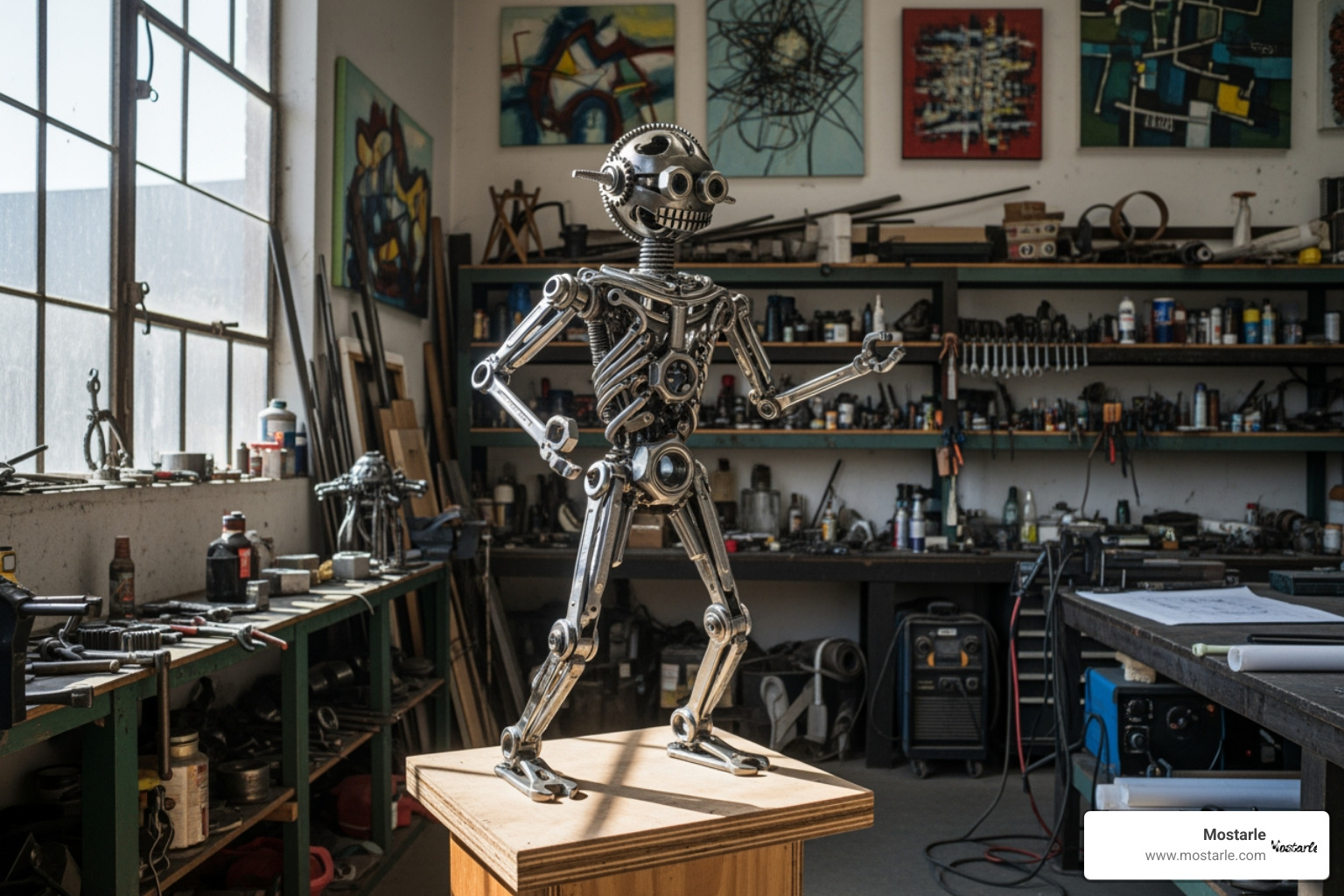
Art made from tools transforms discarded hardware into stunning sculptures and decorative pieces that breathe new life into forgotten objects. Here's what you need to know:
Types of Tool Art:
- Figurative Sculptures - Animals, robots, and human-like forms crafted from wrenches, hammers, and gears
- Abstract Creations - Hearts, geometric shapes, and conceptual pieces that reimagine tool forms
- Functional Decor - Garden trellises, wall hangings, and landscape art made from shovels, rakes, and saw blades
- Mixed Media - Combined hardware like horseshoes, railroad spikes, nuts, and bolts assembled into unique pieces
Common Materials Used: Shovels, rakes, hammers, wrenches, pliers, gears, horseshoes, railroad spikes, nuts, bolts, washers, and chains
There's something deeply satisfying about seeing a rusty hammer or worn-out shovel transformed into a beautiful sculpture. These pieces tell two stories at once - the history of their original use and their rebirth as art.
Artist Jim Dine captured this beautifully in his iconic sculpture "Heart Made From Tools," where saws, hammers, pliers, and rakes come together to form a person-sized heart. The tools reminded him of his family's hardware store and "his fascination with objects made by anonymous hands."
That's the magic of tool art. Every wrench carries the memory of someone's work. Every gear tells a story of motion and purpose. When artists repurpose these objects, they honor both their past and create something entirely new.
The movement has grown from quirky garden decorations to gallery-worthy installations. What was once considered "junk art" now commands respect in the art world, with limited edition pieces selling to collectors who appreciate the blend of industrial history and creative vision.
Whether you're drawn to whimsical garden creatures made from horseshoes or sophisticated assemblages worthy of museum walls, tool art offers endless possibilities for expression.
The Allure of Transformed Tools: From Workshop to Masterpiece
Theres an undeniable charm to art made from tools. Its more than just assembly; its a tribute to the history embedded in each piece of metal. Imagine a sculpture where a rusty wrench, once used to tighten bolts, now forms the neck of a majestic bird. This isn't just scrap metal; it's a story, a memory, a testament to human ingenuity.
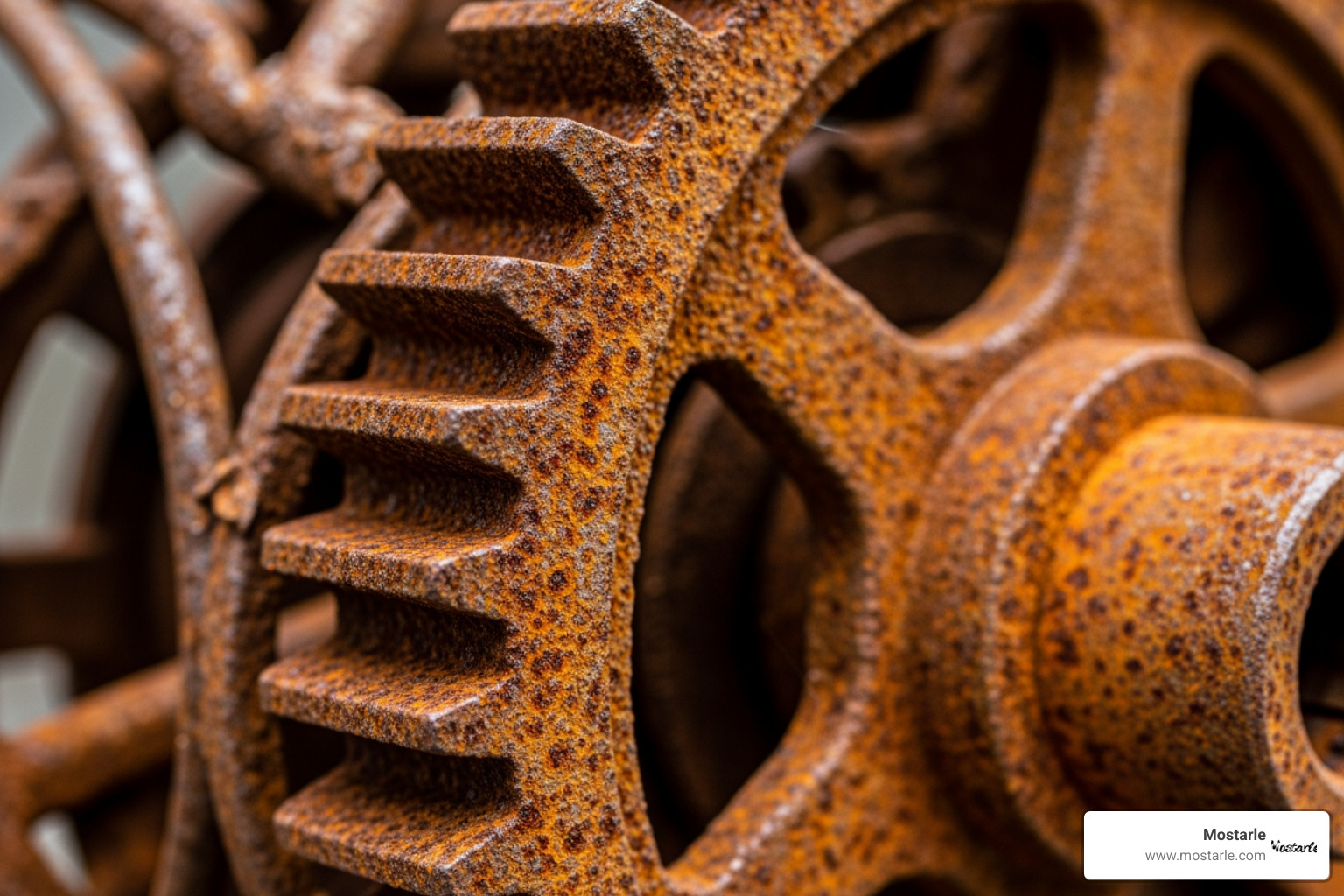
The history of these objects, their previous lives in workshops and gardens, lends an incredible depth to the finished artwork. The patina of rust, the nicks and dents from years of honest work these aren't flaws, but character marks that make each piece unique. We find beauty in this wear and tear, recognizing the echoes of countless tasks performed by "anonymous hands." This change from utility to artistry is what makes repurposed masterpieces so captivating. Dive deeper into this fascinating process with our guide on Repurposed Masterpieces: Crafting Art from Everyday Tools, and explore how the broader tradition of turning found objects into art has evolved over time on Wikipedia's entry on Found Object art.
The Story Behind the Steel
Every old tool carries a whisper of its past. A hammer head might have built a home, a rake might have tended a garden for decades. When artists incorporate these items into their work, they're not just using raw material; they're weaving a narrative. This is particularly evident in the work of artists like Jim Dine, whose use of tools as motifs was deeply personal, reminding him of his familys hardware store and the legacy of makers. The history or previous use of a tool profoundly influences its change into art, infusing it with emotional substance and a sense of human connection. We believe that this narrative qualitythe idea that a piece of art has lived a previous lifeis what truly lifts it.
The wear on tools from extensive handling over the years, as noted by artist Spadge Hopkins, gives greater substance to the characterization of emotions and relationships in his sculptures. Its a powerful concept: the very signs of a tool's past labor become integral to its new artistic identity. This change highlights human ingenuity, turning the mundane into the magnificent.
Aesthetic Qualities That Captivate
What makes tool-based scrap metal art so appealing? Its a delightful blend of industrial chic and rustic charm. The inherent metallic textures, the varied shapes, and the aged patinas create a visual feast. There's a fascinating juxtaposition of function and formobjects originally designed for practical tasks are reborn purely for aesthetic pleasure. The familiar is made new, surprising us with its creative potential. The gorgeous patina that older garden tools, made from wood and metal, develop over time is a key aesthetic quality. This natural aging process adds depth and authenticity that modern materials often lack.
The visual appeal of assembled hardware, from the intricate gears of a clock to the bold curves of a wrench, creates dynamic and engaging sculptures. Whether it's the stark elegance of raw metal or the vibrant contrast of painted components, these pieces often possess a rugged beauty that speaks to both our appreciation for craftsmanship and our love for unconventional art.
A Gallery of Inspiration: Popular Forms of Art Made from Tools
The versatility of tools as an artistic medium is truly astounding. From whimsical garden creatures to profound abstract statements, art made from tools knows no bounds. We've seen everything from tiny shelf decor to life-sized figures, all crafted from the remnants of workshops and garages.
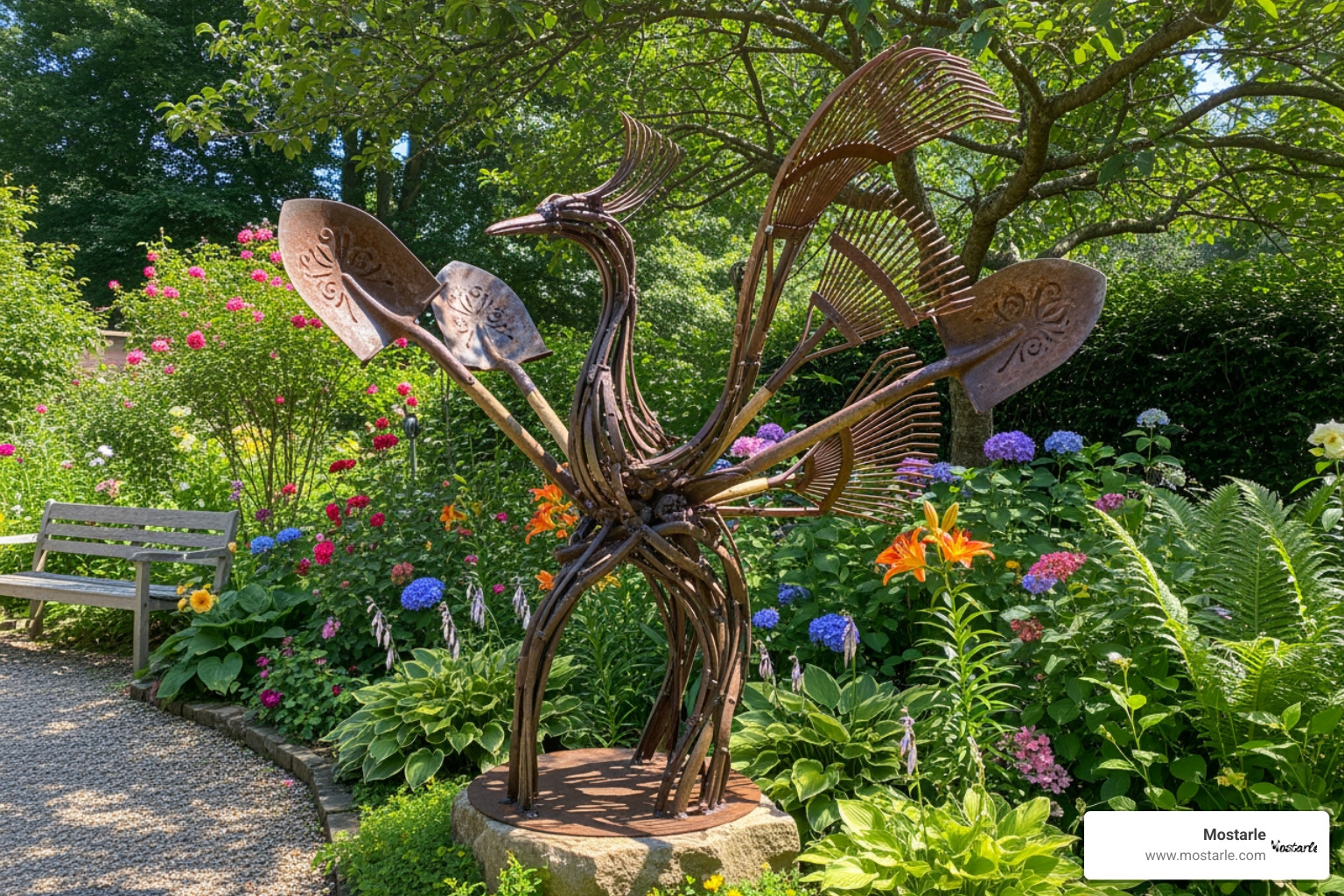
The range of common tools used in sculptures is vast: wrenches, hammers, pliers, gears, shovels, rakes, horseshoes, railroad spikes, nuts, bolts, and even bicycle parts. Each contributes its unique form and texture to the final piece, allowing artists to create a diverse array of stunning works.
Figurative Sculptures: Breathing Life into Metal
Figurative sculptures are perhaps the most immediately recognizable and charming forms of art made from tools. Artists breathe life into inanimate objects, crafting everything from playful animals to imposing humanoid robots. We've encountered delightful weiner dog sculptures made from horseshoes and round bar steel, complete with nuts, washers, and old hammer heads for character. Imagine an owl lantern sculpture, or a curious caterpillar for the garden, carefully assembled from various metal scraps.
The creativity doesn't stop there. We’ve seen repurposed garden tool chicken sculptures, whimsical frogs, and even knights with chain hair and horseshoe armor. These pieces often evoke a sense of wonder and humor, changing the hard edges of metal into expressive, character-filled forms. The key is seeing the potential in each tool – a shovel head becomes a wing, a wrench becomes a leg, and suddenly, a discarded object has a soul.
Abstract & Iconic Creations
Beyond recognizable figures, art made from tools also thrives in the field of abstract and conceptual art. Here, the focus shifts to exploring form, texture, and the inherent qualities of the materials themselves. Artists creatively reinterpret tools, using their shapes and lines to create new, dynamic compositions.
Jim Dine's "Heart Made From Tools" is a prime example of an iconic piece that leverages the symbolism of everyday objects within a familiar form. His use of saws, hammers, pliers, and rakes to construct a person-sized heart speaks volumes about the connection between labor, life, and love. Another compelling example is Damián Ortega's 'Tool Bones I-VI', where interlaced tools are covered in fabric and white plaster to resemble bones. This reconfigures ordinary items into organic-abstract objects, evoking profound questions of mortality and human existence. This approach highlights how tools can be a medium for deeper philosophical exploration, moving beyond their functional origins into the field of pure art. These works demonstrate the influence of movements like Pop Art, which liftd everyday objects to artistic status.
Functional Art for Home and Garden
Tool art isn't just for galleries; it can also be beautifully integrated into our living spaces and gardens. Functional art made from tools offers a charming way to blend utility with artistic expression.
Consider the ingenious use of long-handled tools as trellises for climbing plants, or old bike gears welded together to create an intricate support structure. These aren't just practical; they add a unique industrial-meets-natural aesthetic to any garden. We’ve seen stunning saw blade wall hangings, changing discarded blades into decorative elements for sheds or fences. Shovel heads can be artfully arranged to resemble flowers, adding a touch of rustic whimsy to outdoor spaces. Even simple displays of old tools on a shed wall can become a form of garden art, celebrating their history and form. Old metal wheels, often found in antique shops or farmyards, are always awesome in the garden, adding a touch of vintage charm.
The Artisan's Craft: Techniques and Materials
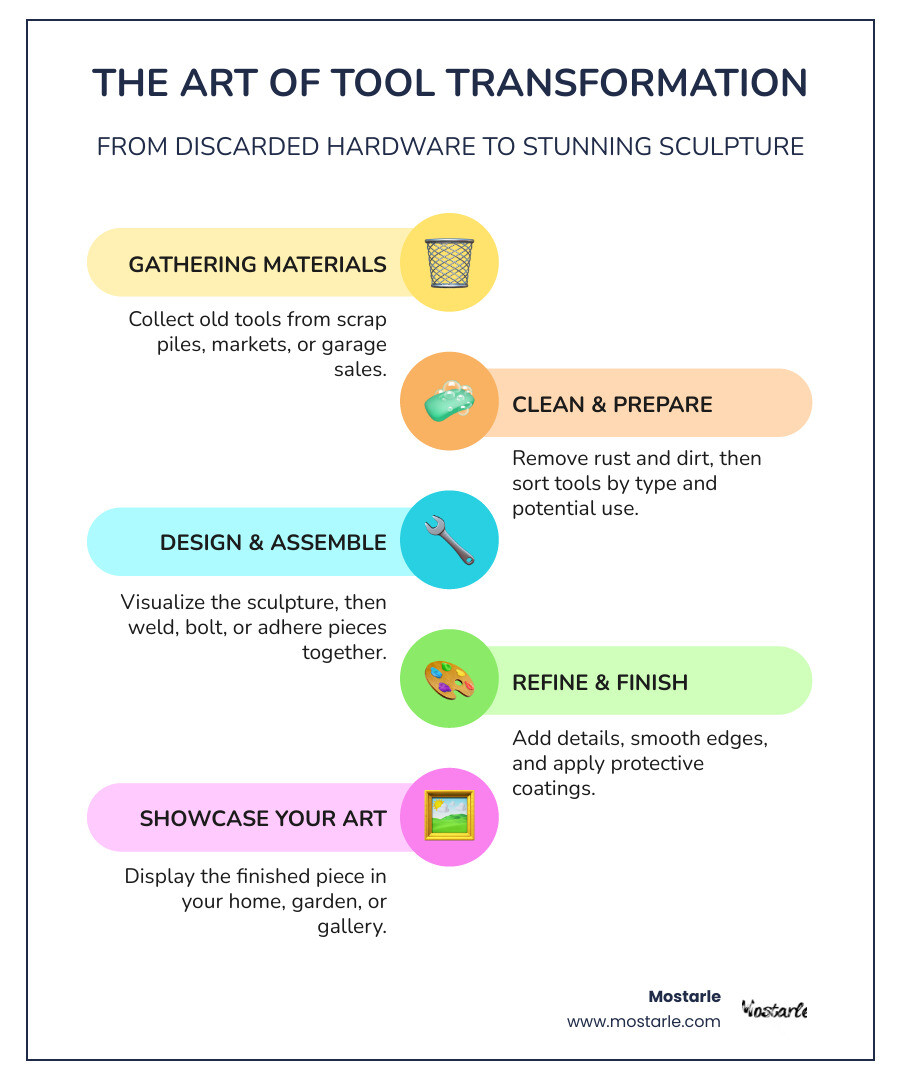
Creating art made from tools is a hands-on process that combines artistic vision with practical metalworking skills. It’s a journey from discarded objects to treasured art pieces, requiring careful sourcing, skillful manipulation, and sometimes a bit of elbow grease.
The process often involves a range of techniques, from simple assembly to complex welding. We find that the most compelling pieces are those where the artist truly understands the properties of their materials and how to coax new forms from them. For a comprehensive look at how found objects are transformed, explore The Art of Assemblage: Discovering Found Object Sculptures.
Sourcing Your Treasure: Where to Find Old Tools
One of the most exciting parts of creating art made from tools is the hunt for materials. Old tools and scrap metal are treasures waiting to be finded. We often find them in places like scrap yards, flea markets, farm auctions, and garage sales. These locations are goldmines for unique pieces with character and history.
The good news is that acquiring these materials can be incredibly cost-effective. The cost of acquiring scrap metal for art can be as low as $50 for a pickup truck load, making it an accessible material for artists and DIY enthusiasts alike. This affordability allows for experimentation and creativity without a huge initial investment, enabling us to transform forgotten fragments into remarkable pieces.
Essential Techniques for Creating Art Made from Tools
The primary techniques used to create art from scrap metal and tools typically involve joining metal pieces together. Welding is by far the most common and versatile method, allowing artists to create strong, permanent bonds between disparate metal objects. It’s how many of those intricate animal sculptures and robust abstract forms come to life.
Beyond welding, artists also employ assembly techniques such as bolting and riveting, which offer strong mechanical fasteners and can add to the industrial aesthetic of the piece. Cutting and shaping metal, whether through grinding, bending, or hammering, are also crucial steps in changing tools from their original forms into artistic components. For those looking to master the art of metal joining, our guide Welding Wonders: Unleash Your Inner Metal Artist provides excellent insights.
Getting Started Without a Welder: DIY Art Made from Tools
Don't have a welding torch? No problem! You can absolutely create your own tool-based art projects without advanced welding skills. There are plenty of accessible techniques for individuals to get started.
Mechanical fastening, using nuts, bolts, screws, and clamps, is a fantastic way to assemble pieces. Strong industrial adhesives designed for metal can also work wonders for smaller, less structural connections. For a simpler approach, consider creating displays where tools are arranged and wired together, or mounted onto a base. Painting and finishing can add a whole new dimension, allowing you to transform the appearance of rusty tools into vibrant, polished, or whimsical pieces. Simple assembly projects, like creating a decorative hanging or a small tabletop sculpture by wiring together pliers and wrenches, are great starting points. Get hands-on with some easy projects described in Hardware Hacks: DIY Projects to Get Your Hands Dirty.
The Bigger Picture: Sustainability and the Art World
Art made from tools is more than just a creative pursuit; it's a powerful statement about sustainability and our relationship with discarded objects. This movement reflects a growing global awareness of waste and the potential for creative reuse.
The perception of scrap metal art has evolved significantly over time. What was once seen as mere "junk art" is now celebrated in galleries and public spaces, commanding respect and value. This change mirrors a broader shift towards appreciating sustainable practices in the art world. Find more about this conscious approach to art in Art with a Conscience: Exploring Sustainable Practices in the Art World.
Art with a Conscience
Creating art made from tools is inherently an act of recycling and upcycling. By repurposing old tools and scrap metal, artists play a vital role in reducing landfill waste and minimizing the demand for new raw materials. This makes tool art a truly sustainable art practice.
A particularly innovative approach involves changing electronic waste into tools and art. The "Circuitous Tools" and "Applecations" projects, for instance, demonstrate how materials like old iMacs and circuit boards can be melted down and recast into functional tools like hammers, screwdrivers, and wrenches. This novel approach tackles the growing problem of e-waste, demonstrating that even highly complex discarded electronics can find a second life, not just as art, but as useful objects. It's about giving objects a second life, imbuing them with new purpose and meaning, and challenging us to rethink what we consider "waste."
From "Junk Art" to Fine Art
The journey of scrap metal art from the fringes to a more prominent standing in the art world is a testament to its enduring appeal and artistic merit. What was once dismissed as folk art or mere craft is now recognized for its creativity, skill, and often, its profound messages. Artists like Jim Dine, with his significant 'Heart Made From Tools' sculpture, exemplify the artistic value and potential of tool-based art, bringing it into mainstream art discussions.
Scrap metal art, including art made from tools, is a growing trend in home and garden decor, appealing to both artists and DIY enthusiasts. While some pieces remain accessible garden ornaments, others, particularly those by notable artists like Spadge Hopkins, are produced in limited editions (e.g., 5 or 10 pieces), indicating a niche but valuable market. This unique appeal ensures that each piece is a one-of-a-kind creation, often fetching significant market value. The economic aspect of tool-based art is quite favorable, given the relatively low material costs for scrap metal, especially when compared to the potential market value of unique, handcrafted sculptures. This evolution underscores the idea that creativity truly has no limits, and beauty can be found and forged from the most unexpected places.
Frequently Asked Questions about Art Made from Tools
We understand you might have some questions about diving into art made from tools. Here are some common inquiries we receive:
What are the best tools to start with for a beginner project?
For beginners, we recommend starting with tools that have distinct, recognizable shapes and are relatively easy to handle and assemble. Shovels, rakes, wrenches, pliers, nuts, and bolts are excellent choices. Their inherent forms can often be easily imagined as parts of larger figures. For example, a shovel head can become a bird's body or a flower petal, while wrenches can form limbs or decorative patterns. These tools allow you to create simple figures like flowers, animals, or abstract shapes without needing advanced skills or specialized equipment like welders, making them perfect for getting your hands dirty and releaseing your inner artisan.
How do I clean and prepare rusty tools for an art project?
Preparing rusty tools is a crucial step in ensuring your art project lasts and looks its best. We typically start by using a wire brush or steel wool to remove any loose rust, dirt, and debris. For a more thorough cleaning and to tackle stubborn rust, you can soak the tools in white vinegar for a few hours or even overnight, depending on the severity of the rust. Alternatively, commercial rust removers are available and can be highly effective. Safety is paramount during this process: always wear protective gloves and eye protection to prevent injury from sharp edges or chemical exposure. After cleaning, thoroughly dry the tools to prevent new rust from forming. At this stage, you'll need to decide if you want to preserve the charming, aged patina for a rustic look or if you prefer to paint over it for a more polished or colorful finish.
Can tool art be kept outdoors?
Yes, tool art can absolutely be kept outdoors, and it often looks fantastic in garden and landscape settings! However, to ensure its longevity and protect it from the elements, some preparation is necessary. We highly recommend applying a clear sealant or an outdoor-grade paint designed for metal to your finished piece. This protective layer will help prevent further rusting and degradation caused by rain, humidity, and UV exposure. Additionally, when designing and placing your outdoor sculptures, consider how water will drain. Ensure the sculpture has good drainage and doesn't collect standing water in crevices, as this can accelerate corrosion and lead to premature wear. With proper care, your art made from tools can beautifully adorn your outdoor spaces for many years to come.
Conclusion
The journey from a forgotten wrench to a captivating sculpture is a testament to the power of imagination and the beauty of repurposed materials. At Mostarle, we believe that creativity has no limits, and that changing ordinary, forgotten fragments into remarkable, creative pieces is at the heart of what we do. Art made from tools perfectly embodies this philosophy, showcasing how the mundane can be liftd to the magnificent.
We've explored the rich history and aesthetic appeal of these unique creations, digd into the techniques and materials used, and highlighted the significant environmental and artistic impact of this growing movement. Whether you're a seasoned artist or just starting to explore your creative side, art made from tools offers endless possibilities for expression and innovation. So, gather those old tools, ignite your imagination, and start crafting your own masterpieces.
Find your inspiration and discover more creative projects on our blog.