
Meet the Shiny Blue Jumping Spider That Looks Like a Tiny Metallic Robot
The Tiny Metallic Spider That Looks Like It Was Built, Not Born
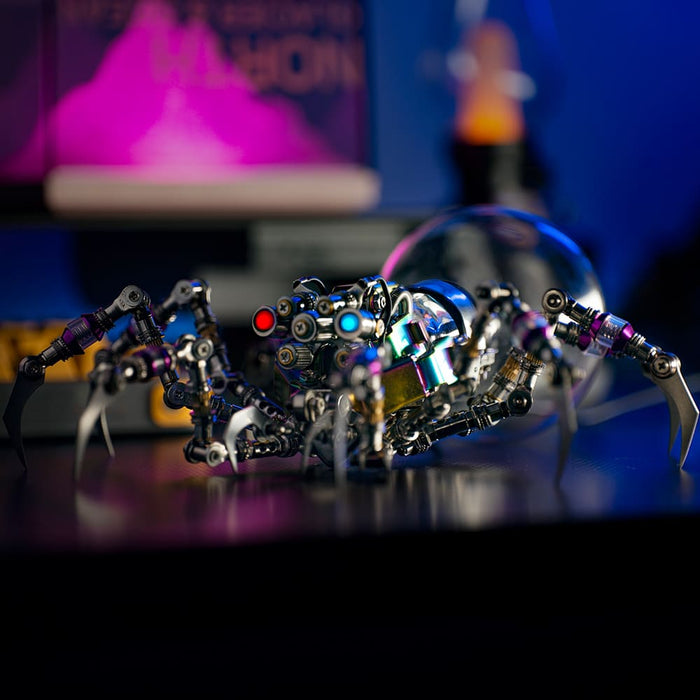
The shiny jumping spider is one of nature's most visually striking creatures — a spider so metallic and precise in its appearance that it genuinely looks like a miniature robot assembled from polished chrome and colored glass.
Quick answer: What is a shiny jumping spider?
- A shiny jumping spider is any jumping spider (family Salticidae) with a metallic, iridescent, or glossy appearance
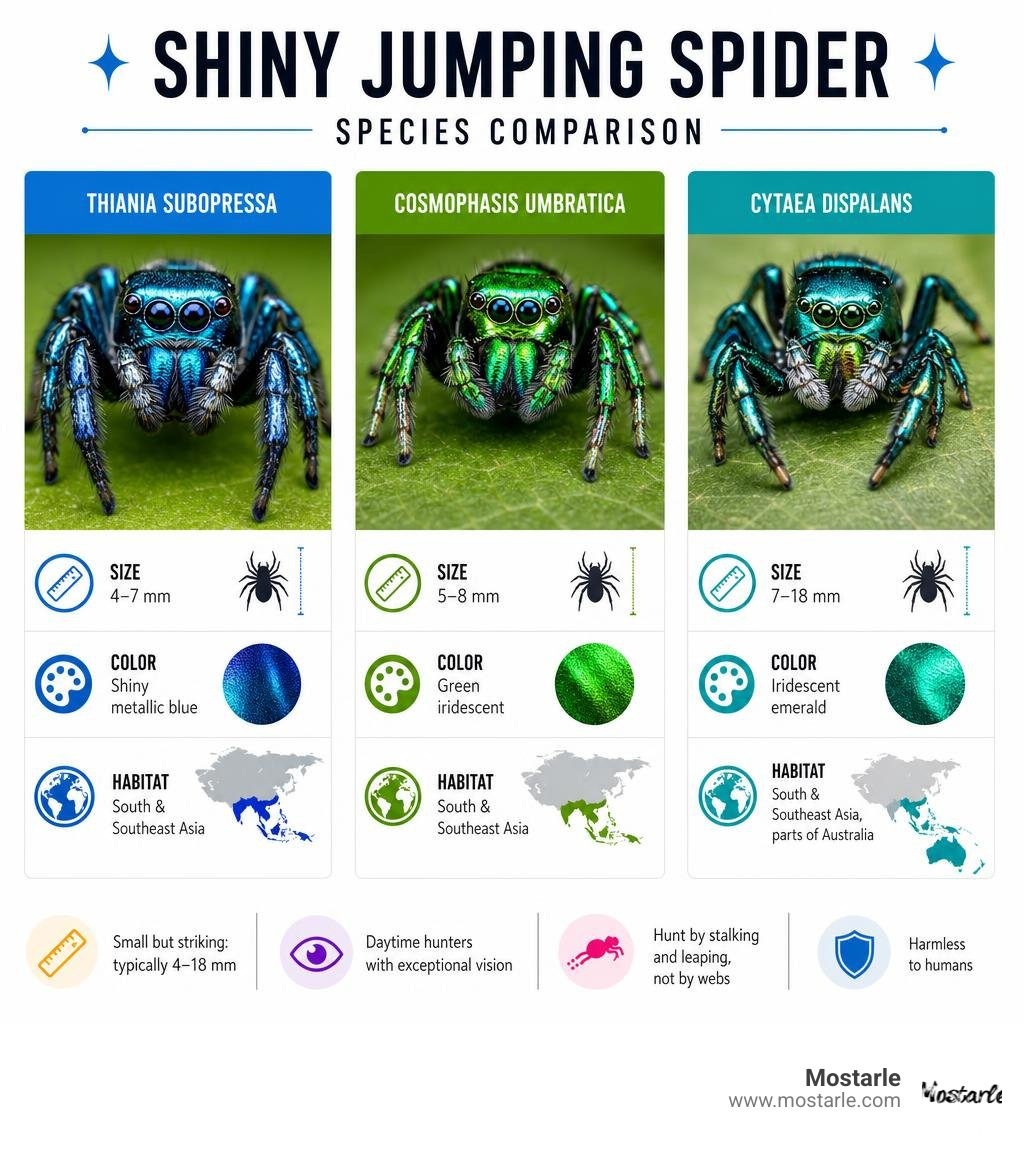
- The most well-known species include Cosmophasis umbratica (green iridescent), Thiania subopressa (shiny blue), and Cytaea dispalans (iridescent emerald)
- They are found across South and Southeast Asia, as well as parts of North America and Australia
- They are small (typically 4–18 mm), completely harmless to humans, and hunt by stalking and leaping — not by spinning webs
- Males often reflect ultraviolet light as part of their courtship displays
These spiders don't just look extraordinary. They are extraordinary. Jumping spiders belong to the largest spider family on Earth, with over 6,000 species across 600 genera. And the shiny ones? They represent some of the most visually complex biology in the entire animal kingdom.
Their metallic colors aren't painted on. They're produced by microscopic structures in their scales — the same principle behind a butterfly's wing or a soap bubble's shimmer.
If you've ever spotted a tiny spider that caught the light like a jewel, or looked like it could have been designed by an industrial engineer, you've almost certainly crossed paths with one of these remarkable animals.
What is a Shiny Jumping Spider?
When we think of spiders, we often picture dusty corners, messy webs, and dull brown or gray colors. But the family Salticidae (jumping spiders) breaks all of those rules. These active, daytime hunters are celebrated for their incredible diversity, massive eyes, and expressive behaviors. Among this massive family of over 6,000 species, a select few have evolved a breathtaking metallic luster.
These are what we call shiny jumping spiders. They don't look like they belong in a garden; they look like they were carefully constructed in a high-tech lab. Their bodies are covered in specialized, reflective scales that bounce light in shimmering shades of cobalt blue, emerald green, copper, and gold. Combined with their segmented, highly articulated legs, their movements can seem almost mechanical—like a tiny, clockwork robot patrolling a leaf.
To help you identify these metallic marvels, we have put together a quick reference table of some of the most prominent shiny jumping spider species:
| Species Common Name | Scientific Name | Average Size | Primary Metallic Colors | Key Geographic Range |
|---|---|---|---|---|
| Shiny Blue Jumping Spider | Thiania subopressa | 5 – 6 mm | Electric blue, teal, metallic black | East & Southeast Asia (e.g., Singapore) |
| Tropical Ornate Jumper | Cosmophasis umbratica | 4 – 7 mm | Iridescent green, bronze, silver | South & Southeast Asia |
| Lobster Claw Tiny Metallic Jumper | Phintella lepidus | 4 mm | Bright gold, metallic black, white | China, Singapore |
| Iridescent Green Garden Jumper | Cosmophasis thalassina | 4 – 7 mm | Brilliant neon green, turquoise | Australia, Southeast Asia |
| Iridescent Emerald Jumper | Cytaea dispalans | 5 – 6 mm | Emerald green, golden-orange | Indonesia, Singapore, Myanmar |
The Metallic Aesthetics of the Shiny Jumping Spider
What makes the shiny jumping spider so visually arresting is the way its body interacts with light. At Mostarle, we are obsessed with the beauty of mechanical design and hardware. We spend our days transforming ordinary, forgotten fragments like nuts, bolts, and copper wires into remarkable, creative art pieces. When we look at a shiny jumping spider, we see nature doing the exact same thing: crafting a masterpiece out of structural, geometric parts.
Unlike most animals that rely on chemical pigments for color, these spiders utilize structural coloration. Their scales contain microscopic, repeating patterns that interfere with light waves, reflecting only specific, brilliant wavelengths back to the observer.
For example, the canopy-dwelling species described in Species Phidippus otiosus - BugGuide.Net (commonly known as the canopy jumping spider, native to the Southeastern United States) features stunning, iridescent green chelicerae (mouthparts) that flash like polished chrome against its otherwise patterned body. Whether it is a subtle metallic accent or an all-over chrome finish, these aesthetics serve a vital purpose in the wild, helping the spiders communicate, attract mates, and sometimes even blend into sunlit foliage.
Key Species of the Shiny Jumping Spider
Let us take a closer look at some of the most spectacular species that wear this robotic armor:
1. Shiny Blue Jumping Spider (Thiania subopressa)
This is the ultimate "robotic" spider. With an adult size of just 0.5 to 0.6 cm, this tiny creature is covered in brilliant, metallic blue and teal bands. They are highly active, solitary hunters that do not spin webs to catch food. Instead, they rely on their powerful legs to leap onto prey. If you are looking to admire one up close, they are occasionally available through specialty captive breeders, such as the Shiny blue jumping spider(Thiania subopressa) for Sale page.
2. Tropical Ornate Jumping Spider (Cosmophasis umbratica)
Found widely across South and Southeast Asia, Cosmophasis umbratica is famous for its extreme sexual dimorphism under ultraviolet (UV) light. To the naked human eye, the males look like stunning silver-and-green gems. Under UV light, however, they light up like neon signs to attract females. Males typically measure 5 to 7 mm, while females are slightly smaller at 4 to 5 mm.
3. Lobster Claw Tiny Metallic Jumper (Phintella lepidus)
A true miniature marvel measuring only 4 mm in length, this species is found in the primary and secondary forests of China and Singapore. Detailed in the "Phintella" lepidus Cao & Li, 2016 - Lobster Claw Tiny Metallic Jumper - SpiderNet profile, the males of this species boast a golden metallic dorsum contrasted by a black-and-white band, alongside a uniquely shaped male anatomy that resembles a tiny lobster claw.
4. Iridescent Green Garden Jumper (Cosmophasis thalassina)
If you walk through sun-lit gardens or forest fringes in Australia or Singapore, you might spot Cosmophasis thalassina (C. L. Koch, 1846) - Iridescent Green Garden Jumper - SpiderNet . This species is adorned with iridescent green scales and black transverse bands. The males use these glittering scales in complex dancing rituals to woo females.
5. Iridescent Emerald Jumper (Cytaea dispalans)
Mainly found in the foliage of secondary forests in Southeast Asia, Cytaea dispalans (Thorell, 1892) - Iridescent Emerald jumper - SpiderNet is easily recognized by the metallic green scales covering the male's legs, face, and back. Females, on the other hand, sport a more modest golden-orange pattern with black brackets that look charmingly like a raccoon's tail.
Iridescence and the Science of Metallic Colors

How does a living organism end up looking like it was chrome-plated in an industrial workshop? The secret lies in evolutionary biophysics.
The metallic colors of the shiny jumping spider are primarily "structural colors." Instead of absorbing certain wavelengths of light using pigments (the way a red leaf or a black beetle does), the microscopic scales on these spiders are shaped like tiny prisms or diffraction gratings. When sunlight hits these nanostructures, it bounces off different layers of the scale at slightly different times, causing optical interference. This creates a shimmering, shifting color effect that changes depending on the angle from which you view the spider.
But this metallic finish isn't just for show. It plays a massive role in their survival and reproduction:
- UV Reflection & Sexual Dimorphism: In species like Cosmophasis umbratica, the visual display is a high-stakes game. While humans see a beautiful green-and-black spider, other spiders see a completely different picture. Males reflect UV light across their entire bodies during courtship displays. Interestingly, females and juveniles do not reflect UV light at all. This extreme dimorphism allows males to signal their fitness to potential mates, even though it comes with the evolutionary trade-off of making them more visible to certain predators.
- Unmatched Vision & Depth Perception: To appreciate these visual displays, jumping spiders have developed some of the best eyes in the animal kingdom. They don't just see colors; they have a unique depth-perception system. Jumping spiders use color penetration differences across four distinct retinal layers to calculate exactly how far away an object is. This multi-layered visual system allows them to accurately judge jumping distances and recognize objects or potential mates from up to 20 to 30 feet away!
Habitat, Distribution, and Hunting Behavior
Jumping spiders are incredibly successful survivors, living on every single continent on Earth except Antarctica. In fact, their evolutionary history is incredibly ancient; the oldest known jumping spider specimen is a 54 million-year-old fossil beautifully preserved in amber.
While you can find various jumping spiders worldwide—from the gardens of Europe, as tracked by projects like Jumping Spiders - SpiderSpotter , to the diverse habitats of Australia documented by SALTICIDAE Jumping spiders - Arachne.org —the highly metallic, shiny species prefer warm, sun-lit, tropical environments.
You will often find them darting across the broad leaves of tropical plants in countries like Singapore, Australia, Argentina (where unique local species are celebrated, such as in Bichos Argentinos #6 – Jumping Spider | Beetles In The Bush ), and even the arid garden landscapes of Bahrain (see Spiders in Bahrain - Species & Pictures ).
These spiders are active during the day, using the bright sunlight to supercharge their structural colors and power their highly visual hunting style.
Unlike typical spiders, they do not spin webs to trap their dinner. They are active hunters, often referred to as the "tigers of the spider world" due to their stalk-and-leap strategy. When a shiny jumping spider spots a fly, gnat, or small beetle, it slowly creeps closer, secures a silk "dragline" to the leaf as a safety harness, and then leaps. They can jump over 2 feet—nearly 20 times their own body length!
However, there are fascinating exceptions to these rules:
- Web Builders: The spiny-legged jumper, Spartaeus spinimanus , found across Southeast Asia, actually builds large sheet webs on tree trunks to capture moths. This is highly unusual for the Salticidae family.
- Vegetarian Tendencies: Some shiny species, including Cosmophasis umbratica, are partially nectivorous. In addition to hunting small insects, they actively feed on the sweet nectar of tropical plants like the Ixora flower.
This active lifestyle makes them incredibly important ecological contributors, keeping local pest populations in check without the need for massive, messy webs. And unlike dangerous arachnids like the highly venomous BRAZILIAN WANDERING SPIDER | Rainforest Expeditions , these tiny metallic jumpers pose absolutely zero threat to humans.
Keeping Metallic Jumpers as Pets: Care and Ethics
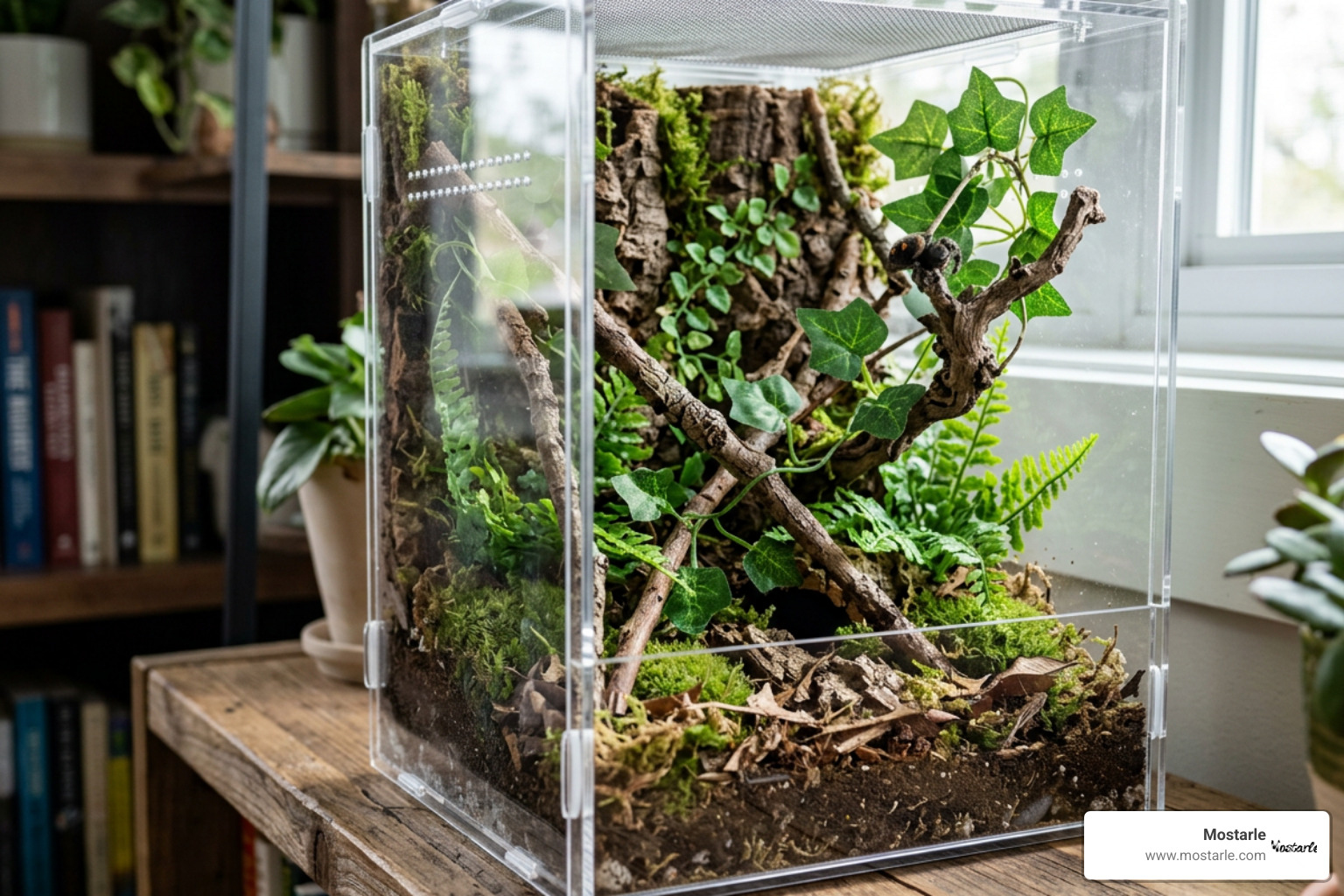
Because of their curious personalities, expressive eyes, and beautiful colors, jumping spiders have quickly become some of the most popular invertebrate pets in the world. Keeping a shiny jumping spider can be an incredibly rewarding experience, but they require specific care to thrive.
If you are considering welcoming one of these tiny "robots" into your home, here are the essential husbandry guidelines:
- Temperature: Keep their enclosure warm, ideally between 22°C and 29°C (71°F to 84°F).
- Humidity: Tropical species require high humidity, typically between 70% and 85%. This can be maintained by lightly misting one side of the enclosure with distilled water daily. Never leave standing puddles of water, as tiny spiders can easily drown in them.
- Diet: Feed them live, active prey. Good options include fruit flies (Drosophila melanogaster or D. hydei) for smaller spiders, and pinhead crickets, small roaches, or breadworms (mealworms) for larger individuals. They do not eat dead insects.
- Housing: Jumping spiders are highly territorial and solitary. You must house them individually. Females leave their egg cocoons after about two weeks and live completely independent lives, never cohabiting with members of the same sex. Keeping them together will inevitably lead to territorial fights or cannibalism.
- Ethical Sourcing: Always source your pets ethically. Avoid taking spiders from the wild, as this disrupts local ecosystems. Instead, purchase captive-bred specimens from reputable breeders, such as those found on Jumping spiders buy - Insektenliebe - Insektenliebe .
Frequently Asked Questions About Shiny Jumping Spiders
What is the adult size of Thiania subopressa?
The shiny blue jumping spider (Thiania subopressa) is a delightfully tiny species. As adults, they typically measure between 0.5 and 0.6 cm (about 0.2 inches) in body length. During their sub-adult stage, they are even smaller, measuring around 0.3 to 0.5 cm. Because of their minuscule size, they require very small prey, such as fruit flies, and escape-proof enclosures.
How do male Cosmophasis umbratica use UV light?
Male Cosmophasis umbratica utilize ultraviolet (UV) light as a secret communication channel. Their bodies are covered in specialized scales that reflect UV light. During courtship, the male performs a complex dance, waving his legs and flashing his UV-reflective body parts at the female. Because females do not reflect UV light, this bright contrast helps the female identify him as a healthy, suitable mate of the correct species.
Are shiny jumping spiders dangerous to humans?
Not at all! While they do possess venom (which they use to quickly subdue their insect prey), their venom is incredibly mild and completely harmless to humans. Furthermore, jumping spiders are famously docile, curious, and non-aggressive. They will almost always choose to jump away rather than bite. A bite would only occur if the spider was severely pinched or crushed, and even then, the sensation is typically milder than a mosquito bite.
Conclusion
The shiny jumping spider is a breathtaking reminder of just how creative nature can be. With their brilliant iridescent scales, complex visual systems, and precise, robotic movements, these tiny creatures bridge the gap between the organic world and the beauty of structured, mechanical design.
At Mostarle, we share this exact same fascination with structure, symmetry, and transformation. Just as evolution takes microscopic scales and structures them to create brilliant metallic colors, we take discarded everyday hardware—like nuts, bolts, washers, and copper wire—and assemble them into striking, hand-crafted metal models. We look at the natural world and see a grand workshop, where even a tiny spider can look like a beautifully engineered piece of art.
If you have fallen in love with these expressive, mechanical-looking arachnids, we invite you to take the next step. Dive deeper into their fascinating behaviors, unique personalities, and incredible evolutionary traits by checking out our guide on Discover the world of jumping spiders.