
Beyond Sudoku: A Guide to Truly Brain-Stimulating Puzzles
Why Brain Stimulating Puzzles Are Your Mind's Best Friend
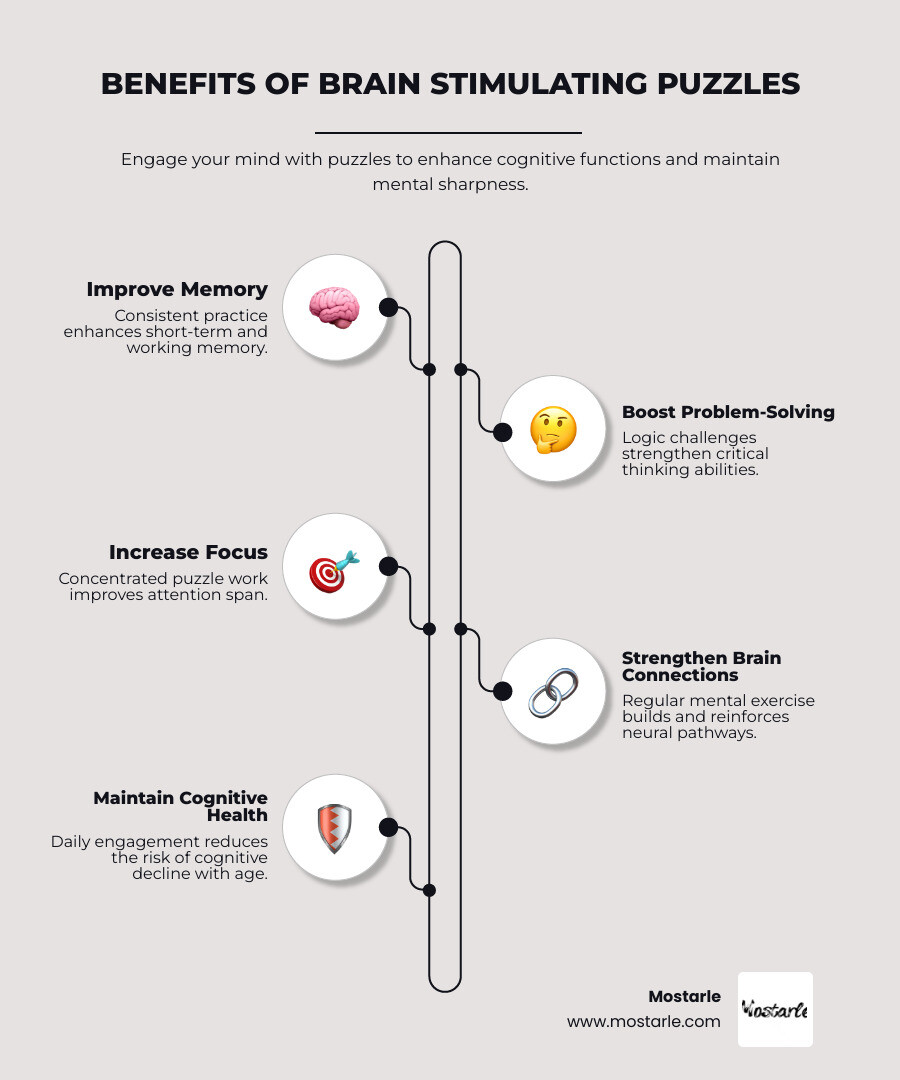
Brain stimulating puzzles are games and activities designed to challenge your cognitive abilities, including memory, problem-solving, logic, and spatial reasoning. They range from traditional options like crosswords and jigsaw puzzles to complex 3D mechanical puzzles and logic grids. These mental workouts help keep your mind sharp by strengthening connections between brain cells and building cognitive reserve.
Key Benefits of Brain Stimulating Puzzles:
- Improve Memory - Regular puzzle-solving helps improve both short-term and working memory
- Boost Problem-Solving Skills - Logic puzzles and riddles strengthen critical thinking abilities
- Increase Focus - Concentrated puzzle work improves attention span and concentration
- Improve Creativity - Spatial and mechanical puzzles stimulate innovative thinking
- Maintain Cognitive Health - Consistent engagement helps prevent cognitive decline with age
You probably know Sudoku. Maybe you've done a crossword or two. But there's a whole universe of puzzles out there that can truly challenge your brain in ways you haven't experienced.
Medical research shows that an active, engaged mind is a healthy mind. When you challenge your brain with puzzles, you're not just passing time—you're actually changing how your brain works. Doing brain teasers can improve short-term memory loss, and challenging your mind with different types of puzzles keeps the connections between your brain cells sharp.
The best part? You don't need hours of free time. Just 10-15 minutes a day can make a real difference. Whether you're looking to maintain mental sharpness, prevent cognitive decline, or simply enjoy a satisfying challenge, brain-stimulating puzzles offer something for everyone—from children developing critical thinking skills to adults seeking creative outlets and seniors maintaining cognitive function.
Let's explore the fascinating world of puzzles that go far beyond the familiar Sudoku grid.
The Science Behind the Fun: Why Puzzles Boost Your Brainpower
We often hear about the benefits of physical exercise for our bodies, but what about our brains? Just like our muscles, our brains need regular workouts to stay fit and healthy. This is where brain stimulating puzzles come into play. They aren't just a fun pastime; they are powerful tools for enhancing cognitive health, backed by science.
At the core of these benefits is a concept called neuroplasticity – our brain's remarkable ability to reorganize itself by forming new neural connections throughout life. When we engage in challenging activities like puzzles, we're actively stimulating these connections. Challenging your mind with various puzzles keeps the connections between your brain cells sharp, fostering a healthier, more adaptable brain.
Studies have consistently shown that engaging in brain games can sharpen your mind, boosting crucial cognitive functions. For instance, research indicates improvements in memory, attention span, thinking speed, creativity, and problem-solving skills. One study involving users of a popular brain-training program reported that participants showed greater improvements in working memory, short-term memory, processing speed, problem-solving, fluid reasoning, and overall cognitive function compared to a control group. This highlights the tangible impact these activities can have on our mental capabilities.
Moreover, regular mental stimulation contributes to building cognitive reserve. This reserve acts as a buffer against age-related cognitive decline and even neurodegenerative diseases. By consistently challenging ourselves with puzzles, we're essentially strengthening our brain's resilience. Learning how to solve brain teasers, for example, improves our ability to concentrate and focus, skills that are invaluable in all aspects of life.
So, when we sit down to tackle a new puzzle, we're not just seeking entertainment; we're investing in our long-term cognitive well-being. We're giving our brains the workout they need to stay vibrant and efficient, ensuring we can continue to learn, adapt, and solve problems effectively. To explore more activities that activate the brain, check out our guide on Boost Your Brain Power: 3 Activities That Activate the Brain.
How Different Puzzles Stimulate Your Brain
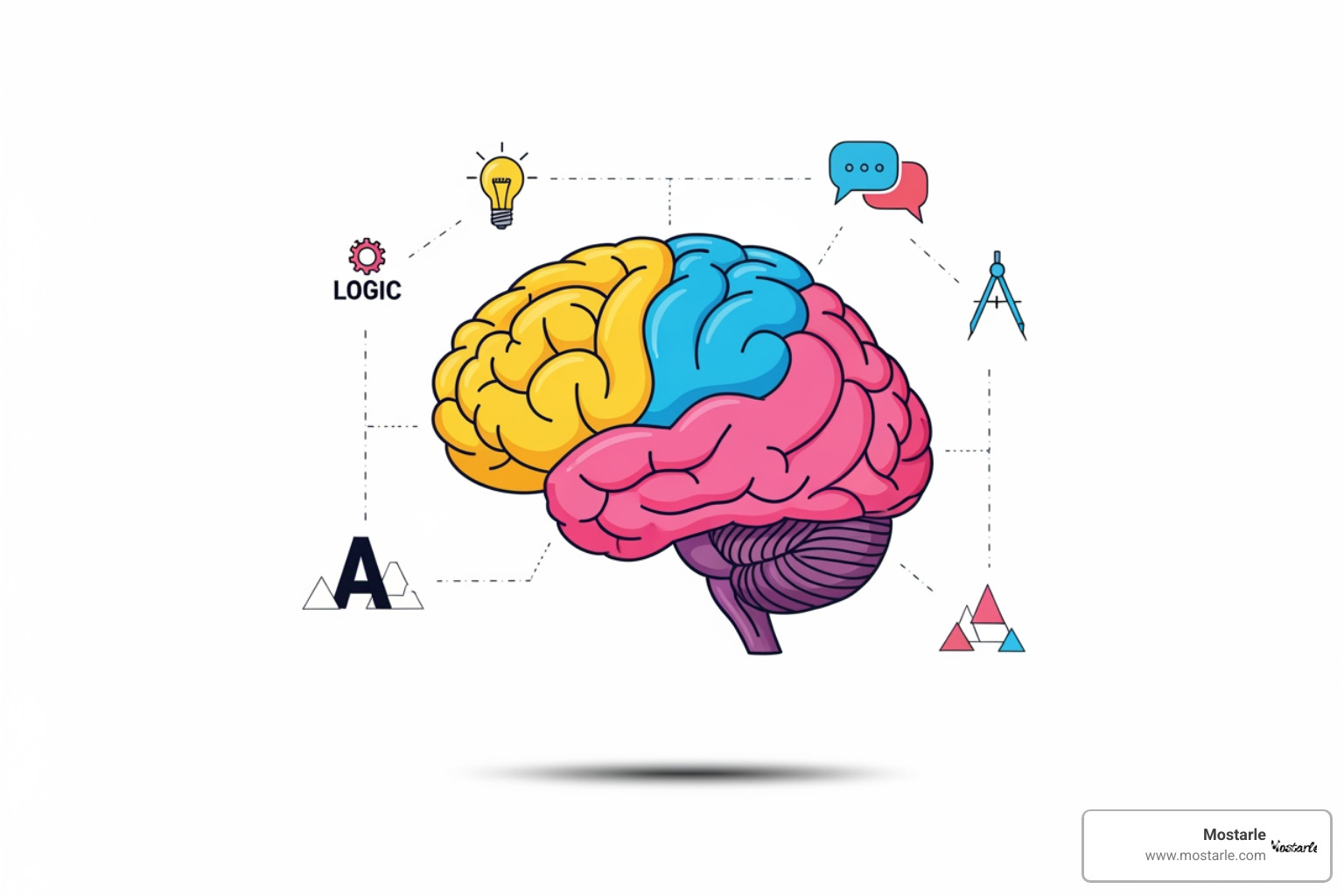
Different types of brain stimulating puzzles are designed to target and improve specific cognitive functions. It's like a diverse workout routine for your brain, ensuring all areas get the attention they need.
- Logic Puzzles (e.g., Sudoku, logic grids, riddles): These puzzles demand deductive reasoning, critical thinking, and systematic problem-solving. They train our ability to analyze information, identify patterns, and draw conclusions based on given constraints. This process strengthens executive functions like planning and inhibition.
- Word Games (e.g., crosswords, anagrams, word searches): Engaging with words boosts our vocabulary, verbal fluency, and linguistic reasoning. They challenge our memory for words and concepts, improve attention to detail, and can even improve processing speed as we quickly search for solutions. Riddles, in particular, encourage lateral thinking, pushing us to think outside conventional boundaries.
- Spatial Puzzles (e.g., jigsaw puzzles, 3D puzzles, tangrams): These puzzles are fantastic for developing spatial perception, visualization, and fine motor skills. They require us to manipulate shapes and objects mentally, understand their relationships in space, and often involve hand-eye coordination. This type of stimulation is crucial for tasks requiring visual-spatial reasoning.
- Memory Games (e.g., matching games, sequence recall): Directly targeting our memory, these games improve both short-term and working memory. They challenge our ability to encode, store, and retrieve information, helping us practice recall and recognition skills.
Beyond these, there are puzzles that combine elements, stimulating multiple areas simultaneously. For example, some brain training programs use AI to adapt challenges, targeting specific cognitive skills such as response time, shifting attention, visual scanning, planning, and even emotional processing. By understanding how each puzzle type works, we can choose activities that best suit our cognitive goals and provide a comprehensive mental workout.
A Universe of Puzzles: Exploring Different Types of Brain Stimulators
The world of brain stimulating puzzles is vast and varied, offering endless opportunities to challenge ourselves. From classic paper-and-pencil games to intricate mechanical creations, there's a perfect puzzle for every preference and skill level.
Here's a list of popular puzzle types that truly stimulate the brain:
- Logic and Number Puzzles: Sudoku, KenKen, Nonograms, Kakuro, logic grid puzzles, math brain teasers.
- Word and Language Games: Crosswords, riddles, anagrams, word searches, Scrabble, Boggle, cryptograms.
- Spatial and Visual Puzzles: Jigsaw puzzles, tangrams, 3D puzzles (like those from Mostarle), mechanical puzzles (dismess, interlocking, sequential movement), maze puzzles, spot-the-difference.
- Memory and Pattern Games: Memory matching games, Simon Says, sequence recall games, chess puzzles, pattern recognition challenges.
- Strategy Games: Chess, Mahjong, Go, Minesweeper (digital).
These aren't just games; they are gateways to improved cognitive function, each offering a unique pathway to mental agility.
Logic and Number Puzzles
Logic and number puzzles are the gym for our analytical minds. They demand precision, patience, and a methodical approach to problem-solving. Games like Sudoku, where we fill a grid with numbers ensuring each row, column, and block contains all digits without repetition, are excellent for deductive reasoning. Similarly, KenKen and Kakuro combine arithmetic with logic, forcing us to think strategically about number placement and combinations.
Math brain teasers, often found in riddle collections, challenge our numerical fluency and problem-solving under unique constraints. The beauty of these puzzles lies in their ability to improve short-term memory loss and keep the connections between our brain cells sharp. They teach us to break down complex problems into smaller, manageable steps, a skill highly transferable to real-life challenges. For more ways to challenge your thinking, you can explore activities that activate the brain.
Word and Language Games
For those who love language, word and language games offer a playground for verbal dexterity and cognitive flexibility. Crosswords, a perennial favorite, not only expand our vocabulary but also test our general knowledge and ability to retrieve information from memory. Riddles, like those found in collections of 101 brain teasers, push us to engage in lateral thinking, considering multiple interpretations of words and phrases to arrive at often surprising solutions.
Games such as anagrams and word searches sharpen our attention to detail and processing speed, as we quickly identify patterns and manipulate letters. These puzzles are fantastic for improving concentration and focus, making us more attentive and efficient in our daily tasks. Engaging in these word-based challenges helps us hone our communication skills and keeps our linguistic pathways active and robust. To sharpen your wit with more engaging puzzles, consider exploring Beyond the Ordinary: Engaging Metal Puzzles to Sharpen Your Wit.
Spatial and Mechanical Puzzles
Spatial and mechanical puzzles are where the tactile meets the cerebral, offering a multi-sensory experience that deeply engages our cognitive abilities. Traditional jigsaw puzzles, for instance, are superb for developing visual perception, spatial reasoning, and pattern recognition as we piece together fragments to form a complete image.
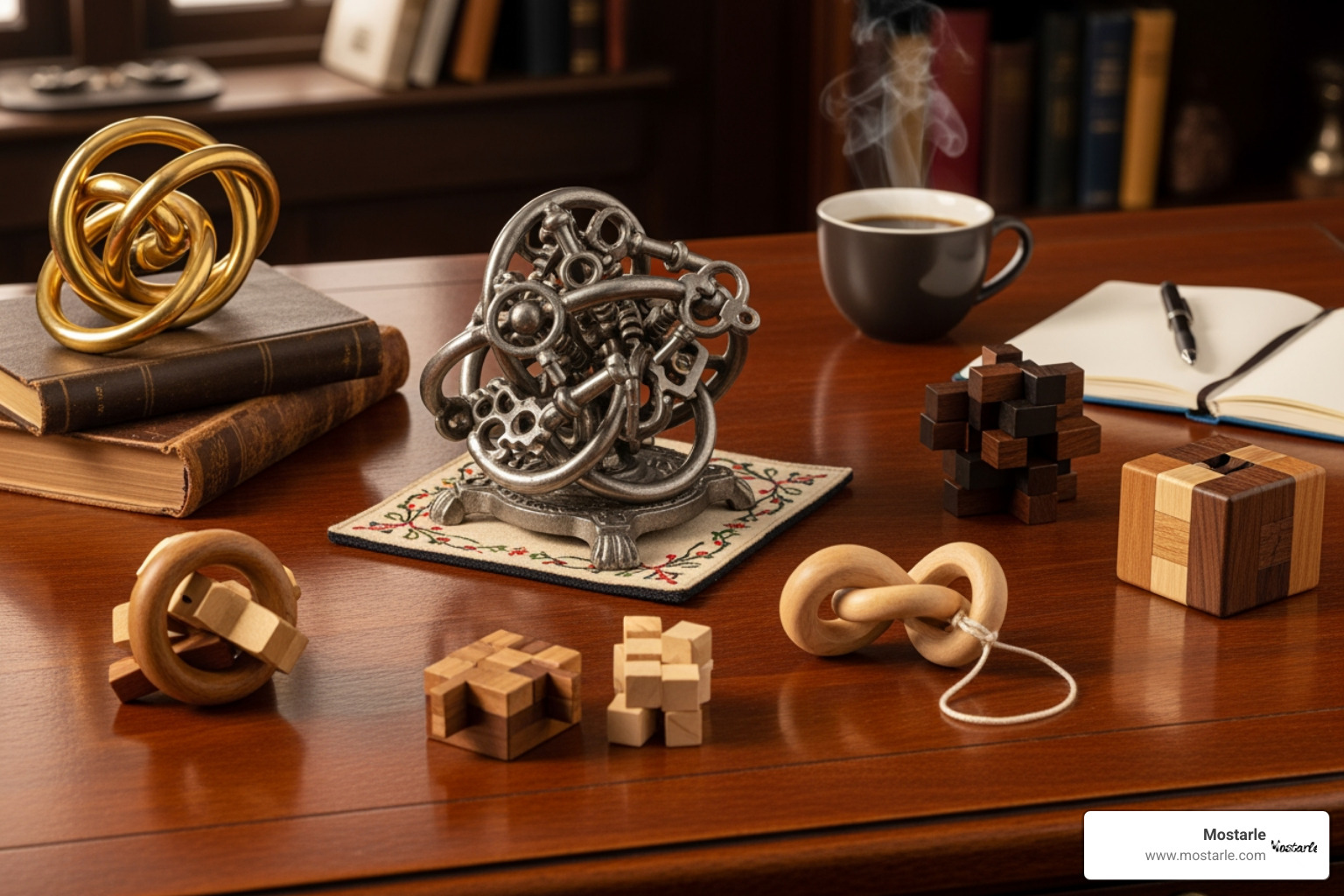
Then there are 3D puzzles and mechanical puzzles, a specialty of ours at Mostarle. These intricate creations, often made from metal or wood, require us to visualize complex structures, understand how components fit together in three dimensions, and often involve a sequential process of assembly or dismess. Our unique models, crafted from everyday hardware like nuts and bolts, exemplify how ordinary fragments can be transformed into remarkable, creative pieces, proving that creativity truly has no limits. These puzzles ignite our cognitive skills and sparkle creativity, enhancing fine motor skills and spatial visualization. For those interested in the intricate world of such puzzles, our articles like Tickle Your Brain: 3D Puzzles Can Ignite Your Cognitive Skills and Sparkle Creativity and The Art of Disentanglement: Solving Intricate Metal Ring Puzzles offer deeper insights. They are not just about finding a solution; they're about appreciating the artistry and engineering involved.
Your Daily Mental Workout: Integrating Brain Stimulating Puzzles into Your Life
Incorporating brain stimulating puzzles into our daily routine doesn't have to be a chore; it can be an enjoyable and rewarding habit. Think of it as a mental workout, just like a physical one. The key is consistency. Dedicating even a small amount of time each day can yield significant long-term benefits for mental sharpness and cognitive decline prevention.
Many experts suggest that ten to fifteen minutes a day is a great way to build a consistent routine for cognitive exercises. This short, focused period can be seamlessly integrated into various parts of your day: during a coffee break, while commuting, or as a relaxing activity before bed. The goal is to make it a regular part of your lifestyle, something you look forward to rather than feel obligated to do.
The beauty of puzzles is their versatility. Whether you prefer digital apps that offer a fresh set of games daily or physical puzzles you can pick up and put down, there are options to fit every lifestyle. The act of engaging with a puzzle, even for a brief period, shifts our focus, encourages problem-solving, and provides a refreshing break from other cognitive tasks. This small daily investment can contribute immensely to maintaining mental agility and overall brain health as we age.
The Benefits of Daily Brain Stimulating Puzzles
The advantages of making brain stimulating puzzles a daily habit extend far beyond just sharpening specific cognitive skills. Consistent engagement contributes to our overall well-being and provides a unique form of entertainment.
Regular puzzle-solving has been linked to improved memory, attention span, thinking speed, creativity, and problem-solving skills. But it's not just about measurable cognitive gains. The process of tackling a puzzle can be incredibly satisfying, providing a sense of accomplishment and boosting self-esteem. This can be a powerful antidote to stress, offering a focused distraction that calms the mind and reduces anxiety. Many find the immersive nature of puzzles to be a form of mindfulness, allowing them to be present and engaged in the moment.
Moreover, the sheer variety of puzzles means there's always something new to explore, preventing boredom and ensuring continuous engagement. Whether it's the quiet contemplation of a logic grid or the hands-on satisfaction of assembling a mechanical puzzle, these activities provide a healthy and productive outlet for our mental energy. The "healing power of mechanical puzzles," as we've discussed in our blog, highlights how these engagements can offer therapeutic benefits, aiding relaxation and mental clarity. You can read more about this in The Healing Power of Mechanical Puzzles.
Puzzles for All Ages
One of the most wonderful aspects of brain stimulating puzzles is their universal appeal and effectiveness across all age groups. From toddlers to seniors, there are puzzles specifically designed to cater to different developmental stages and cognitive needs.
For children, puzzles are fundamental tools for cognitive development. They help improve problem-solving skills, improve fine motor coordination, and foster creativity and imagination. Logic puzzles and age-appropriate riddles introduce critical thinking early on, while spatial puzzles like building blocks or simple jigsaws build foundational visual-spatial skills. Our article How Puzzles Help Improve Children's Problem-Solving Skills digs deeper into these benefits.
For adults, puzzles offer a way to maintain mental sharpness, reduce stress, and explore new interests. Whether it's a complex crossword, a challenging 3D mechanical puzzle, or a strategic logic game, adult puzzles provide a satisfying mental escape and a continuous opportunity for learning. For those seeking their next challenge, our The Ultimate Guide to Adult Puzzles: Find Your Next Challenge can be a great resource.
Seniors particularly benefit from puzzles as a means to prevent cognitive decline and maintain mental acuity. Studies on brain-training programs have shown that older adults can significantly improve cognitive performance, even surpassing younger adults in some areas after dedicated training. Activities like Sudoku, memory games, and even intricate 3D puzzles can help keep the brain active, engaged, and plastic, contributing to a better quality of life in later years. The wide range of puzzles available ensures that everyone, regardless of age, can find a stimulating and enjoyable challenge.
Choosing Your Challenge and Avoiding Pitfalls
With the vast array of brain stimulating puzzles available, choosing the right ones can feel overwhelming. The key is to find puzzles that are challenging enough to engage you but not so difficult that they lead to frustration. The goal is continuous engagement and improvement, which often means adjusting the challenge level over time.
When selecting puzzles, consider your personal interests and cognitive goals. Are you looking to boost memory, improve logical reasoning, or improve spatial skills? Variety is also crucial; don't stick to just one type of puzzle. Our brains thrive on novelty, and switching between different formats ensures a more comprehensive mental workout. This also helps prevent plateaus, as you're constantly introducing new demands on your cognitive functions. For tips on tackling tougher puzzles, check out 9 Tips for Solving Difficult 3D Puzzles.
However, it's also important to be aware of potential limitations and misconceptions surrounding brain training. While brain stimulating puzzles offer significant benefits for cognitive health, it's not always clear if improvements in specific games translate directly into overall "smarter" thinking or a higher IQ in everyday tasks. Some scientists note that while puzzles can sharpen certain skills, the broader impact on general intelligence is still debated. Promotional materials for brain training programs, while highlighting positive findings, sometimes acknowledge the need for more extensive research to fully understand the long-term, real-world effects. It's best to approach puzzles as a valuable component of a holistic approach to brain health, alongside a healthy lifestyle, good nutrition, and social engagement.
Finding the Best Brain Stimulating Puzzles for You
To truly benefit from brain stimulating puzzles, personalization is key. We recommend starting with puzzles that genuinely pique your interest. If you enjoy mathematical challenges, dive into Sudoku or KenKen. If words are your passion, crosswords and riddles await. For those who love hands-on challenges and visual problem-solving, our 3D mechanical puzzles offer an immersive experience.
Consider whether you prefer physical puzzles, which offer a tactile experience and can be a great break from screens, or digital puzzles, which provide convenience and often adaptive difficulty levels. Many online platforms and apps offer personalized training programs that adjust the difficulty of games based on your performance, ensuring you're continuously challenged without being overwhelmed.
When you're ready to make a purchase, whether it's a new 3D puzzle or a book of logic problems, think about what you want to achieve. Are you looking for a quick daily mental jog or a longer, more involved project? Our guide on 7 Things to Consider Before Buying Your First 3D Puzzle can help you make an informed choice. The goal is to keep your brain engaged, curious, and continuously learning.
Conclusion
The journey beyond Sudoku reveals a vibrant landscape of brain stimulating puzzles, each offering unique pathways to cognitive improvement and personal enjoyment. From the rigorous logic of number grids to the creative problem-solving of spatial challenges and the linguistic gymnastics of word games, these activities are more than just pastimes. They are powerful tools for fostering neuroplasticity, building cognitive reserve, and maintaining mental sharpness throughout our lives.
We've seen how different puzzle types activate distinct areas of the brain, improving memory, attention, problem-solving, and creativity across all age groups. Integrating these puzzles into our daily routines, even for just 10-15 minutes, can lead to significant long-term benefits for overall well-being and even help prevent cognitive decline.
At Mostarle, we believe in the transformative power of puzzles. Our passion lies in taking simple parts and changing them into complex, captivating art, much like how puzzles transform our ordinary thoughts into extraordinary mental feats. Just as we craft unique models from everyday hardware, we encourage you to build a sharper, more agile mind by engaging with the rich world of brain stimulating puzzles. They offer not just a challenge, but a delightful path to lifelong learning and mental agility. To dig deeper into the fascinating world of mechanical puzzles and their benefits, explore Everything to Know About Mechanical Puzzles.
Frequently Asked Questions about Brain Stimulating Puzzles
Do brain games actually make you smarter?
While brain stimulating puzzles can significantly improve specific cognitive abilities like memory, focus, and problem-solving skills, it's not definitively proven that they directly increase general intelligence (IQ). Think of it this way: practicing specific exercises will make you better at those exercises, and these improvements can transfer to related real-world tasks. For example, consistent logic puzzle solving can make you a better problem-solver in daily situations. However, becoming "smarter" in a broad sense involves a combination of factors, including a healthy lifestyle, continuous learning, good nutrition, and social engagement, not just puzzles alone.
What types of puzzles are best for memory?
For memory improvement, we recommend focusing on puzzles that specifically challenge recall and recognition. Memory games like matching pairs or sequence recall are direct trainers for short-term and working memory. Crosswords are excellent for semantic memory (memory for facts and words). Jigsaw puzzles also engage visual memory and spatial recall as you remember where pieces fit. Engaging in a variety of these types of brain stimulating puzzles can provide a comprehensive workout for different aspects of your memory. For more insights into activating your brain, check out Unlock Your Brain Power: 3 Activities That Activate the Brain.
How often should I do puzzles to see benefits?
Consistency is key when it comes to reaping the benefits of brain stimulating puzzles. Research suggests that dedicating even a short amount of time, around 10-15 minutes per day, can be effective in building a consistent cognitive routine. Regular, focused engagement, rather than sporadic long sessions, helps to reinforce neural pathways and maintain mental sharpness over time. Making it a daily habit, perhaps during a coffee break or as part of your evening wind-down, will contribute significantly to your long-term cognitive health and well-being.