


Sculpting Success: Finding the Perfect Aluminum Wire for Your Art
The Unseen Skeleton of Your Masterpiece

Aluminum wire for sculpting is the hidden framework that transforms soft clay into gravity-defying art. Here's what you need to know:
| Wire Gauge | Diameter | Best For |
|---|---|---|
| 16 Gauge | 1/16" (1.6mm) | Small figures up to 12", detail work, wrapping |
| 11½ - 12 Gauge | 3/32" (2.4mm) | Small to medium figures up to 15" |
| 6 Gauge | 3/16" (4.8mm) | Medium figures up to 24" |
| 4 Gauge | 1/4" (6.4mm) | Medium to large figures up to 24" |
| 2/0 Gauge | 3/8" (9.5mm) | Large figures 36" to 48" |
Key Properties: Lightweight, fully pliable, non-staining, non-corrosive, 1220°F melting point, compatible with all clay types.
Every great sculpture starts with something most viewers never see: the armature. This internal skeleton is what keeps your clay from collapsing under its own weight, what lets arms stretch outward without drooping, and what allows your creative vision to stand tall.
As one product description puts it perfectly: "A great sculpture starts with a great, sturdy armature!"
Aluminum armature wire has become the sculptor's material of choice for good reason. Made from alloy 1100 with an O temper (the industry standard), it offers the perfect balance of strength and flexibility. Unlike steel wire that can rust and stain your work, or copper that's often too soft for larger pieces, aluminum stays clean and holds its shape without fighting back.
The wire creates the structural framework that keeps everything together. Think of it as the bones of your sculpture—invisible in the final piece, but absolutely essential for bringing your vision to life. Whether you're building a delicate 6-inch figurine or a commanding 4-foot statue, choosing the right gauge means the difference between a piece that lasts and one that slumps.
Related content about aluminum wire for sculpting:
Why Choose Aluminum? The Sculptor's Preferred Metal
When we start on a sculpting project, we're not just shaping clay; we're giving life to an idea. And for that idea to stand tall, literally, it needs a robust internal structure. This is where aluminum wire for sculpting shines as the artist's secret weapon. We've seen countless materials used for armatures, but aluminum consistently rises to the top, offering a suite of benefits that make it an indispensable tool for sculptors of all levels.
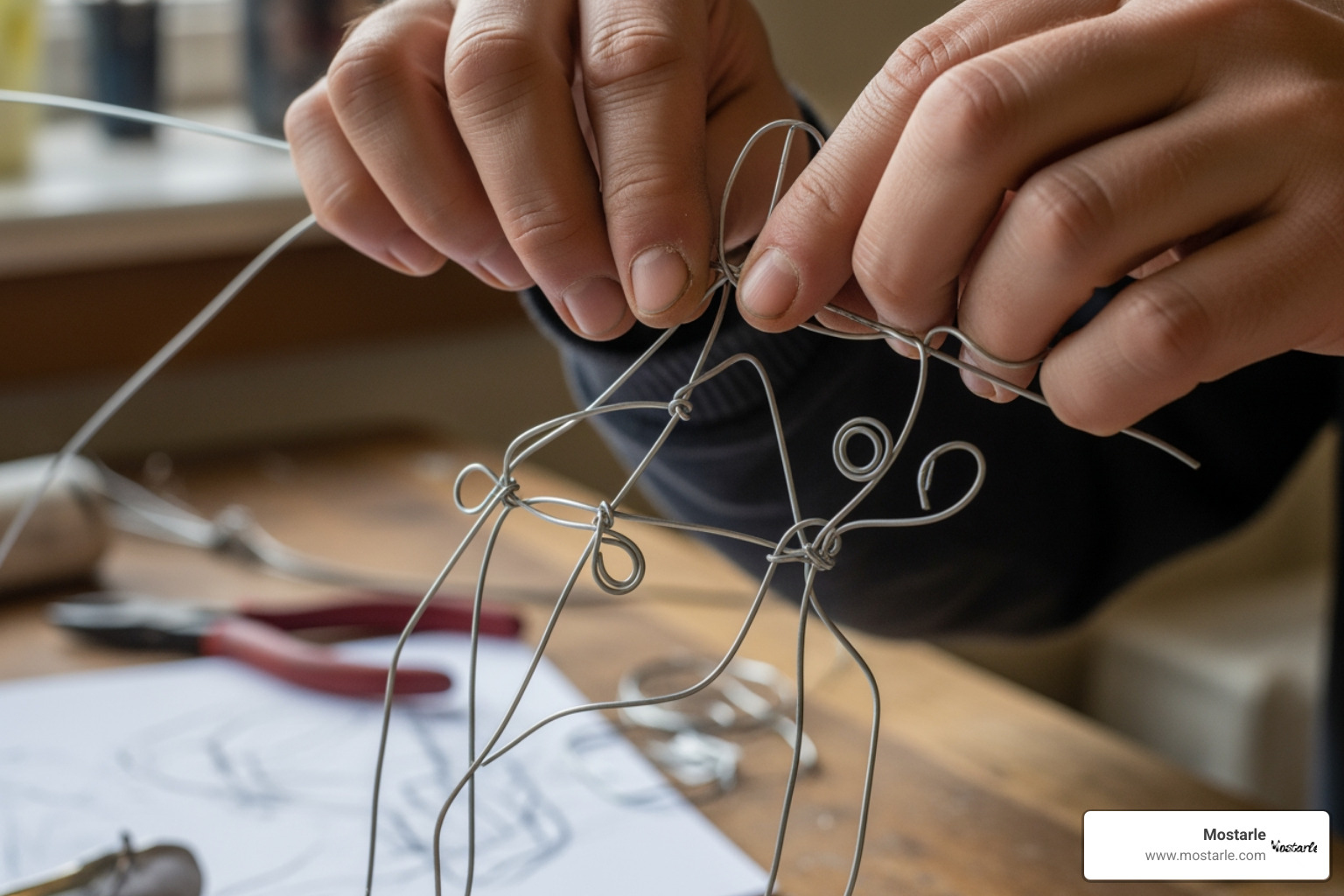
Imagine trying to mold a dynamic figure, perhaps a dancer in mid-leap or a creature with outstretched wings, without an armature. It would be a battle against gravity, a frustrating dance with collapsing forms. The armature provides the foundational support, allowing us to build up our vision layer by layer. But why aluminum specifically?
One of the most significant advantages of aluminum armature wire is its lightweight nature. Sculptures, especially larger ones, can quickly become heavy. Using a lightweight armature ensures that the overall piece remains manageable and reduces stress on the final structure. This also makes transport and display much easier.
Next up is its remarkable pliability. This wire is incredibly easy to bend and shape, even thicker gauges, without requiring heavy-duty tools. This characteristic allows for intricate detailing and fluid forms, giving us the freedom to realize complex designs. As one product description notes, it's "fully pliable," making it accessible for "artists of all ages." This ease of manipulation is crucial for maintaining the spontaneity and flow of the creative process.
Perhaps one of the most critical benefits is its corrosion resistance and non-staining quality. Unlike steel wire, which can rust over time, especially when interacting with certain clays or moisture, aluminum simply won't. This means our sculptures remain pristine, free from unsightly rust stains that could bleed through the finished surface. The research confirms this: "This wire will not corrode or stain." This peace of mind allows us to focus entirely on the artistic process, knowing our armature won't betray our efforts.
Compared to other materials, aluminum strikes a superior balance. While steel wire offers incredible strength, it's heavier, less pliable, and prone to rust. Copper wire, though often beautiful and somewhat pliable, can be too soft for larger structures and is typically more expensive. Aluminum provides that sweet spot: strong enough to support, flexible enough to shape, and durable enough to last without degradation. For a broad, neutral overview of aluminum's properties and common uses, see the aluminium article on Wikipedia.
At Mostarle, we understand the power of changing everyday materials into extraordinary art, much like how aluminum wire for sculpting turns a simple metal strand into the backbone of a masterpiece. If you're inspired by how common elements can be reinvented, explore our insights on Repurposed Masterpieces: Crafting Art From Everyday Tools.
Key Properties of Sculpting Wire
When we choose an armature wire, we're looking for specific characteristics that will support our creative journey. Let's dig deeper into the essential properties that make aluminum an ideal choice for sculpting.
Pliability: This refers to how easily the wire can be bent and shaped without breaking or requiring excessive force. Aluminum wire for sculpting is renowned for its pliability, often described as "soft and flexible." This allows us to quickly form complex shapes, curves, and angles, which is vital for capturing dynamic poses and intricate details in our sculptures. The ability to manipulate the wire with relative ease means less strain on our hands and more focus on the artistic vision.
Strength: While pliable, the wire must also possess sufficient strength to hold the weight of the sculpting medium and resist deformation. The strength of aluminum armature wire is directly related to its gauge (thickness) and its alloy/temper. It needs to be rigid enough to maintain the intended form against gravity, preventing our work from sagging or collapsing, especially as we add more material.
Corrosion Resistance: As mentioned, this is a standout feature of aluminum. Rust and corrosion can severely compromise a sculpture's integrity and appearance. Aluminum wire for sculpting is naturally resistant to oxidation, meaning it won't rust or degrade when exposed to moisture or chemicals present in some clays. This ensures the longevity of both the armature and the finished artwork. The research explicitly states, "This wire will not corrode or stain."
Melting Point (1220°F): For sculptors working with oven-bake clays like polymer clay, the melting point of the armature wire is a critical consideration. With a high melting point of 1220°F (approximately 660°C), aluminum armature wire can safely endure the typical baking temperatures required for polymer clays, which usually range from 230°F to 300°F (110°C to 150°C). This high melting point ensures the armature remains stable and intact during the curing process.
Non-Staining Quality: Beyond corrosion, some metals can react with clays or paints, leading to discoloration or staining. Aluminum's inert nature means it won't leach colors or create unwanted marks on our sculpture, preserving the intended aesthetic. This "non-staining" property is consistently highlighted in product descriptions, assuring us that our artwork will remain true to our vision.
Alloy 1100 and O Temper: When you see specifications like "alloy 1100 with an O temper," it refers to the precise composition and treatment of the aluminum. Alloy 1100 is a commercially pure aluminum, known for its excellent workability and corrosion resistance. The "O temper" signifies that the aluminum is in its annealed or softest state. This combination—alloy 1100 with an O temper—is specifically chosen and "used as armature wire in the sculpture wire industry" because it delivers the optimal balance of pliability and strength required for sculpting. It's soft enough to bend easily yet strong enough to hold its shape, making it the industry standard for aluminum wire for sculpting.
A Guide to Gauges and Sizes for Aluminum Wire for Sculpting
Understanding wire gauge is fundamental to selecting the right aluminum wire for sculpting for any project. It might seem a little confusing at first, but once you grasp the concept, it becomes second nature.
The term "gauge" refers to the diameter or thickness of the wire. What's often counter-intuitive is that a higher gauge number indicates a thinner wire, while a lower gauge number (or even a "0" gauge, like 2/0) indicates a thicker wire. For example, 16 gauge wire is much thinner than 6 gauge wire.
Here's a general breakdown of how gauge relates to diameter:
| Wire Gauge | Diameter (approximate inches) | Diameter (approximate mm) | Strength vs. Flexibility |
|---|---|---|---|
| 2/0 (00) | 0.375" (3/8") | 9.5 mm | Very strong, very rigid. Low flexibility. |
| 4 | 0.204" (1/4") | 5.2 mm | Strong, rigid. Low-medium flexibility. |
| 6 | 0.162" (3/16") | 4.1 mm | Good strength, moderate flexibility. |
| 9 | 0.114" | 2.9 mm | Moderate strength and flexibility. |
| 11½ - 12 | 0.080" - 0.085" (3/32") | 2.1 - 2.2 mm | Good flexibility, medium strength. |
| 14 | 0.078" | 1.9 mm | Flexible, good for details. Lower strength. |
| 16 | 0.0625" (1/16") | 1.6 mm | Very flexible, good for fine details, wrapping. Lowest strength among common armature wires. |
When we choose a gauge, we're essentially balancing strength versus flexibility. Thicker wires (lower gauge numbers) offer more rigidity and support, making them ideal for the main structure of larger sculptures. They're harder to bend but hold their shape firmly. Thinner wires (higher gauge numbers), conversely, are much more flexible and easier to manipulate, perfect for creating delicate features, wrapping, or reinforcing smaller parts.
Choosing the Right Gauge for Your Project
Selecting the correct gauge of aluminum wire for sculpting is paramount to the success and stability of your artwork. It's like choosing the right rebar for a building—too thin, and it won't hold; too thick, and it's unwieldy. Our research provides excellent guidelines for matching wire gauge to sculpture size:
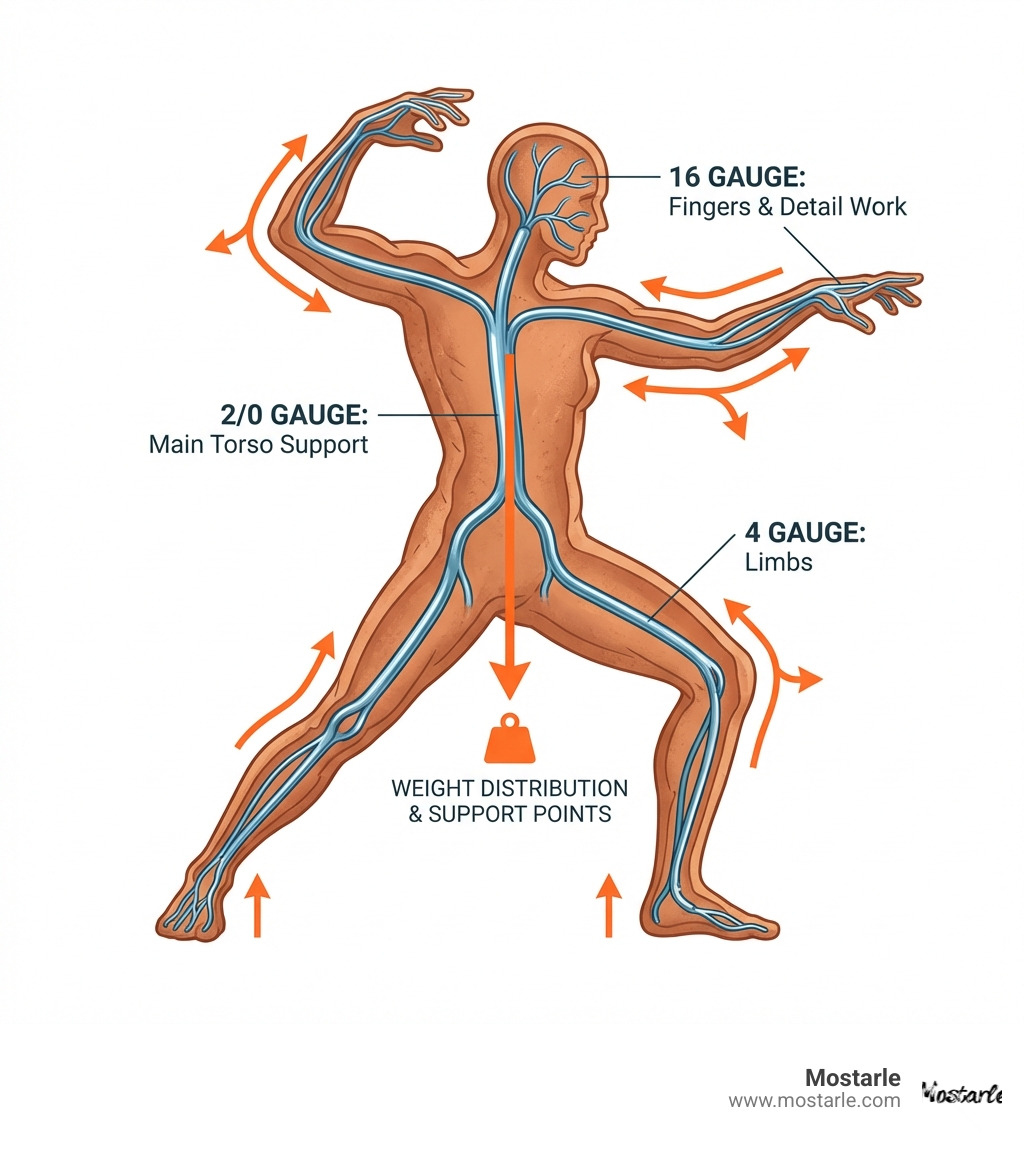
Small Figures (under 15 inches): For delicate creations up to about 12 inches, 1/16in (16 gauge) wire is an excellent choice. It's flexible enough for intricate details and sufficient for supporting smaller masses of clay. For figures up to 15 inches, you can also consider 5/64in, 3/32in, or 1/8in wires, which offer a bit more rigidity while still being manageable for smaller scales. These gauges are also fantastic for detail work, such as fingers, ears, or delicate appendages. As one source noted, "Gauge sizes range from 2/0 for large figures down to 16 for wrapping."
Medium Figures (up to 24 inches): When our sculptures grow to a medium size, generally up to 24 inches tall, we need a more substantial armature. Here, 3/16in (6 gauge) or 1/4in (4 gauge) wires come into their own. These gauges provide the necessary strength to support a greater volume and weight of sculpting material, ensuring the sculpture remains stable and robust. They still offer good pliability, allowing for dynamic posing without sacrificing structural integrity.
Large Figures (36 inches and up): For monumental works, ranging from 36 inches to even 48 inches or more, maximum support is required. This is where the thickest aluminum wire for sculpting, such as 3/8in (2/0 gauge), becomes indispensable. This heavy-duty wire forms the central spine and primary limbs of large sculptures, providing an unyielding framework against gravity. While less flexible, its strength is best for these larger projects.
Detail Work and Wrapping Wire: Even with a sturdy main armature, we often need thinner wires for fine details or to secure parts. 16 gauge wire is perfect for this. It's ideal for wrapping around thicker wires to create joints, adding small structural elements, or creating very fine details that don't bear much weight.
Using aluminum wire for sculpting with Different Mediums
One of the greatest strengths of aluminum wire for sculpting is its versatility across various sculpting mediums. We're not limited to just one type of clay; aluminum armature wire plays well with almost everything!
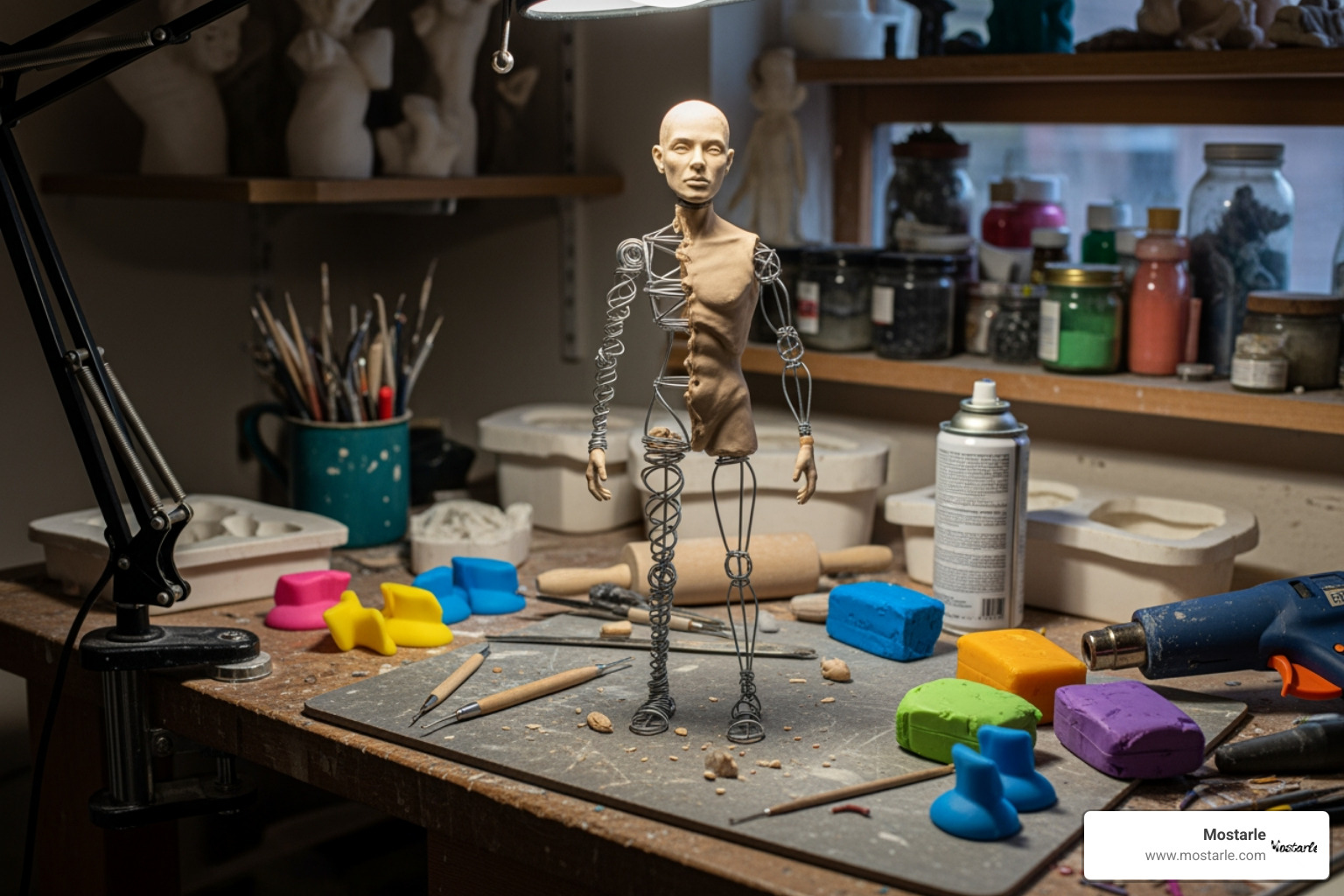
Polymer Clay: This is a match made in heaven. As we discussed, the high melting point of aluminum wire for sculpting (1220°F) makes it perfectly safe for oven-bake polymer clays. The wire won't melt, off-gas, or degrade during the baking process, ensuring your armature remains solid inside your cured sculpture. This compatibility is a huge advantage for polymer clay artists, allowing them to create complex, gravity-defying forms that would otherwise be impossible. This makes it suitable even for specialized, flexible polymer clays.
Oil-Based Clay (e.g., Plastilina): Oil-based clays never truly harden, so they rely entirely on the armature for structural support. Aluminum wire for sculpting is ideal here because it's non-corrosive and won't react with the oil-based compounds in the clay, preventing any staining or degradation over long periods. Its pliability also allows for easy adjustments to the armature as the sculpture progresses.
Water-Based Clay (e.g., Ceramic Clay, Earthenware): While water-based clays are often fired in a kiln, aluminum armature wire can still be used for the initial sculpting phase. For larger pieces that need to dry slowly, an aluminum armature can provide support. However, it's crucial to remember that aluminum (like any non-ceramic material) cannot go into a high-temperature ceramic kiln. If the piece is to be fired, the armature must be removed before firing, or a different firing-safe armature material (like nichrome wire, if applicable to the design) should be considered. For pieces that are not fired, such as those intended for display as dry clay, aluminum works perfectly.
Papier-mâché: This classic medium benefits greatly from a sturdy internal frame. Aluminum wire for sculpting provides an excellent, lightweight skeleton for papier-mâché projects, allowing us to build up layers of paper and paste without worrying about the structure collapsing. Its non-corrosive nature means no rust stains will bleed through the paper layers, preserving the artwork's finish. As many product descriptions note, it's "ideal for use with clay and papier-mâché."
Where to Find Your Wire and Environmental Considerations
Finding the right aluminum wire for sculpting is easier than ever, thanks to a variety of sources. Once you know the gauge and length you need, you can explore several options to get your hands on this essential material.
Art Supply Stores: Dedicated art supply retailers, both local and online, are often the first stop for sculptors. They stock a wide range of gauges and lengths specifically marketed for armature construction and often provide detailed product descriptions, making it easier to choose the right wire for your project.
Hardware Stores: While not always labeled specifically for "sculpting," general hardware stores can be a good source for various gauges of aluminum wire. You might find it in the electrical, fencing, or general wire sections. Be sure to check the alloy and temper if possible, aiming for a soft (O temper) aluminum wire like 1100, which is ideal for pliability.
Online Marketplaces: Large online marketplaces offer a vast selection of aluminum wire for sculpting from various brands. This provides convenience and often competitive pricing, especially for bulk purchases. You can find everything from small coils for hobbyists to larger spools for professional studios.
When considering price ranges, several factors come into play. The gauge of the wire significantly impacts the price, with thicker gauges generally costing more per foot due to the increased material. The length or weight of the wire also matters; buying in bulk (larger spools or heavier coils) typically offers a better price per foot than smaller, pre-cut lengths. Finally, brand reputation can influence pricing, with established art supply brands sometimes commanding a slightly higher price for guaranteed quality and consistency.
Environmental Considerations
As artists, we often think about the materials we use and their impact. The good news is that aluminum wire for sculpting offers some favorable environmental considerations.
Aluminum is one of the most recyclable materials on the planet. It can be recycled repeatedly without significant loss of quality. This means that if our armature wire scraps are properly disposed of in recycling streams, they can be repurposed into new aluminum products, reducing the demand for virgin aluminum production, which is an energy-intensive process. This commitment to sustainability aligns with a growing movement in the art world to adopt more eco-conscious practices. For more on this, consider exploring how we can engage in Art With a Conscience: Exploring Sustainable Practices in the Art World. By choosing aluminum wire for sculpting and ensuring its proper recycling, we contribute to a more sustainable artistic practice.
Frequently Asked Questions about Aluminum Armature Wire
We understand that diving into armatures can bring up many questions. Here, we address some of the most common inquiries about aluminum wire for sculpting.
Can I bake polymer clay with an aluminum wire armature?
Absolutely, yes! This is one of the primary reasons why aluminum wire for sculpting is so popular among polymer clay artists. The key lies in aluminum's impressively high melting point. As we've mentioned, aluminum has a melting point of approximately 1220°F (660°C). Polymer clays, on the other hand, typically cure at much lower temperatures, usually ranging from 230°F to 300°F (110°C to 150°C).
This significant difference means that the aluminum armature will remain completely stable and solid during the baking process. It won't melt, deform, or release any toxic fumes. This makes it an ideal, safe, and effective internal support for all your oven-bake clay projects, allowing you to create intricate and structurally sound pieces.
What's the difference between aluminum and steel armature wire?
While both aluminum and steel can be used as armature wire, they have distinct properties that make them suitable for different applications. Understanding these differences helps us make informed choices for our sculptures:
- Weight: Aluminum wire for sculpting is significantly lighter than steel wire. This is a considerable advantage for larger sculptures, where overall weight can become an issue for handling, display, and even shipping.
- Pliability: Aluminum is much more pliable and easier to bend and shape by hand or with simple tools. Steel wire, especially in thicker gauges, is considerably stiffer and often requires more effort and stronger tools to manipulate.
- Corrosion Resistance: This is a major differentiator. Aluminum is naturally corrosion-resistant and non-staining, meaning it won't rust. Steel, unless it's stainless steel (which is often more expensive and harder to work with), is prone to rust, especially when exposed to moisture or certain types of clay. Rust can bleed into your clay and ruin the final appearance of your sculpture.
- Strength: While aluminum is strong enough for most sculpting needs, steel typically offers superior tensile strength. For extremely large, heavy, or structurally demanding sculptures where maximum rigidity is paramount, steel might be considered. However, for the vast majority of clay sculpting projects, the strength of aluminum wire for sculpting is more than adequate.
- Cost: Aluminum wire is generally more economical than steel wire, particularly when considering its non-corrosive properties and ease of use.
The choice depends on your project's specific requirements. For most clay-based sculptures, the lightweight, pliable, and rust-proof nature of aluminum wire for sculpting makes it the preferred material.
How do I connect pieces of thick aluminum wire to build a large armature?
Building larger armatures often requires joining multiple pieces of aluminum wire for sculpting to create a robust and complex structure. Here are several effective methods we can use:
- Twisting with Pliers: For many connections, especially with medium to thick gauges, simply twisting the wires together firmly with strong pliers can create a surprisingly secure joint. You can twist two ends around each other, or twist a thinner piece of wire around a junction of thicker wires for added stability.
- Wrapping with Thinner Gauge Wire: This is a very common and effective technique. Once you've positioned the main armature pieces, use a thinner, more flexible gauge of aluminum wire for sculpting (like 16 or 18 gauge) to tightly wrap around the joints. This binds the thicker wires together, reinforcing the connection. You can wrap multiple times and then twist the ends of the thinner wire to secure it.
- Epoxy Putty or Clay: For extremely strong and rigid joints, or to fill gaps and create a smooth transition, epoxy putties (like Apoxie Sculpt or Milliput) can be applied over twisted or wrapped wire connections. These putties cure rock-hard and can be sanded or painted, creating a seamless and very durable bond.
- Mechanical Fasteners: For very heavy-duty armatures, or if you need the ability to disassemble parts, you might consider using small nuts and bolts or screws (drilling pilot holes into the aluminum first). This is less common for typical clay armatures but can be useful for modular designs or very large-scale projects.
- Welding/Soldering (Advanced): While generally not necessary for typical clay armatures and requiring specialized equipment and skills, aluminum can be welded or brazed for extremely permanent and strong connections. However, for most sculptors, the methods above are more practical and accessible. For those interested in metal joining techniques, exploring resources like Welding Wonders: Unleash Your Inner Metal Artist can provide further insight, though specific aluminum welding is a specialized skill.
When connecting pieces, always ensure the joint is as secure and rigid as possible, as this will directly impact the stability of your finished sculpture.
Conclusion: Building Your Vision from the Inside Out
As we've explored, aluminum wire for sculpting is far more than just a simple piece of metal; it's the unsung hero of countless sculptures, providing the essential support that allows artistic visions to take form. Its unique combination of being lightweight, incredibly pliable, non-corrosive, and non-staining makes it the ideal choice for artists working with a wide range of mediums, especially polymer and oil-based clays.
The importance of selecting the correct wire gauge cannot be overstated. From the delicate 16 gauge for intricate details to the robust 2/0 gauge for monumental figures, matching the wire's thickness to your sculpture's size and complexity is crucial for its stability and longevity. This thoughtful selection ensures that your masterpiece stands tall, defying gravity and holding its intended pose for years to come.
At Mostarle, we believe that creativity truly has no limits, and we find immense joy in changing ordinary, often forgotten, fragments into remarkable, creative pieces. Just as aluminum wire for sculpting provides the hidden strength for your artistic expressions, we find beauty and potential in everyday hardware, turning nuts and bolts into captivating models. We encourage you to accept the creative potential of all materials, whether it's the foundational strength of aluminum wire or the repurposed charm of metal components.
For more inspiration on building complex structures and finding the perfect form for your creations, explore our guide on understanding 3D metal puzzles, or find delightful ideas for your next project with our guide to Find Your Feline or Forest Friend: A Buyer's Guide to Metal Animal Sculptures. Happy sculpting!