Expert Support

Shop Corten Steel Sculptures for Your Outdoor Space
Why a Corten Steel Sculpture Belongs in Your Outdoor Space

Looking for the best Corten steel sculptures for your garden or outdoor space? Here's a quick overview:
| Type | Best For | Price Range |
|---|---|---|
| Small garden pieces (2 ft) | Patios, planters, accents | ~$335 |
| Mid-size statement pieces (~5 ft) | Garden focal points, entryways | ~$2,650 |
| Large figurative works (8 ft+) | Open landscapes, commercial spaces | $18,500+ |
| Commission/custom sculpture | Unique or site-specific installations | £30k–£40k+ |
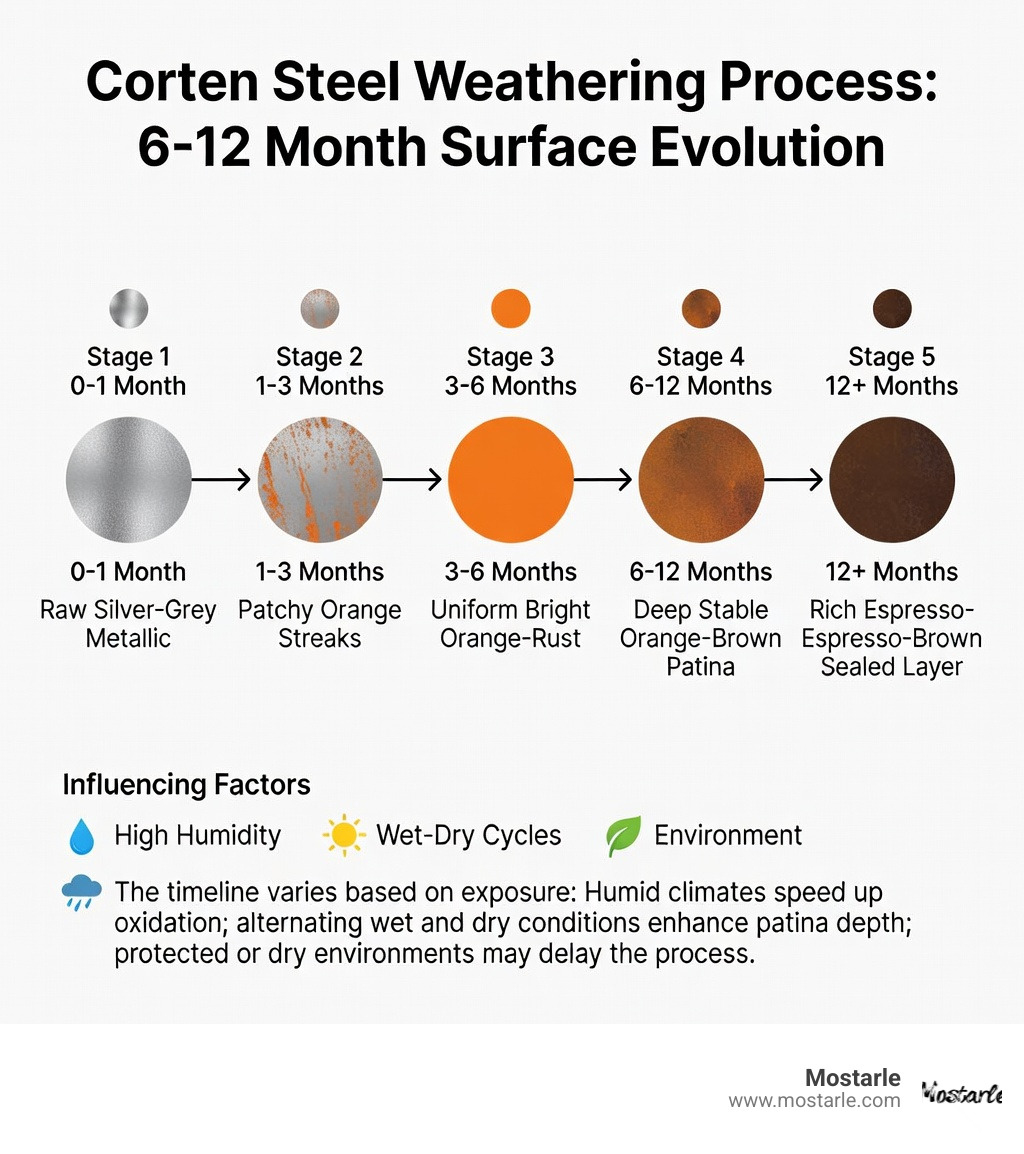
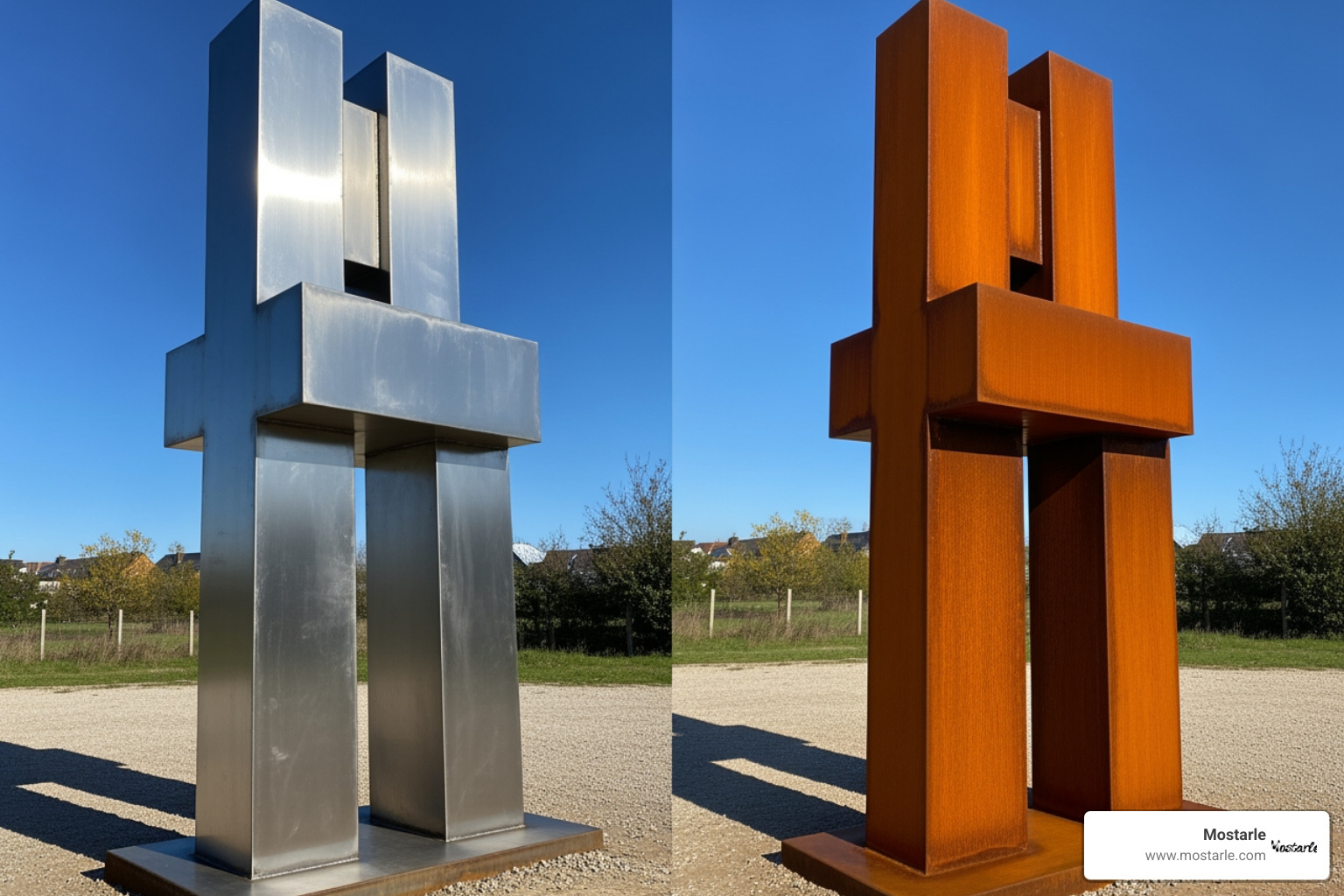
A corten steel sculpture is one of the most striking things you can add to an outdoor space. It starts as raw, metallic steel. Over 6 to 12 months, it transforms into a rich, orange-brown surface that looks like it's been standing for centuries.
That change isn't damage. It's the whole point.
The rust-like patina that forms on Corten (also called weathering steel) is actually a protective layer. It shields the metal from further corrosion — no paint, no coating, no ongoing upkeep needed.
That combination of low maintenance, visual drama, and natural character is why artists from Beverly Pepper in the 1960s to Richard Serra today have built careers around this material. It's also why more homeowners and collectors are choosing Corten art over bronze, stainless steel, or stone.
Whether you're looking for a small garden accent or a bold statement piece, this guide covers what you need to know before you buy.
Key terms for corten steel sculpture:
The Timeless Appeal of a Corten Steel Sculpture
When we talk about weathering steel, we are usually referring to a group of steel alloys developed to eliminate the need for painting. Originally utilized for industrial heavy-lifting—think railroad hopper cars carrying coal or mineral products—this material found its way into the art world because of its rugged beauty and incredible resilience.
The most common grades used today are A242 and A588. These aren't your average "hardware store" steels. They are specifically engineered with a high copper content, along with chromium and nickel. This chemical cocktail is what allows the steel to "rust" just enough to create a barrier, but not enough to compromise its structural integrity.
Unique Properties and Material Composition
What makes a corten steel sculpture so special is its high-strength, low-alloy composition. Unlike mild steel, which will eventually flake away and rust through until it develops holes, Corten is designed to be self-protecting.
The "rust" you see is actually a dense, stable oxide layer called the patina. This layer acts as a shield, preventing oxygen and moisture from reaching the deeper metal. This means your sculpture can sit in the rain, snow, and sun for decades without losing its shape or strength. It’s the ultimate "set it and forget it" material for outdoor art.
The Art of Weathering: How Patina Transforms Your Sculpture
The transformation of a corten steel sculpture is a slow-motion performance. When it first arrives at your home, it might look like a standard piece of dark grey or silver-grey industrial metal. However, once the oxidation process begins, the magic happens.
Over the first 6 to 12 months, environmental factors like humidity, rainfall, and temperature will dictate the color evolution. The surface texture will shift from smooth and metallic to slightly grainy and organic. If you live in a coastal area with salt air, the process might happen faster; in a dry desert, it may take longer. This "wet-dry cycle" is essential—the steel needs to get wet and then dry out completely for the protective patina to harden properly.
Aesthetic Advantages of a Corten Steel Sculpture
There is a certain rustic charm to Corten that other metals just can't replicate. The organic tones of deep orange, sienna, and burnt umber allow the sculpture to blend seamlessly into a garden, contrasting beautifully against green foliage or blue skies.
Because the patina is a natural process, no two sculptures will ever look exactly the same. The visual depth created by the varying shades of rust adds a sense of history and "weight" to the work. Whether you are aiming for a minimalist industrial look or a more custom metal art style, Corten provides a versatility that feels both ancient and modern at the same time.
Iconic Artists and Famous Corten Steel Sculptures
Corten steel didn't just appear in gardens by accident; it was championed by some of the greatest minds in modern art.
One of the most renowned figures is Richard Serra. His work often focuses on the sheer weight and presence of the material. His massive 180-ton sculpture, Snake, consists of three enormous steel blades and is a central part of The Matter of Time installation at the Guggenheim Museum Bilbao. Serra’s work proves that steel isn't just a building material—it’s a way to define space.
Another pioneer was Beverly Pepper, who was likely the first artist to incorporate Corten steel into sculpture as early as 1964. Her work, such as the 12-foot-tall Medea, showed that this "tough" industrial material could be used to create elegant, breathtaking forms.
In the UK, Antony Gormley used weathering steel to create the Angel of the North, one of the most famous public artworks in the world. Even the city of Chicago features a monumental 50-foot-tall Corten sculpture by Picasso, which has become a beloved symbol of the city's architectural heritage.
Notable Examples of Large-Scale Corten Steel Sculpture
Large-scale works often push the limits of engineering. Richard Serra's Torqued Ellipses are famous for their "dizzying" sensation of space in motion. These pieces, sometimes 14 feet high with sheets up to 50 feet long, require massive industrial rollers to create their signature curves.
These site-specific installations aren't just art—they are landmarks. They invite viewers to walk through and around them, feeling the cool, textured surface of the metal and experiencing the "gravitas" that only 3mm to 50mm thick steel can provide.
Practical Guide to Installation and Maintenance
While a corten steel sculpture is incredibly durable, you can't just toss it onto the grass and hope for the best. Proper installation ensures the piece remains stable and lasts for generations.
For mid-to-large pieces, foundation requirements are key. You might need a concrete pad or a hidden base plate that can be bolted down using anchor bolts. Smaller garden pieces often come with stakes (usually 10-12 inches long) that can be pushed directly into the soil.
One critical consideration is runoff staining. During the first few months of weathering, the steel will "bleed" iron oxide. This orange runoff can permanently stain porous surfaces like light-colored concrete, pavers, or stone. We always recommend placing the sculpture on a bed of gravel or a protective mat during the initial weathering phase.
| Material | Maintenance Level | Best Environment | Longevity |
|---|---|---|---|
| Corten Steel | Very Low | Outdoor (Wet/Dry cycles) | 50+ Years |
| Stainless Steel | Low | Modern/Coastal | 100+ Years |
| Mild Steel | High (Requires Paint/Powdercoat) | Indoor/Dry | 10-20 Years (uncoated) |
Indoor vs. Outdoor Use for Your Corten Steel Sculpture
Can you use Corten indoors? Yes, but with a warning. Since the patina requires a wet-dry cycle to form, an indoor piece will stay a dark, raw grey unless it is "pre-weathered" by the artist or manufacturer before delivery.
If you do bring a weathered piece inside, you must ensure it is sealed. Otherwise, any moisture could cause rust leaching onto your floors or carpets. Using innovative stands and mounts for metal art can help elevate the piece and protect your surfaces.
Sustainability and the Design Process
We have to think about the footprint our art leaves behind. Fortunately, Corten steel is a champion of sustainability. It is 100% recyclable, and because it never needs painting or chemical coatings to prevent rust, it doesn't release volatile organic compounds (VOCs) into the environment over its lifespan.
The design process for a modern corten steel sculpture is a blend of high-tech and hand-craft. It often starts with CAD design and 3D modeling to ensure the proportions are perfect. From there, the steel is cut—often using precision laser or plasma cutting—and then joined using specialized welding techniques.
At Mostarle, we appreciate this journey from raw material to finished masterpiece. While we specialize in transforming everyday hardware like nuts and bolts into creative pieces, we share the same passion for durable and stylish outdoor metal decor that stands the test of time.
Frequently Asked Questions about Corten Steel Sculpture
How long does it take for Corten steel to rust?
The natural weathering process typically takes 6 to 12 months to reach a stable state. However, the initial orange "bloom" can appear in as little as a few weeks. Factors like humidity and frequent wet-dry cycles will speed this up. Some artists offer "accelerated oxidation" using a salt-and-vinegar solution to give you that rusted look overnight!
Does Corten steel stain concrete?
Yes, it can. During the initial oxidation phase, the runoff contains iron oxide which will stain porous surfaces like concrete, marble, or light stone. To prevent this, we recommend placing your corten steel sculpture on dark gravel, grass, or a dedicated pedestal until the patina has fully stabilized.
Is Corten steel maintenance-free?
Essentially, yes! Once the protective patina has formed, the steel is self-protecting. You don't need to paint it, oil it, or seal it. The only "maintenance" we suggest is occasionally wiping off bird droppings or debris with a soft cloth to ensure the patina develops evenly. It is built to last for decades—if not centuries.
Conclusion
A corten steel sculpture is more than just a decoration; it’s a living piece of art that evolves with your landscape. From its industrial roots to its place in the world's most famous museums, weathering steel offers a unique blend of strength, beauty, and sustainability.
At Mostarle, we believe that creativity has no limits. Whether it's a monumental steel curve or our own unique models crafted from forgotten fragments of hardware, art should tell a story. If you're ready to bring a touch of industrial elegance to your home, why not start your collection with 3D metal puzzles and explore the fascinating world of metal craftsmanship?